Vázquez-López Rosalino, Hernández-Martínez Tanya, Larios-Fernández Selene Ivonne, Piña-Leyva Celia, Lara-Lozano Manuel, Guerrero-González Tayde, Martínez-Bautista Javier, Gómez-Conde Eduardo, González-Barrios Juan Antonio
Departamento de Microbiología, Centro de Investigación en Ciencias de la Salud (CICSA), Facultad de Ciencias de la Salud Universidad Anáhuac México Norte, Huixquilucan 52786, Mexico.
Laboratorio de Medicina Genómica, Hospital Regional "Primero de Octubre", ISSSTE, Av. Instituto Politécnico Nacional 1669, Lindavista, Gustavo A. Madero, Ciudad de México 07300, Mexico.
Antibiotics (Basel). 2023 Aug 23;12(9):1355. doi: 10.3390/antibiotics12091355.
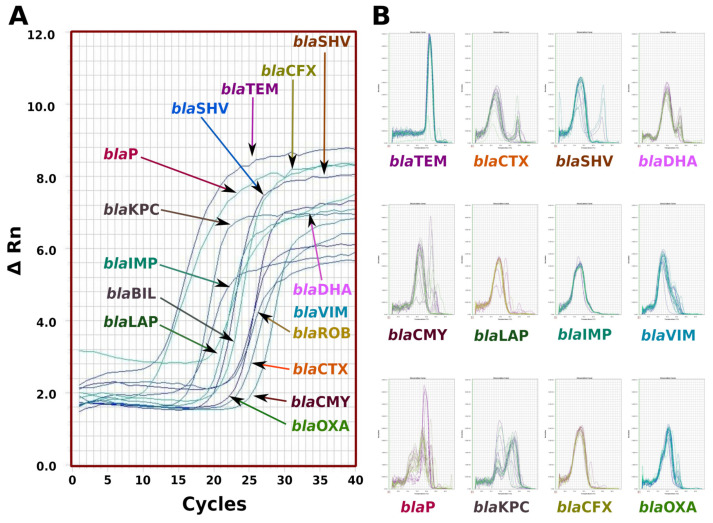
Nosocomial infections caused by pose significant therapeutic challenges due to the high expression of genes encoding antimicrobial drug resistance. In this study, we investigated the conformation of the beta-lactam resistome responsible for the specific pattern of resistance against beta-lactam antibiotics. A total of 218 strains were isolated from in-hospital patients diagnosed with nosocomial infections, obtained from various sources such as urine ( = 49, 22.48%), vaginal discharge ( = 46, 21.10%), catheter tips ( = 14, 6.42%), blood ( = 13, 5.96%), feces ( = 12, 5.50%), sputum ( = 11, 5.05%), biopsies ( = 8, 3.67%), cerebrospinal fluid ( = 2, 0.92%) and other unspecified discharges ( = 63, 28.90%). To characterize the beta-lactam resistome, all strains were subjected to antibiotic dilution tests and grown in beta-lactam antibiotics supplemented with Luria culture medium. Subsequently, multiplex PCR and next-generation sequencing were conducted. The results show a multi-drug-resistance phenotype, particularly against beta-lactam drugs. The primary determinant of this resistance was the expression of the blaTEM gene family, with 209 positive strains (95.87%) expressing it as a single gene ( = 47, 21.6%) or in combination with other genes. Common combinations included TEM + CTX ( = 42, 19.3%), TEM + CTX + SHV ( = 13, 6%) and TEM + CTX + BIL ( = 12, 5.5%), among others. The beta-lactam resistome of nosocomial strains isolated from inpatients at the "October first" Regional Hospital of ISSSTE was predominantly composed of members of the blaTEM gene family, expressed in various configurations along with different members of other beta-lactamase gene families.
由……引起的医院感染由于编码抗菌药物耐药性的基因高表达而带来了重大的治疗挑战。在本研究中,我们调查了负责对β-内酰胺类抗生素产生特定耐药模式的β-内酰胺类耐药基因组的构象。总共从诊断为医院感染的住院患者中分离出218株菌株,这些菌株来自尿液(n = 49,22.48%)、阴道分泌物(n = 46,21.10%)、导管尖端(n = 14,6.42%)、血液(n = 13,5.96%)、粪便(n = 12,5.50%)、痰液(n = 11,5.05%)、活检组织(n = 8,3.67%)、脑脊液(n = 2,0.92%)和其他未指定的分泌物(n = 63,28.90%)等各种来源。为了表征β-内酰胺类耐药基因组,所有菌株都进行了抗生素稀释试验,并在补充了Luria培养基的β-内酰胺类抗生素中培养。随后,进行了多重PCR和下一代测序。结果显示出多药耐药表型,尤其是对β-内酰胺类药物。这种耐药性的主要决定因素是blaTEM基因家族的表达,209株阳性菌株(95.87%)将其作为单个基因表达(n = 47,21.6%)或与其他基因组合表达。常见组合包括TEM + CTX(n = 42,19.3%)、TEM + CTX + SHV(n = 13,6%)和TEM + CTX + BIL(n = 12,5.5%)等。从ISSSTE的“十月一日”地区医院住院患者中分离出的医院菌株的β-内酰胺类耐药基因组主要由blaTEM基因家族的成员组成,并与其他β-内酰胺酶基因家族的不同成员以各种组合形式表达。