
用于预测不同SARS-CoV-2变体和疫苗接种状态下死亡率的ANCOC评分
ANCOC Score to Predict Mortality in Different SARS-CoV-2 Variants and Vaccination Status.
作者信息
Candelli Marcello, Sacco Fernandez Marta, Pignataro Giulia, Merra Giuseppe, Tullo Gianluca, Bronzino Alessandra, Piccioni Andrea, Ojetti Veronica, Gasbarrini Antonio, Franceschi Francesco
机构信息
Emergency, Anesthesiological and Reanimation Sciences Department, Fondazione Policlinico Universitario A. Gemelli-IRCCS of Rome, 00168 Rome, Italy.
Department of Emergency Medicine, Università Cattolica del Sacro Cuore of Rome, 00168 Rome, Italy.
出版信息
J Clin Med. 2023 Sep 8;12(18):5838. doi: 10.3390/jcm12185838.
BACKGROUND
More than three years after the severe acute respiratory syndrome coronavirus 2 (SARS-CoV-2) pandemic outbreak, hospitals worldwide are still affected by coronavirus disease 19 (COVID-19). The availability of a clinical score that can predict the risk of death from the disease at the time of diagnosis and that can be used even if population characteristics change and the virus mutates can be a useful tool for emergency physicians to make clinical decisions. During the first COVID-19 waves, we developed the ANCOC (age, blood urea nitrogen, C-reactive protein, oxygen saturation, comorbidities) score, a clinical score based on five main parameters (age, blood urea nitrogen, C-reactive protein, oxygen saturation, comorbidities) that accurately predicts the risk of death in patients infected with SARS-CoV-2. A score of less than -1 was associated with 0% mortality risk, whereas a score of 6 was associated with 100% risk of death, with an overall accuracy of 0.920. The aim of our study is to internally validate the ANCOC score and evaluate whether it can predict 60-day mortality risk independent of vaccination status and viral variant.
METHODS
We retrospectively enrolled 843 patients admitted to the emergency department (ED) of our hospital with a diagnosis of COVID-19. A total of 515 patients were admitted from July 2021 to September 2021, when the Delta variant was prevalent, and 328 in January 2022, when the Omicron 1 variant was predominant. All patients included in the study had a diagnosis of COVID-19 confirmed by polymerase chain reaction (PCR) on an oropharyngeal swab. Demographic data, comorbidities, vaccination data, and various laboratory, radiographic, and blood gas parameters were collected from all patients to determine differences between the two waves. ANCOC scores were then calculated for each patient, ranging from -6 to 6.
RESULTS
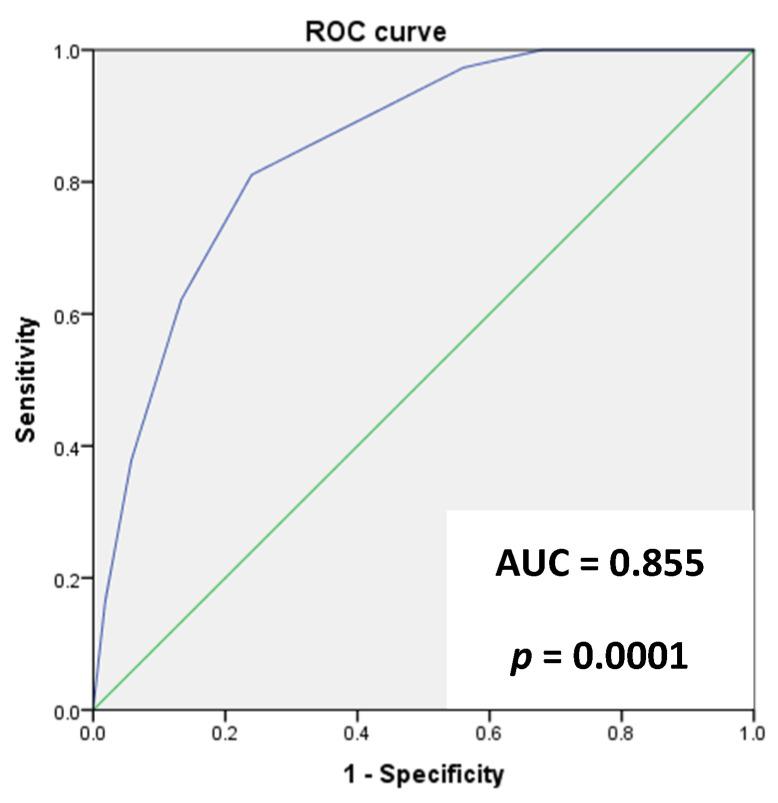
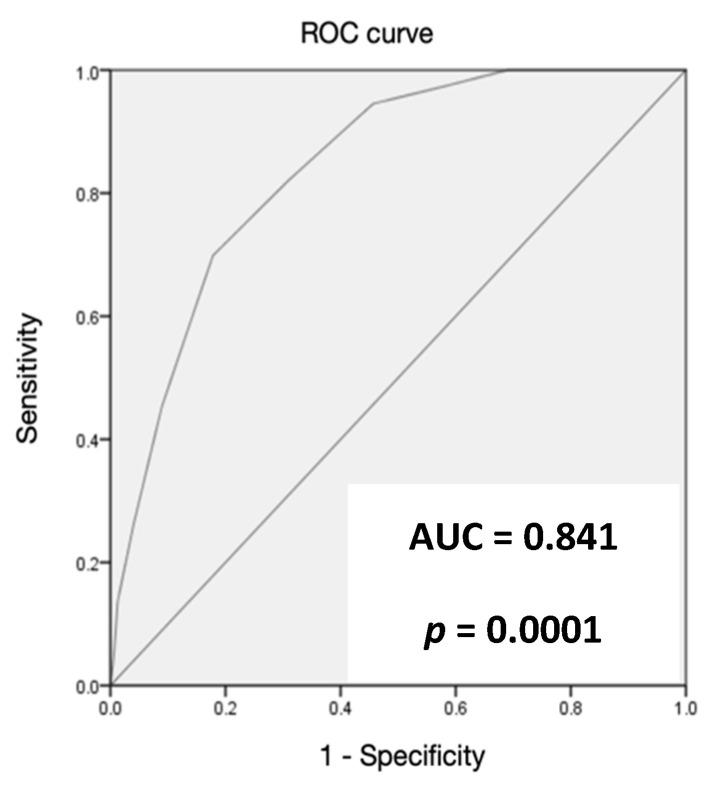
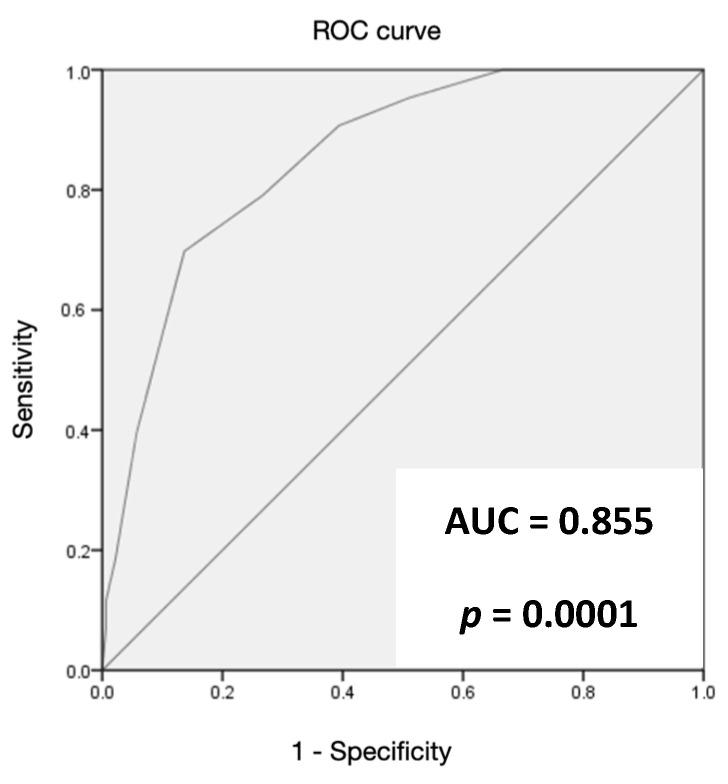
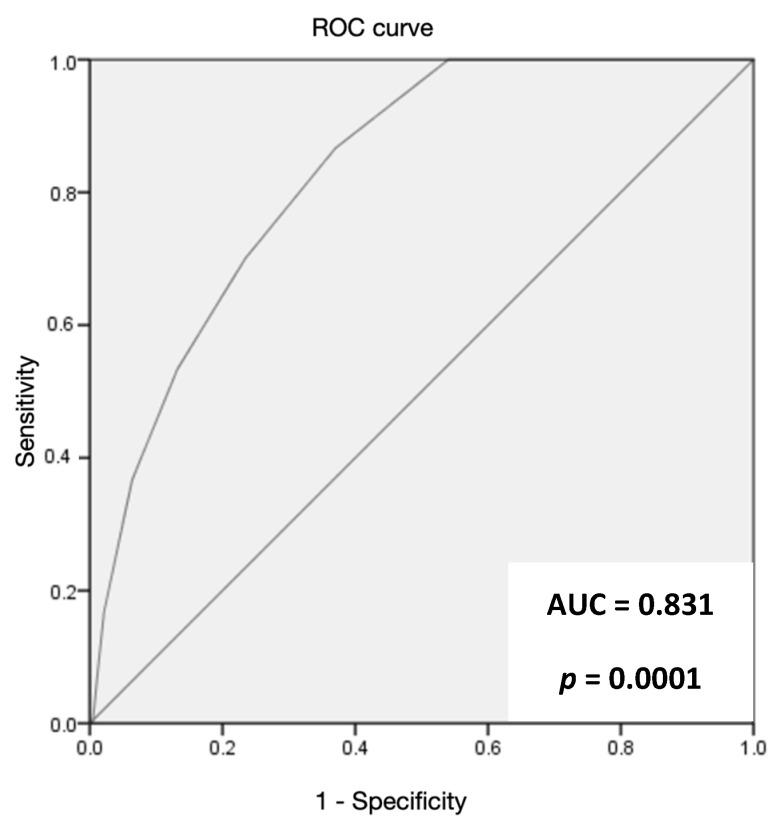
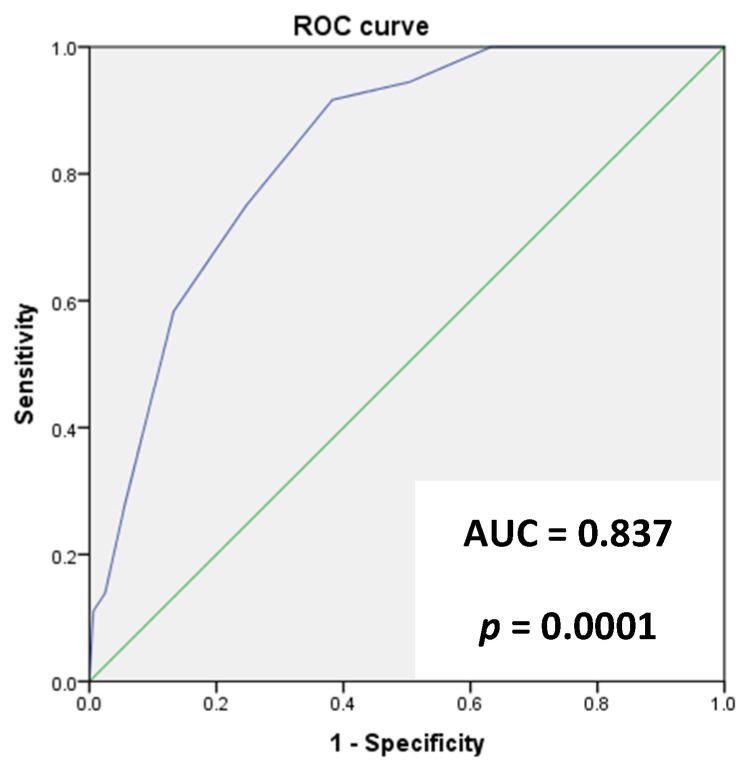
Patients infected with the Omicron variant were significantly older and had a greater number of comorbidities, of which hypertension and chronic obstructive pulmonary disease (COPD) were the most common. Immunization was less common in Delta patients than in Omicron patients (34% and 56%, respectively). To assess the accuracy of mortality prediction, we constructed a receiver operating characteristic (ROC) curve and found that the area under the ROC curve was greater than 0.8 for both variants. These results suggest that the ANCOC score is able to predict 60-day mortality regardless of viral variant and whether the patient is vaccinated or not.
CONCLUSION
In a population with increasingly high vaccination rates, several parameters may be considered prognostic for the risk of fatal outcomes. This study suggests that the ANCOC score can be very useful for the clinician in an emergency setting to quickly understand the patient's evolution and provide proper attention and the most appropriate treatments.
背景
在严重急性呼吸综合征冠状病毒2(SARS-CoV-2)大流行爆发三年多后,全球医院仍受到新型冠状病毒肺炎(COVID-19)的影响。有一种临床评分能够在诊断时预测该疾病的死亡风险,并且即使人群特征发生变化以及病毒发生变异时仍可使用,这对于急诊医生做出临床决策可能是一个有用的工具。在第一波COVID-19疫情期间,我们开发了ANCOC(年龄、血尿素氮、C反应蛋白、血氧饱和度、合并症)评分,这是一种基于五个主要参数(年龄、血尿素氮、C反应蛋白、血氧饱和度、合并症)的临床评分,可准确预测感染SARS-CoV-2患者的死亡风险。评分低于-1与0%的死亡风险相关,而评分6与100%的死亡风险相关,总体准确率为0.920。我们研究的目的是对ANCOC评分进行内部验证,并评估其是否能够独立于疫苗接种状态和病毒变体预测60天死亡风险。
方法
我们回顾性纳入了我院急诊科收治的843例诊断为COVID-19的患者。2021年7月至2021年9月,当Delta变体流行时,共收治515例患者;2022年1月,当Omicron 1变体占主导时,收治328例患者。纳入研究的所有患者经口咽拭子聚合酶链反应(PCR)确诊为COVID-19。收集所有患者的人口统计学数据、合并症、疫苗接种数据以及各种实验室、影像学和血气参数,以确定两波疫情之间的差异。然后为每位患者计算ANCOC评分,范围为-6至6。
结果
感染Omicron变体的患者年龄显著更大,合并症数量更多,其中高血压和慢性阻塞性肺疾病(COPD)最为常见。Delta患者的免疫接种率低于Omicron患者(分别为34%和56%)。为评估死亡预测的准确性,我们绘制了受试者工作特征(ROC)曲线,发现两种变体的ROC曲线下面积均大于0.8。这些结果表明,无论病毒变体如何以及患者是否接种疫苗,ANCOC评分都能够预测60天死亡风险。
结论
在疫苗接种率日益提高的人群中,有几个参数可能被视为致命结局风险的预后指标。本研究表明,ANCOC评分对于急诊环境中的临床医生快速了解患者的病情演变、给予适当关注并提供最合适的治疗可能非常有用。
 Zotero 插件