Smid Annemarie, Oterdoom D L Marinus, Pauwels Rik W J, Tamasi Katalin, Elting Jan Willem J, Absalom Anthony R, van Laar Teus, van Dijk J Marc C, Drost Gea
Department of Neurosurgery, University Medical Center Groningen, University of Groningen, Hanzeplein 1, 9713 GZ Groningen, The Netherlands.
Department of Epidemiology, University Medical Center Groningen, University of Groningen, Hanzeplein 1, 9713 GZ Groningen, The Netherlands.
J Clin Med. 2023 Sep 10;12(18):5887. doi: 10.3390/jcm12185887.
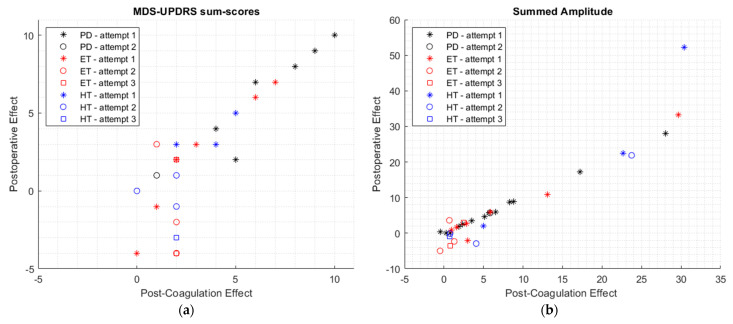
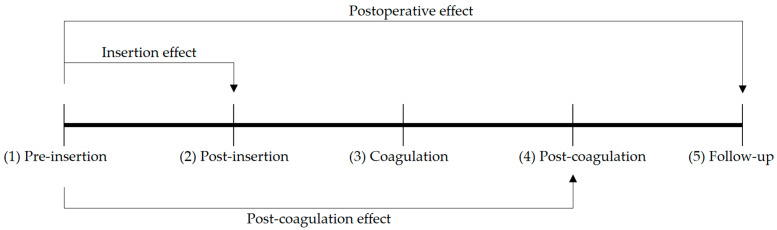
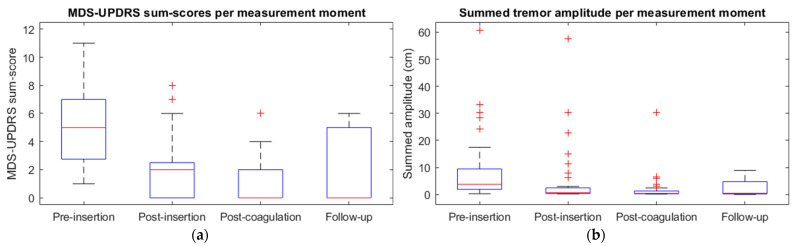
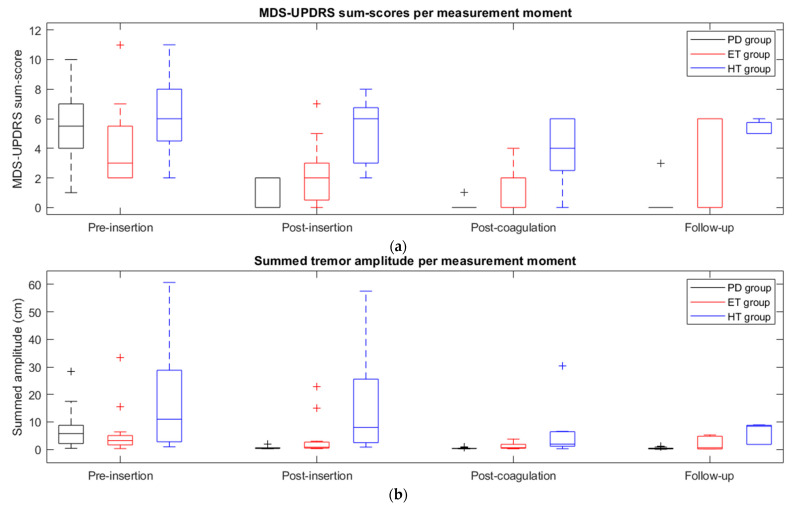
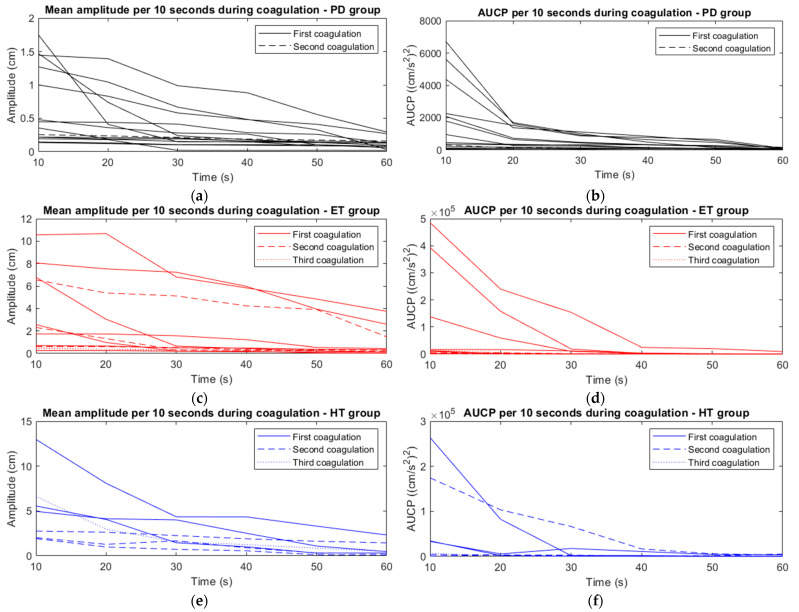
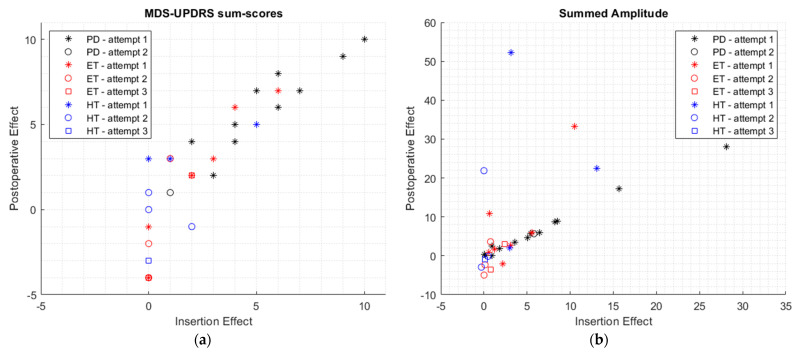
Thalamotomy alleviates medication-refractory tremors in patients with movement disorders such as Parkinson's Disease (PD), Essential tremor (ET), and Holmes tremor (HT). However, limited data are available on tremor intensity during different thalamotomy stages. Also, the predictive value of the intraoperative tremor status for treatment outcomes remains unclear. Therefore, we aimed to quantify tremor status during thalamotomy and postoperatively. Data were gathered between January 2020 and June 2023 during consecutive unilateral thalamotomy procedures in patients with PD ( = 13), ET ( = 8), and HT ( = 3). MDS-UPDRS scores and tri-axial accelerometry data were obtained during rest, postural, and intention tremor tests. Measurements were performed intraoperatively (1) before lesioning-probe insertion, (2) directly after lesioning-probe insertion, (3) during coagulation, (4) directly after coagulation, and (5) 4-6 months post-surgery. Accelerometric data were recorded continuously during the coagulation process. Outcome measures included MDS-UPDRS tremor scores and accelerometric parameters (peak frequency, tremor amplitude, and area under the curve of power (AUCP)). Tremor intensity was assessed for the insertion effect (1-2), during coagulation (3), post-coagulation effect (1-4), and postoperative effect (1-5). Following insertion and coagulation, tremor intensity improved significantly compared to baseline ( < 0.001). The insertion effect clearly correlated with the postoperative effect ( = 0.863, < 0.001). Both tremor amplitude and AUCP declined gradually during coagulation. Peak frequency did not change significantly intraoperatively. In conclusion, the study data show that both the intraoperative insertion effect and the post-coagulation effect are good predictors for thalamotomy outcomes.
丘脑切开术可缓解帕金森病(PD)、特发性震颤(ET)和霍尔姆斯震颤(HT)等运动障碍患者对药物难治的震颤。然而,关于不同丘脑切开术阶段的震颤强度的数据有限。此外,术中震颤状态对治疗结果的预测价值仍不清楚。因此,我们旨在量化丘脑切开术期间及术后的震颤状态。在2020年1月至2023年6月期间,对PD患者(n = 13)、ET患者(n = 8)和HT患者(n = 3)进行连续单侧丘脑切开术时收集数据。在静息、姿势和意向性震颤测试期间获取MDS-UPDRS评分和三轴加速度计数据。测量在术中进行:(1)在毁损探针插入前,(2)在毁损探针插入后立即,(3)在凝固过程中,(4)在凝固后立即,以及(5)手术后4 - 6个月。在凝固过程中连续记录加速度计数据。结果指标包括MDS-UPDRS震颤评分和加速度计参数(峰值频率、震颤幅度和功率曲线下面积(AUCP))。评估了插入效应(1 - 2)、凝固过程中(3)、凝固后效应(1 - 4)和术后效应(1 - 5)的震颤强度。插入和凝固后,震颤强度与基线相比显著改善(P < 0.001)。插入效应与术后效应明显相关(r = 0.863,P < 0.001)。在凝固过程中,震颤幅度和AUCP均逐渐下降。术中峰值频率没有显著变化。总之,研究数据表明,术中插入效应和凝固后效应都是丘脑切开术结果的良好预测指标。