Arab Hany H, Eid Ahmed H, Yahia Rania, Alsufyani Shuruq E, Ashour Ahmed M, El-Sheikh Azza A K, Darwish Hany W, Saad Muhammed A, Al-Shorbagy Muhammad Y, Masoud Marwa A
Department of Pharmacology and Toxicology, College of Pharmacy, Taif University, P.O. Box 11099, Taif 21944, Saudi Arabia.
Department of Biochemistry, Faculty of Pharmacy, Cairo University, Cairo 11562, Egypt.
Pharmaceuticals (Basel). 2023 Aug 29;16(9):1214. doi: 10.3390/ph16091214.
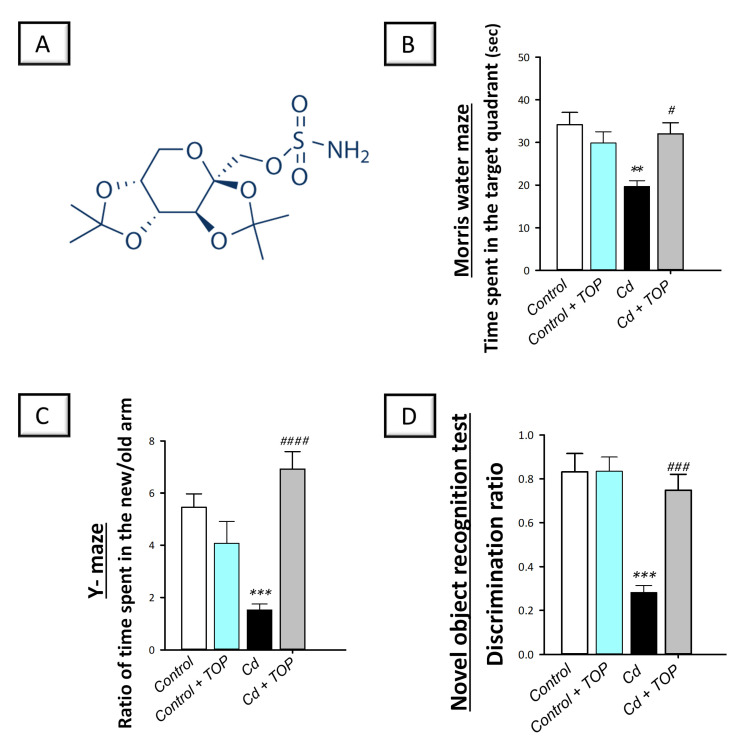
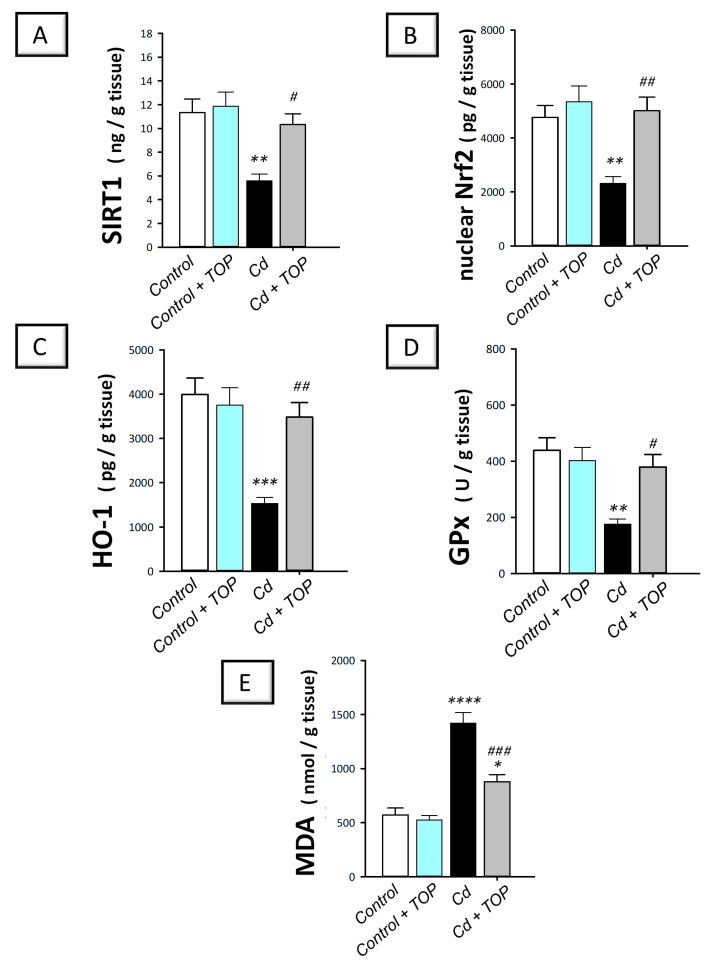
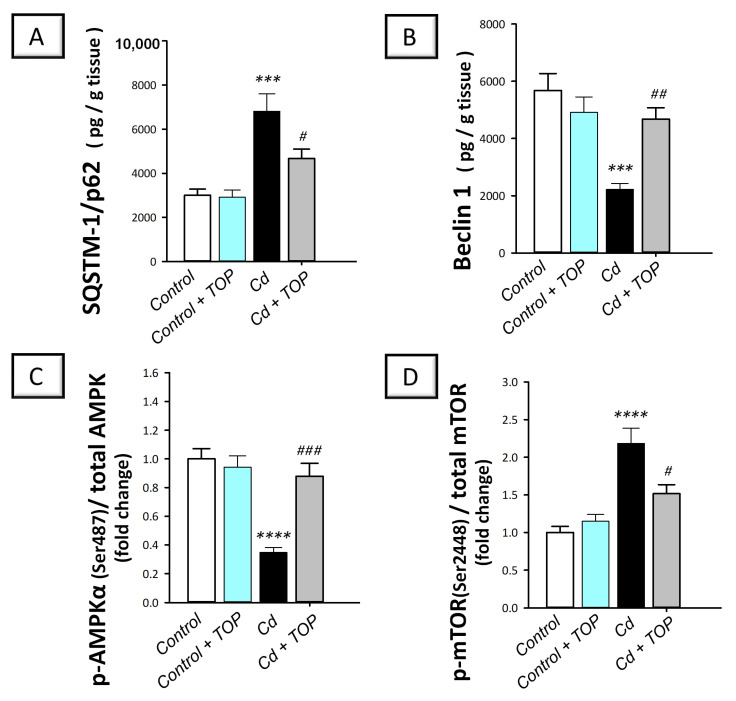
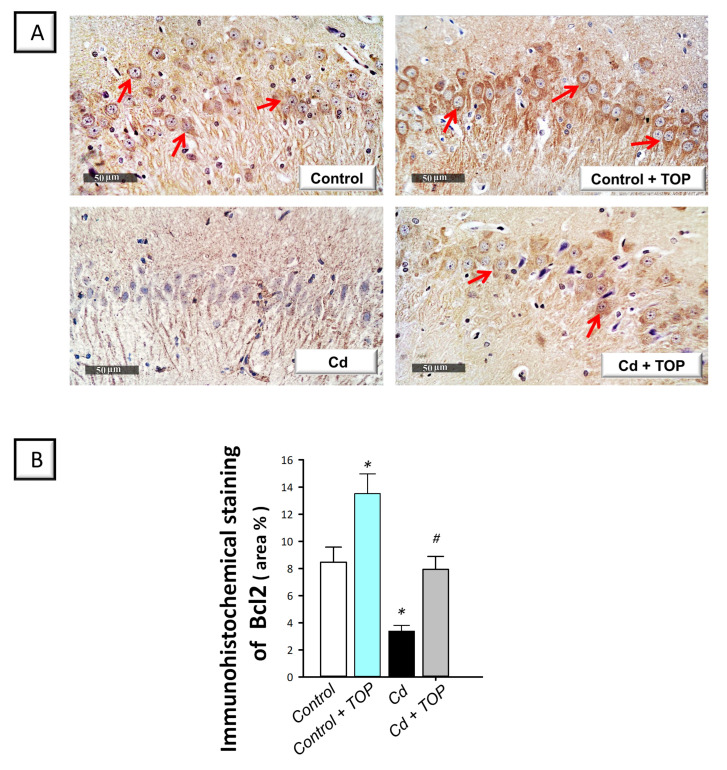
Cadmium is an environmental toxicant that instigates cognitive deficits with excessive glutamate excitatory neuroactivity in the brain. Topiramate, a glutamate receptor antagonist, has displayed favorable neuroprotection against epilepsy, cerebral ischemia, and Huntington's disease; however, its effect on cadmium neurotoxicity remains to be investigated. In this study, topiramate was tested for its potential to combat the cognitive deficits induced by cadmium in rats with an emphasis on hippocampal oxidative insult, apoptosis, and autophagy. After topiramate intake (50 mg/kg/day; p.o.) for 8 weeks, behavioral disturbances and molecular changes in the hippocampal area were explored. Herein, Morris water maze, Y-maze, and novel object recognition test revealed that topiramate rescued cadmium-induced memory/learning deficits. Moreover, topiramate significantly lowered hippocampal histopathological damage scores. Mechanistically, topiramate significantly replenished hippocampal GLP-1 and dampened Aβ42 and p-tau neurotoxic cues. Notably, it significantly diminished hippocampal glutamate content and enhanced acetylcholine and GABA neurotransmitters. The behavioral recovery was prompted by hippocampal suppression of the pro-oxidant events with notable activation of SIRT1/Nrf2/HO-1 axis. Moreover, topiramate inactivated GSK-3β and dampened the hippocampal apoptotic changes. In tandem, stimulation of hippocampal pro-autophagy events, including Beclin 1 upregulation, was triggered by topiramate that also activated AMPK/mTOR pathway. Together, the pro-autophagic, antioxidant, and anti-apoptotic features of topiramate contributed to its neuroprotective properties in rats intoxicated with cadmium. Therefore, it may be useful to mitigate cadmium-induced cognitive deficits.
镉是一种环境毒物,可通过大脑中过量的谷氨酸兴奋性神经活动引发认知缺陷。托吡酯是一种谷氨酸受体拮抗剂,已显示出对癫痫、脑缺血和亨廷顿病具有良好的神经保护作用;然而,其对镉神经毒性的影响仍有待研究。在本研究中,测试了托吡酯对抗镉诱导的大鼠认知缺陷的潜力,重点关注海马体的氧化损伤、细胞凋亡和自噬。在摄入托吡酯(50毫克/千克/天;口服)8周后,探索了海马区的行为障碍和分子变化。在此,莫里斯水迷宫、Y迷宫和新物体识别测试表明,托吡酯挽救了镉诱导的记忆/学习缺陷。此外,托吡酯显著降低了海马体组织病理学损伤评分。从机制上讲,托吡酯显著补充了海马体中的胰高血糖素样肽-1,并抑制了Aβ42和磷酸化tau蛋白的神经毒性信号。值得注意的是,它显著降低了海马体中的谷氨酸含量,并增强了乙酰胆碱和γ-氨基丁酸神经递质。海马体对促氧化事件的抑制以及SIRT1/Nrf2/HO-1轴的显著激活促使了行为恢复。此外,托吡酯使糖原合成酶激酶-3β失活,并抑制了海马体的细胞凋亡变化。同时,托吡酯触发了海马体促自噬事件的刺激,包括贝克林1的上调,这也激活了AMPK/mTOR途径。总之,托吡酯的促自噬、抗氧化和抗凋亡特性有助于其对镉中毒大鼠的神经保护作用。因此,它可能有助于减轻镉诱导的认知缺陷。