Castellini Jorge Luis Alberto, Grande Ratti María Florencia, Chan Débora Mirta
Orthopedic Foot and Ankle Surgeon, Argentina.
Internal Medicine Research Unit, Department of Internal Medicine, Hospital Italiano de Buenos Aires, Argentina.
Foot Ankle Orthop. 2023 Sep 25;8(3):24730114231198524. doi: 10.1177/24730114231198524. eCollection 2023 Jul.
The aim was to analyze changes in normal functional parameters of gait analysis by aging, sex, and body mass index (BMI).
A cross-sectional study with a consecutive sample of asymptomatic subjects was performed between 2014 and 2020. Primary outcomes were time and force parameters (contact time and center of force [CoF] time), in the heel, midfoot, and metatarsal areas, measured using an in-office force platform.
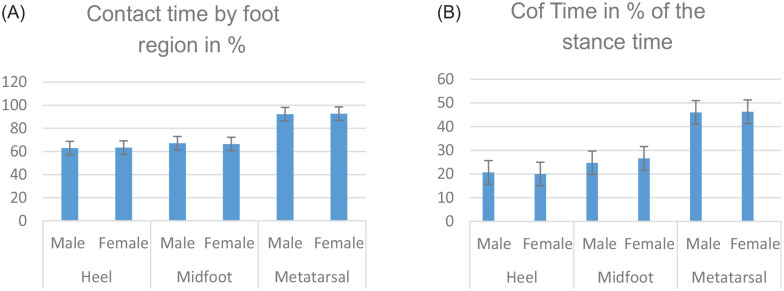
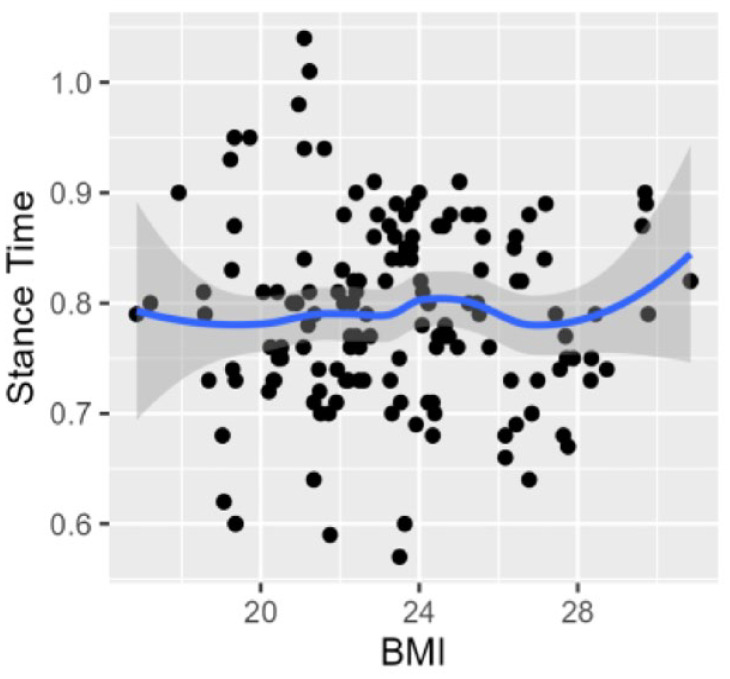
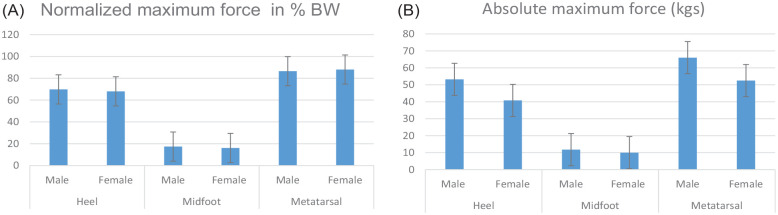
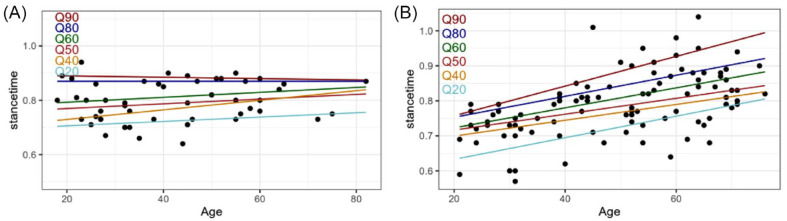
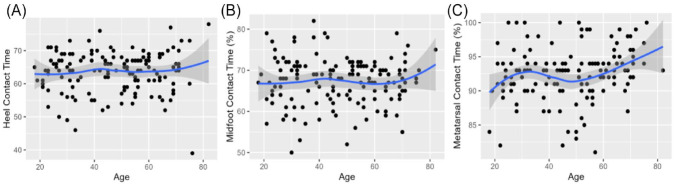
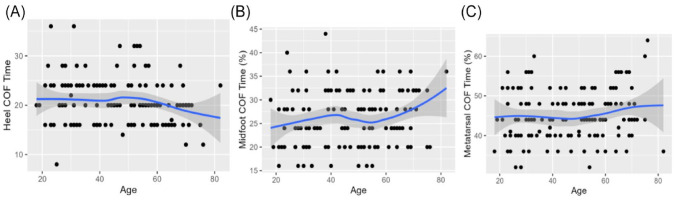
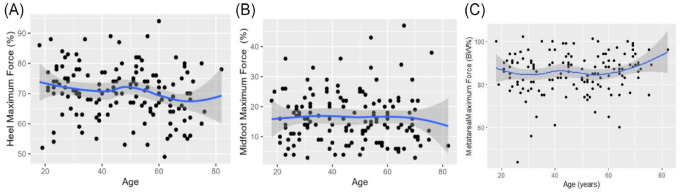
A total of 156 subjects (312 feet) were included, including 67% of women with a mean age of 47 years. The mean of total contact time was similar in males and females ( = .695) and across BMI ( = .413). Contact time did not show differences by region ( = .648 heel, = .286 midfoot, and = .690 metatarsal). CoF time in the heel and metatarsal areas did not change between males and females ( = .288 and = .879, respectively); meanwhile, it was different in midfoot ( = .002). Maximum force showed a reduction between sexes in the heel ( = .039) but did not in the midfoot and metatarsal areas. By age, differences were detected in the heel and metatarsal areas in females ( = .002 and = .001) and the metatarsal area in males ( = .001). According to the age groups, total contact time increased in females ( = .001) but not in males ( = .018), and no differences were detected between foot areas. In females, CoF time did not change either foot areas or age groups. In males, CoF time values increased in the midfoot area in the older group ( = .001).
Time variables did not change by foot region, independent of age, sex, and BMI. Heel maximum force decreased in females, probably linked to adaptive phenomena by aging. The midfoot remains stable, and acts as an undamaged "bridge." These parameters could be interpreted as normal in asymptomatic subjects.
Level III, diagnostic and prognostic.
目的是分析步态分析的正常功能参数随年龄、性别和体重指数(BMI)的变化。
于2014年至2020年对无症状受试者的连续样本进行了一项横断面研究。主要结局是使用办公室内测力平台测量的足跟、中足和跖骨区域的时间和力参数(接触时间和力中心[CoF]时间)。
共纳入156名受试者(312只脚),其中67%为女性,平均年龄47岁。男性和女性的总接触时间均值相似(P = 0.695),且在不同BMI组间也相似(P = 0.413)。接触时间在各区域间无差异(足跟P = 0.648,中足P = 0.286,跖骨P = 0.690)。足跟和跖骨区域的CoF时间在男性和女性之间无变化(分别为P = 0.288和P = 0.879);同时,中足区域存在差异(P = 0.002)。最大力在足跟区域存在性别差异(P = 0.039),但在中足和跖骨区域无差异。按年龄分组,女性在足跟和跖骨区域存在差异(P = 0.002和P = 0.001),男性在跖骨区域存在差异(P = 0.001)。根据年龄组,女性的总接触时间增加(P = 0.001),男性则未增加(P = 0.018),且足部区域间未检测到差异。在女性中,CoF时间在足部区域和年龄组间均无变化。在男性中,老年组中足区域的CoF时间值增加(P = 0.001)。
时间变量在足部区域间无变化,与年龄、性别和BMI无关。女性足跟最大力下降,可能与衰老的适应性现象有关。中足保持稳定,起到未受损“桥梁”的作用。这些参数在无症状受试者中可解释为正常。
III级,诊断和预后。