International Centre of Insect Physiology and Ecology (icipe), P.O. Box 30772, Nairobi, 00100, Kenya.
Invasive Species and Pollinator Health Research Unit, USDA-ARS, Albany, CA, 94710, USA.
Sci Rep. 2023 Sep 30;13(1):16477. doi: 10.1038/s41598-023-43564-2.
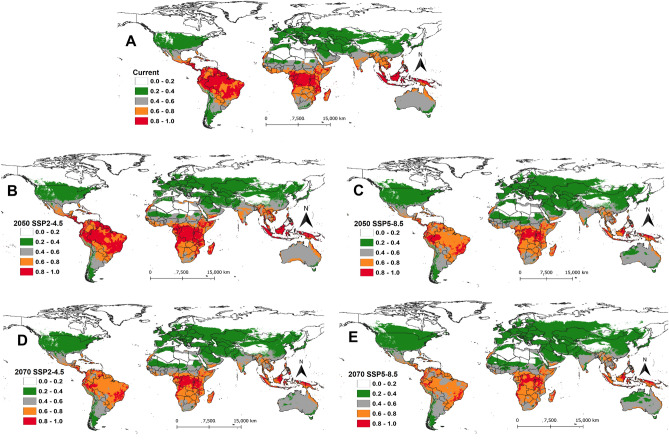
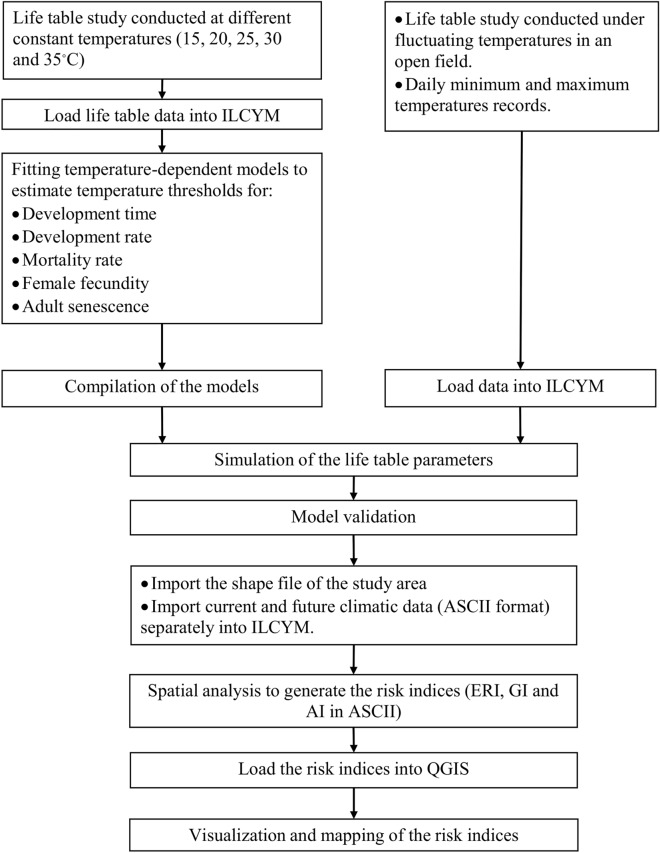
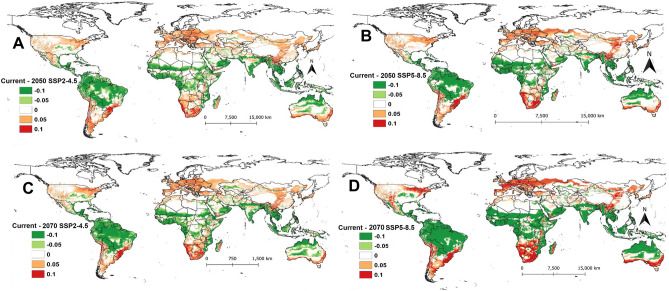
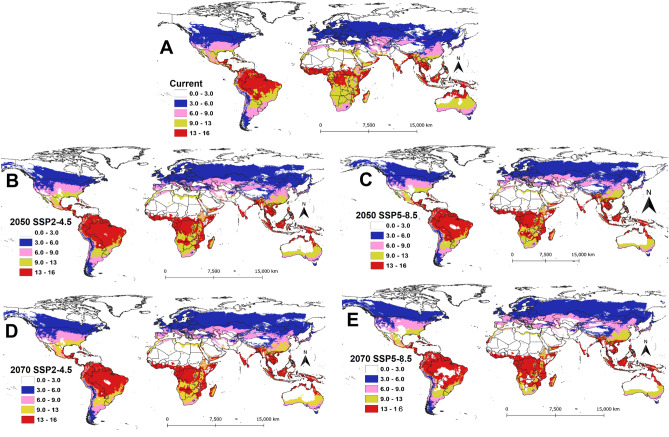
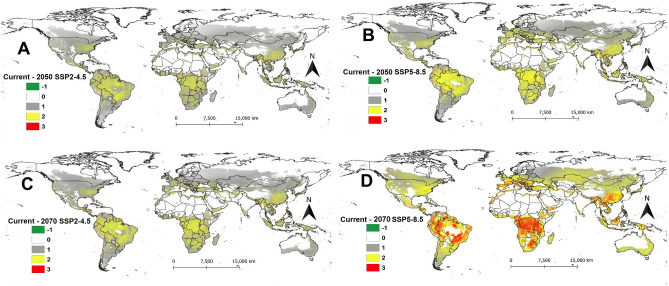
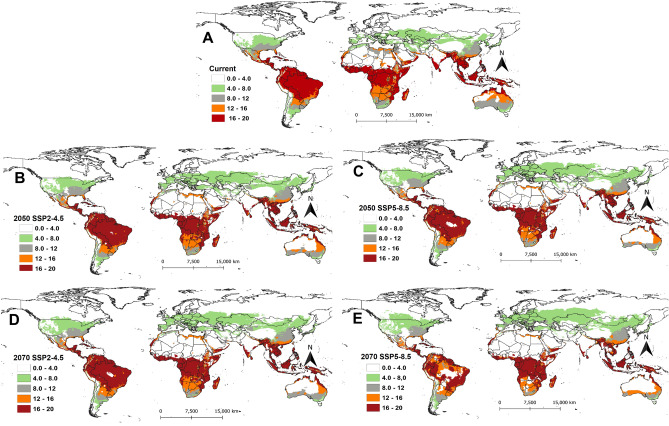
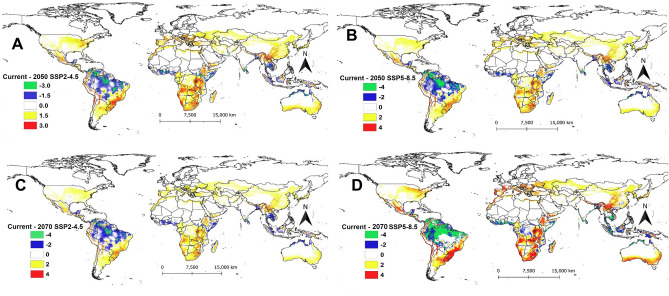
Phthorimaea absoluta (Meyrick) (= Tuta absoluta) (Lepidoptera: Gelechiidae), is the most damaging insect pest threatening the production of tomato and other solanaceous vegetables in many countries. In this study, we predicted the risk of establishment and number of generations for P. absoluta in the current and future climatic conditions under two Shared Socioeconomic Pathways (SSP2-4.5 and SSP5-8.5) of the years 2050 and 2070 using insect life cycle modelling (ILCYM) software. We used a temperature-dependent phenology model to project three risk indices viz., establishment risk index (ERI), generation index (GI), and activity index (AI) based on temperature data. The model projected large suitable areas for P. absoluta establishment in the Southern hemisphere under current and future climatic scenarios, compared to the Northern part. However, the risk of P. absoluta is expected to increase in Europe, USA, Southern Africa, and some parts of Asia in the future. Under current conditions, P. absoluta can complete between 6 and 16 generations per year in suitable areas. However, an increase in GI between 1 and 3 per year is projected for most parts of the world in the future, with an increase in AI between 1 and 4. Our results provide information on the risk of establishment of P. absoluta which could guide decision-makers to develop control strategies adapted for specific agro-ecological zones.
桃蛀野螟(Phthorimaea absoluta)(鳞翅目:螟蛾科)是威胁许多国家番茄和其他茄科蔬菜生产的最具破坏性的昆虫害虫。在这项研究中,我们使用昆虫生活史模型(ILCYM)软件,根据 2050 年和 2070 年两个共享社会经济路径(SSP2-4.5 和 SSP5-8.5)的当前和未来气候条件,预测了桃蛀野螟在当前和未来气候条件下建立种群和繁殖代数的风险。我们使用温度依赖性物候模型,根据温度数据预测了三个风险指数,即建立风险指数(ERI)、繁殖指数(GI)和活动指数(AI)。与北半球相比,该模型预测南半球在当前和未来气候情景下有更大的适合桃蛀野螟建立种群的区域。然而,预计在未来,欧洲、美国、南部非洲和亚洲部分地区的桃蛀野螟风险将会增加。在当前条件下,桃蛀野螟在适宜地区每年可完成 6 到 16 代。然而,未来预计全球大部分地区的 GI 每年增加 1 到 3 代,AI 每年增加 1 到 4 代。我们的研究结果提供了关于桃蛀野螟建立种群风险的信息,这可能有助于决策者制定适应特定农业生态区的控制策略。