Department of Neuroscience, McKnight Brain Institute, University of Florida, 1149 SW Newell Drive, Gainesville, FL, 32610, USA.
Department of Microbiology, Immunology and Molecular Genetics, University of Texas Health, San Antonio, TX, USA.
J Neuroinflammation. 2023 Sep 30;20(1):221. doi: 10.1186/s12974-023-02907-6.
Receptor-interacting protein kinase 2 (RIPK2) is a serine/threonine kinase whose activity propagates inflammatory signaling through its association with pattern recognition receptors (PRRs) and subsequent TAK1, NF-κB, and MAPK pathway activation. After stroke, dead and dying cells release a host of damage-associated molecular patterns (DAMPs) that activate PRRs and initiate a robust inflammatory response. We hypothesize that RIPK2 plays a damaging role in the progression of stroke injury by enhancing the neuroinflammatory response to stroke and that global genetic deletion or microglia-specific conditional deletion of Ripk2 will be protective following ischemic stroke.
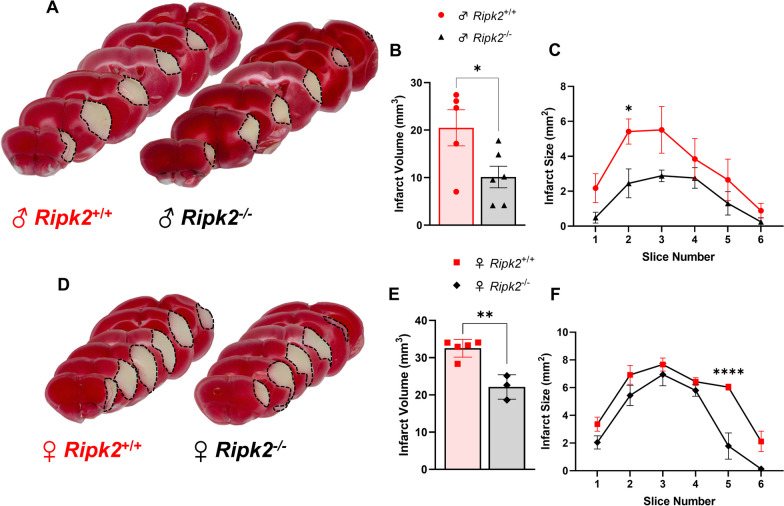
Adult (3-6 months) male mice were subjected to 45 min of transient middle cerebral artery occlusion (tMCAO) followed by 24 h, 48 h, or 28 days of reperfusion. Aged male and female mice (18-24 months) were subjected to permanent ischemic stroke and sacrificed 48 h later. Infarct volumes were calculated using TTC staining (24-48 h) or Cresyl violet staining (28d). Sensorimotor tests (weight grip, vertical grid, and open field) were performed at indicated timepoints. Blood-brain barrier (BBB) damage, tight junction proteins, matrix metalloproteinase-9 (MMP-9), and neuroinflammatory markers were assessed via immunoblotting, ELISA, immunohistochemistry, and RT-qPCR. Differential gene expression profiles were generated through bulk RNA sequencing and nanoString.
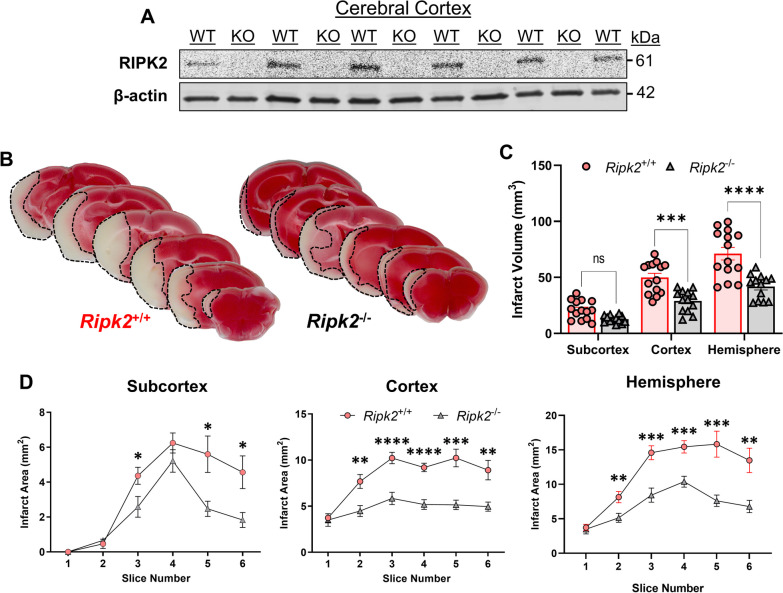
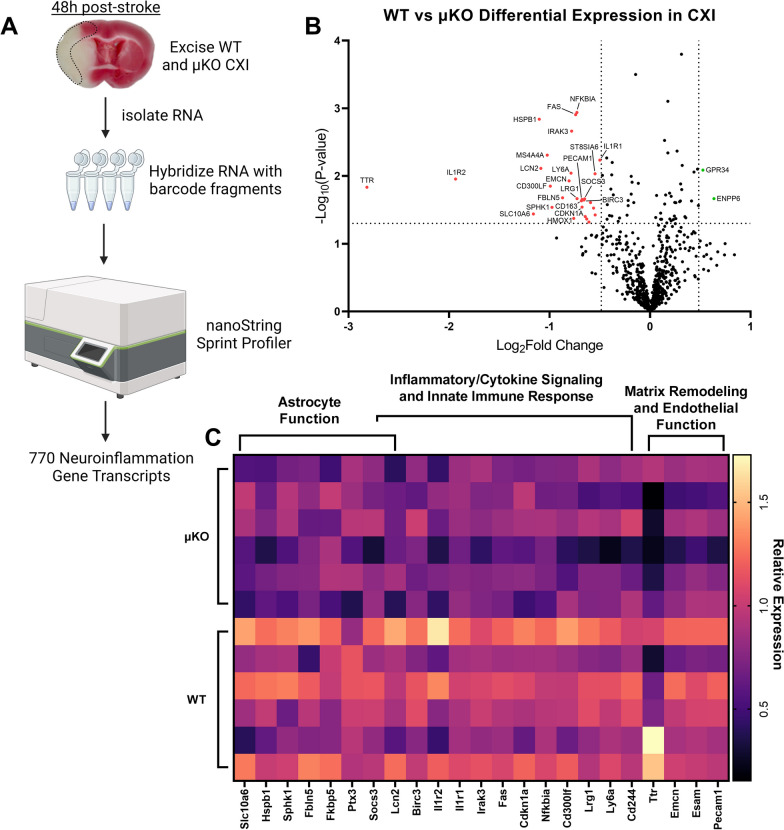
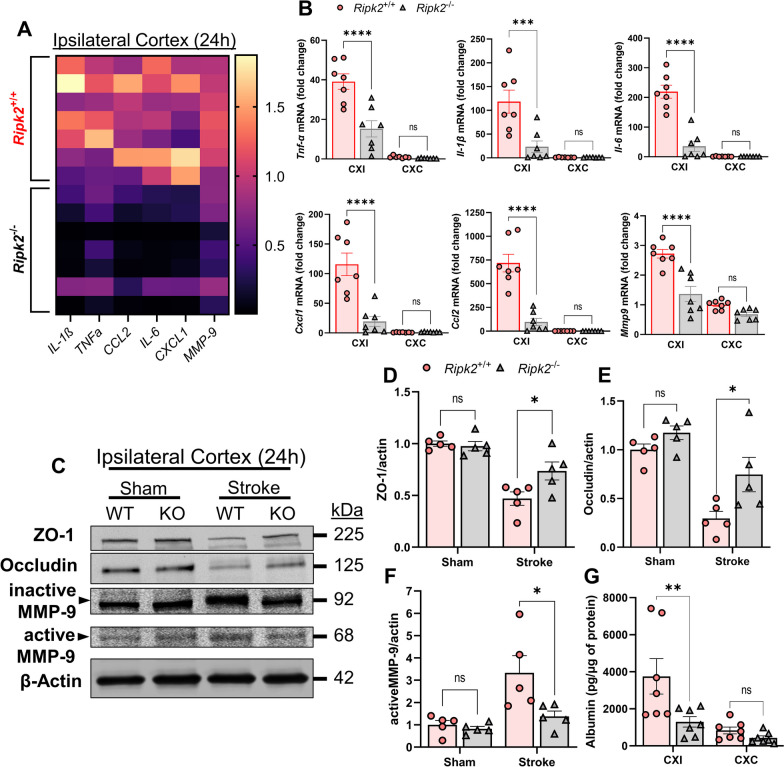
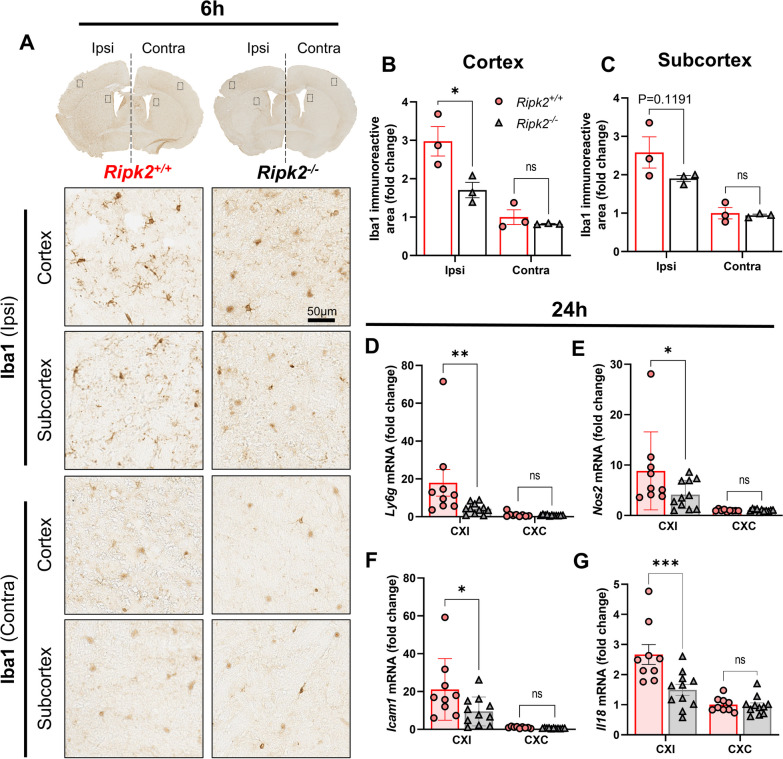
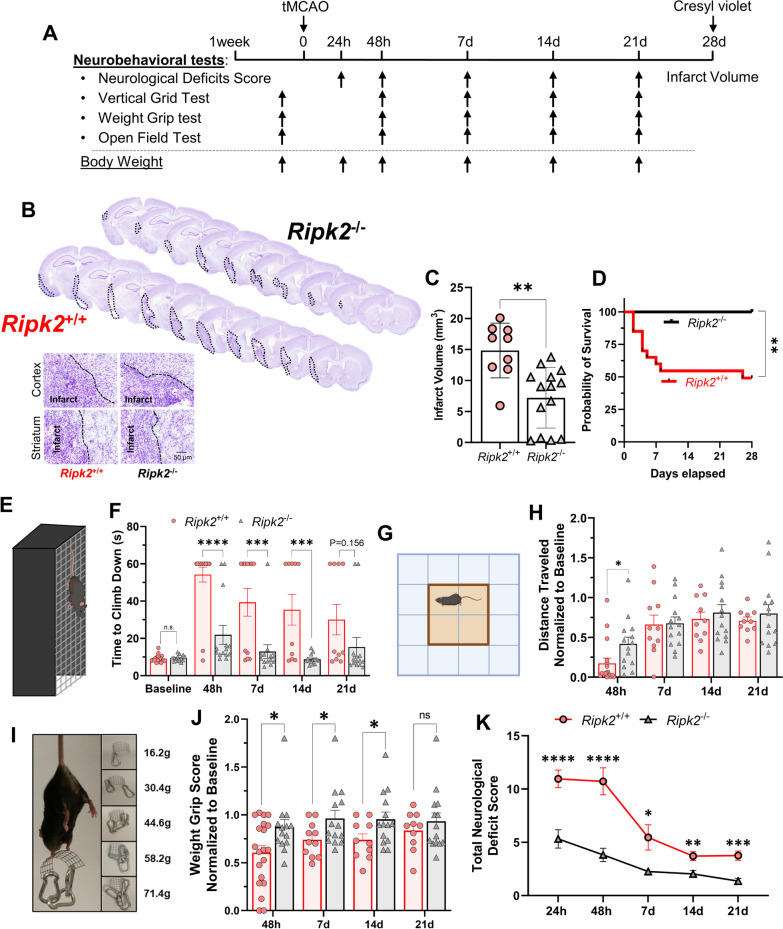
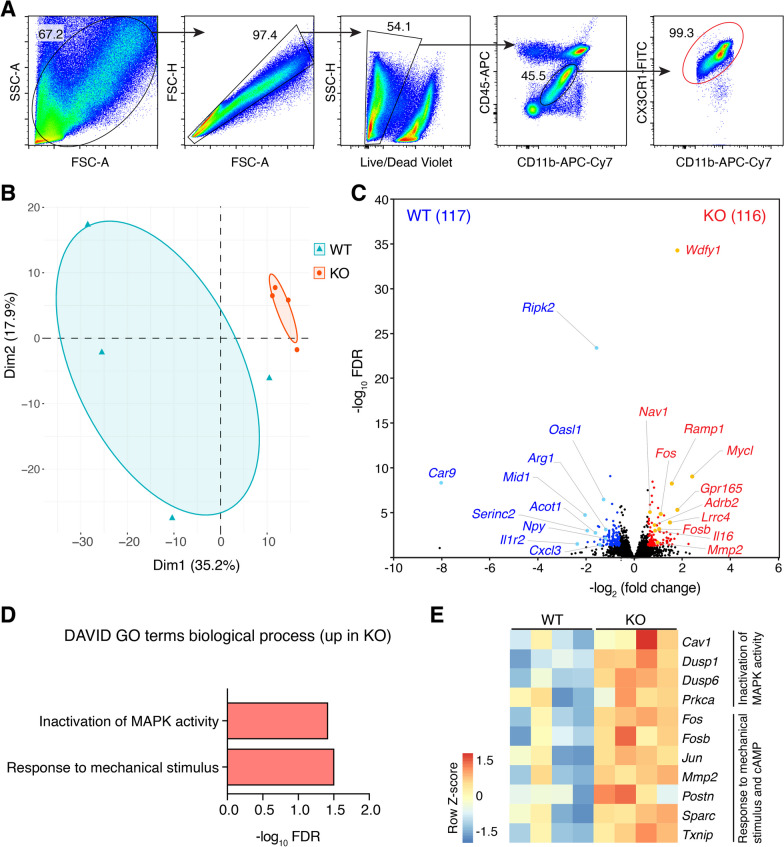
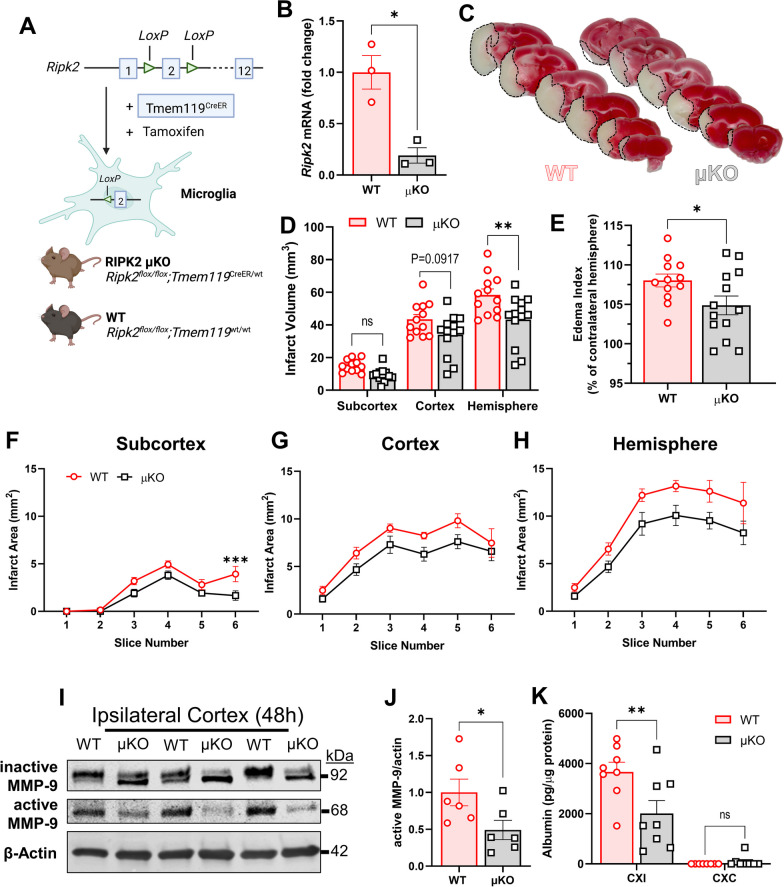
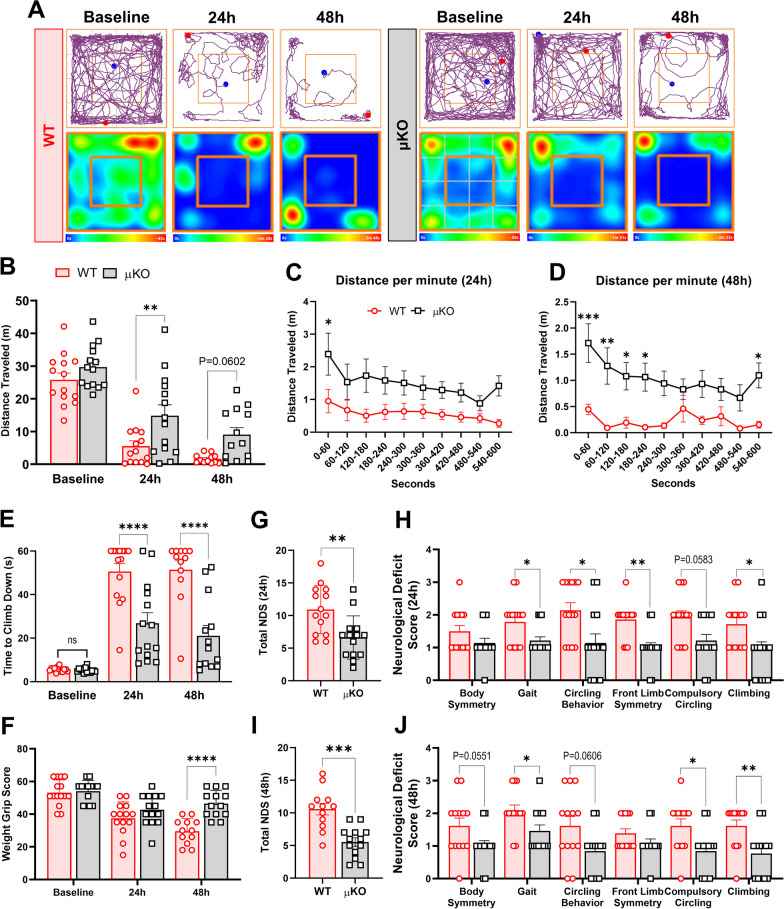
Global genetic deletion of Ripk2 resulted in decreased infarct sizes and reduced neuroinflammatory markers 24 h after stroke compared to wild-type controls. Ripk2 global deletion also improved both acute and long-term behavioral outcomes with powerful effects on reducing infarct volume and mortality at 28d post-stroke. Conditional deletion of microglial Ripk2 (mKO) partially recapitulated our results in global Ripk2 deficient mice, showing reductive effects on infarct volume and improved behavioral outcomes within 48 h of injury. Finally, bulk transcriptomic profiling and nanoString data demonstrated that Ripk2 deficiency in microglia decreases genes associated with MAPK and NF-κB signaling, dampening the neuroinflammatory response after stroke injury by reducing immune cell activation and peripheral immune cell invasion.
These results reveal a hitherto unknown role for RIPK2 in the pathogenesis of ischemic stroke injury, with microglia playing a distinct role. This study identifies RIPK2 as a potent propagator of neuroinflammatory signaling, highlighting its potential as a therapeutic target for post-stroke intervention.
受体相互作用蛋白激酶 2(RIPK2)是一种丝氨酸/苏氨酸激酶,其活性通过与模式识别受体(PRRs)的结合以及随后的 TAK1、NF-κB 和 MAPK 通路的激活来传播炎症信号。中风后,死亡和濒死细胞释放大量损伤相关分子模式(DAMPs),激活 PRRs 并引发强烈的炎症反应。我们假设 RIPK2 通过增强对中风的神经炎症反应,在中风损伤的进展中发挥破坏性作用,并且在缺血性中风后,RIPK2 的全局基因缺失或小胶质细胞特异性条件性缺失将具有保护作用。
成年(3-6 个月)雄性小鼠接受 45 分钟短暂性大脑中动脉闭塞(tMCAO),然后再进行 24 小时、48 小时或 28 天的再灌注。老年雄性和雌性小鼠(18-24 个月)接受永久性缺血性中风,并在 48 小时后处死。使用 TTC 染色(24-48 小时)或 Cresyl 紫染色(28 天)计算梗死体积。在指定的时间点进行感觉运动测试(握力、垂直网格和旷场)。通过免疫印迹、ELISA、免疫组织化学和 RT-qPCR 评估血脑屏障(BBB)损伤、紧密连接蛋白、基质金属蛋白酶-9(MMP-9)和神经炎症标志物。通过批量 RNA 测序和 nanoString 生成差异基因表达谱。
与野生型对照相比,RIPK2 的全局基因缺失导致中风后 24 小时梗死体积减小和神经炎症标志物减少。Ripk2 全局缺失还改善了急性和长期行为结果,在中风后 28 天具有强大的减少梗死体积和降低死亡率的作用。小胶质细胞条件性缺失 Ripk2(mKO)部分重现了我们在全局 Ripk2 缺陷小鼠中的结果,在损伤后 48 小时内显示出对梗死体积的减少和行为结果的改善。最后,批量转录组分析和 nanoString 数据表明,小胶质细胞中 Ripk2 的缺失减少了与 MAPK 和 NF-κB 信号相关的基因,通过减少免疫细胞激活和外周免疫细胞浸润来减轻中风损伤后的神经炎症反应。
这些结果揭示了 RIPK2 在缺血性中风损伤发病机制中的一个以前未知的作用,小胶质细胞起着独特的作用。这项研究确定 RIPK2 是神经炎症信号的有力传播者,突出了其作为中风后干预治疗靶点的潜力。