Cancer Translational Research Team, RIKEN Center for Advanced Intelligence Project, 1-4-1 Nihonbashi, Chuo-ku, Tokyo, 103-0027, Japan.
Division of Medical AI Research and Development, National Cancer Center Research Institute, 5-1-1 Tsukiji, Chuo-ku, Tokyo, 104-0045, Japan.
Exp Mol Med. 2023 Oct;55(10):2205-2219. doi: 10.1038/s12276-023-01090-1. Epub 2023 Oct 2.
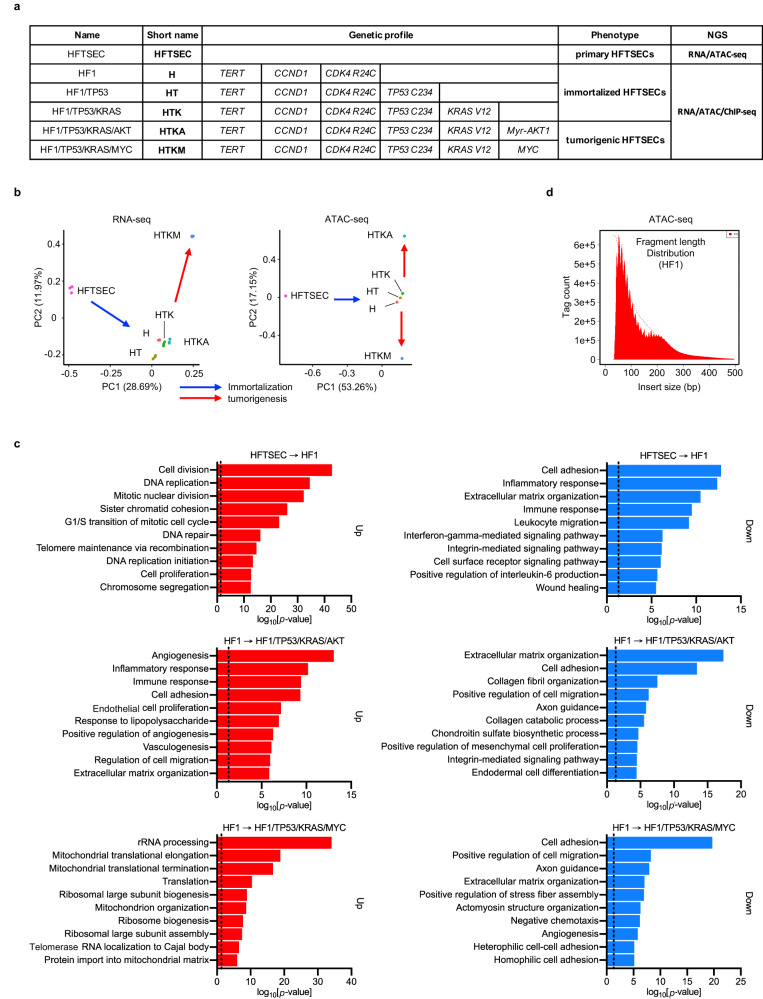
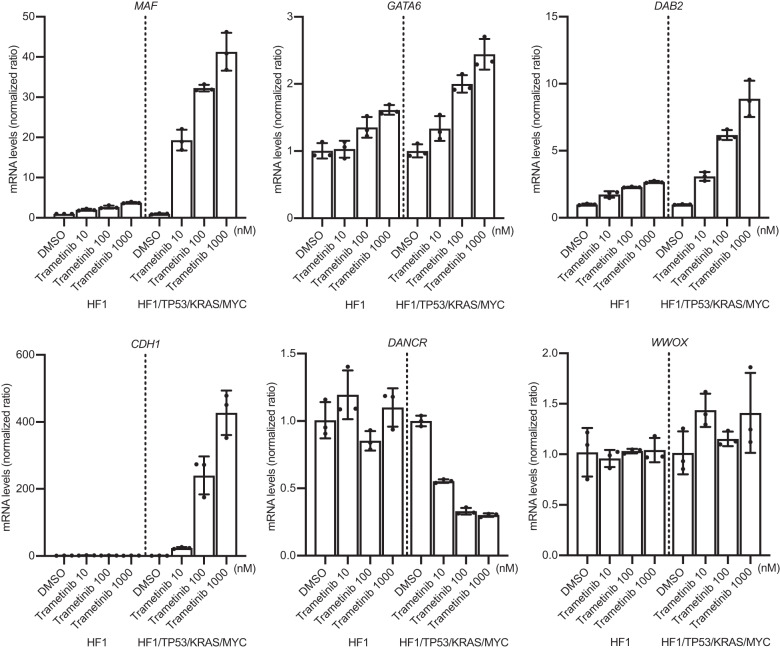
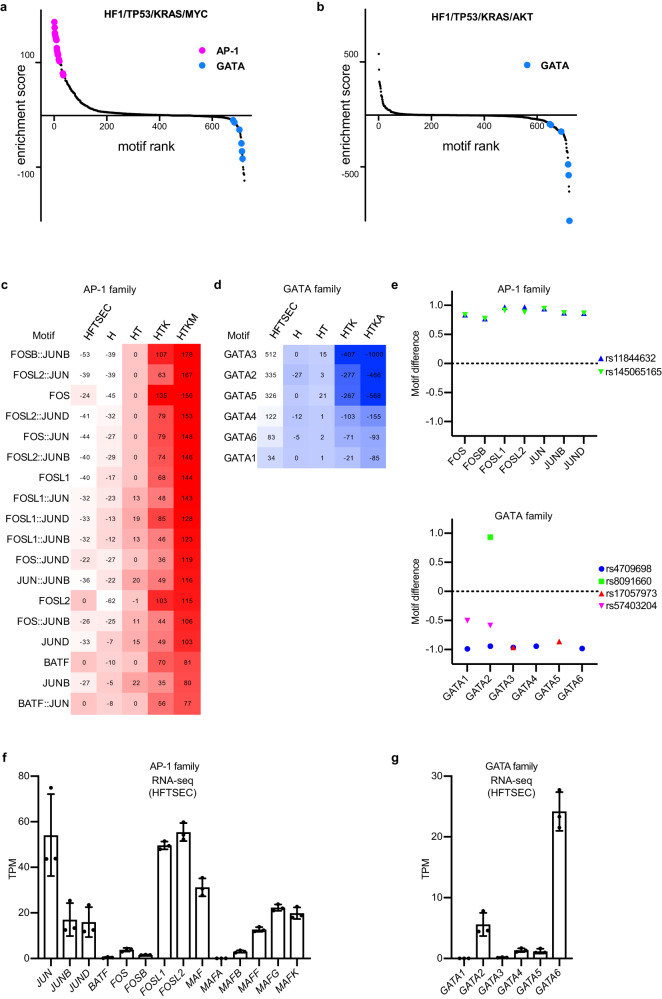
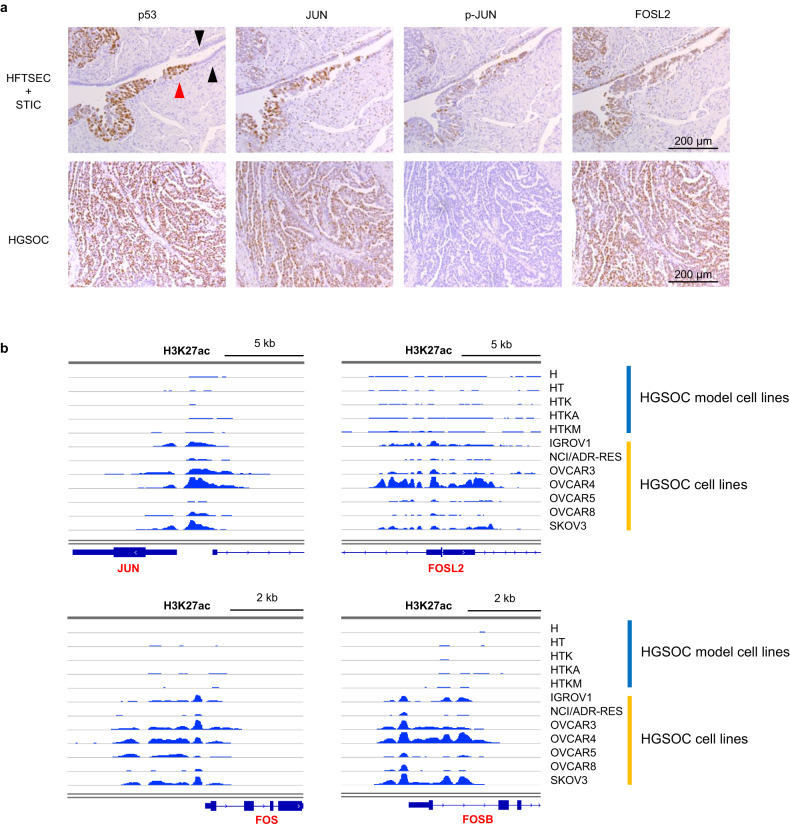
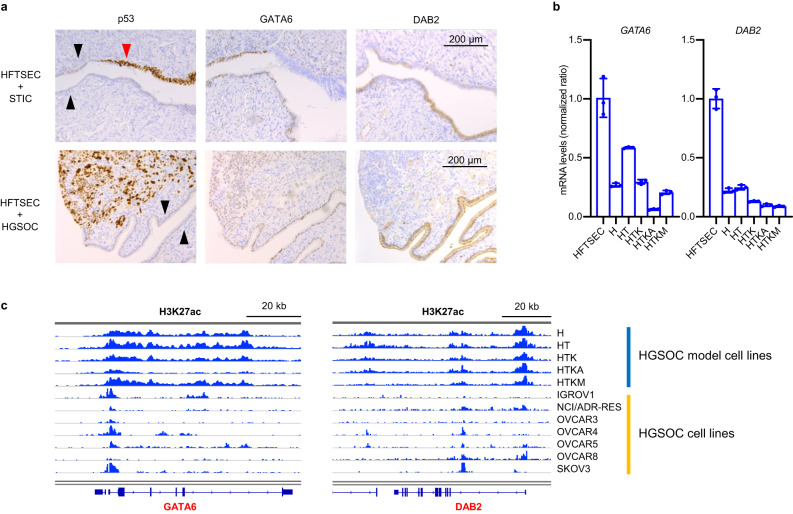
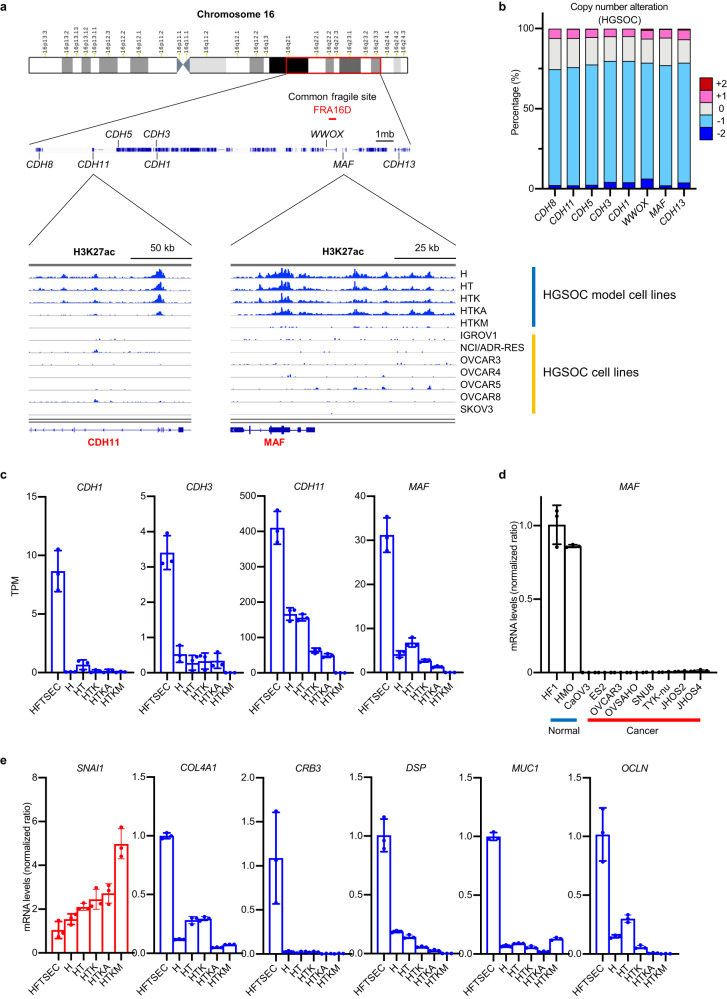
High-grade serous ovarian carcinoma (HGSOC) is the most lethal gynecological malignancy. To date, the profiles of gene mutations and copy number alterations in HGSOC have been well characterized. However, the patterns of epigenetic alterations and transcription factor dysregulation in HGSOC have not yet been fully elucidated. In this study, we performed integrative omics analyses of a series of stepwise HGSOC model cells originating from human fallopian tube secretory epithelial cells (HFTSECs) to investigate early epigenetic alterations in HGSOC tumorigenesis. Assay for transposase-accessible chromatin using sequencing (ATAC-seq), chromatin immunoprecipitation sequencing (ChIP-seq), and RNA sequencing (RNA-seq) methods were used to analyze HGSOC samples. Additionally, protein expression changes in target genes were confirmed using normal HFTSECs, serous tubal intraepithelial carcinomas (STICs), and HGSOC tissues. Transcription factor motif analysis revealed that the DNA-binding activity of the AP-1 complex and GATA family proteins was dysregulated during early tumorigenesis. The protein expression levels of JUN and FOSL2 were increased, and those of GATA6 and DAB2 were decreased in STIC lesions, which were associated with epithelial-mesenchymal transition (EMT) and proteasome downregulation. The genomic region around the FRA16D site, containing a cadherin cluster region, was epigenetically suppressed by oncogenic signaling. Proteasome inhibition caused the upregulation of chemokine genes, which may facilitate immune evasion during HGSOC tumorigenesis. Importantly, MEK inhibitor treatment reversed these oncogenic alterations, indicating its clinical effectiveness in a subgroup of patients with HGSOC. This result suggests that MEK inhibitor therapy may be an effective treatment option for chemotherapy-resistant HGSOC.
高级别浆液性卵巢癌(HGSOC)是最致命的妇科恶性肿瘤。迄今为止,HGSOC 中的基因突变和拷贝数改变的特征已经得到很好的描述。然而,HGSOC 中的表观遗传改变和转录因子失调的模式尚未完全阐明。在这项研究中,我们对一系列源自人输卵管分泌上皮细胞(HFTSEC)的逐步 HGSOC 模型细胞进行了综合组学分析,以研究 HGSOC 肿瘤发生中的早期表观遗传改变。使用转座酶可及染色质测序(ATAC-seq)、染色质免疫沉淀测序(ChIP-seq)和 RNA 测序(RNA-seq)方法分析 HGSOC 样本。此外,使用正常 HFTSEC、浆液性输卵管内上皮内癌(STIC)和 HGSOC 组织证实了靶基因的蛋白表达变化。转录因子基序分析显示,AP-1 复合物和 GATA 家族蛋白的 DNA 结合活性在早期肿瘤发生过程中失调。在 STIC 病变中,JUN 和 FOSL2 的蛋白表达水平增加,而 GATA6 和 DAB2 的蛋白表达水平降低,这与上皮-间充质转化(EMT)和蛋白酶体下调有关。FRA16D 位点周围的基因组区域包含一个钙黏蛋白簇区域,被致癌信号抑制了表观遗传。蛋白酶体抑制导致趋化因子基因的上调,这可能有助于 HGSOC 肿瘤发生过程中的免疫逃避。重要的是,MEK 抑制剂治疗逆转了这些致癌改变,表明其在 HGSOC 患者亚组中的临床有效性。这一结果表明,MEK 抑制剂治疗可能是化疗耐药性 HGSOC 的一种有效治疗选择。