Genomics Coordination Centre, Department of Genetics, University Medical Centre Groningen, University of Groningen, Groningen, Netherlands.
Department of Rheumatology and Clinical Immunology, University Medical Centre Groningen, University of Groningen, Groningen, Netherlands.
Front Immunol. 2023 Sep 12;14:1215869. doi: 10.3389/fimmu.2023.1215869. eCollection 2023.
Accurate and standardized phenotypic descriptions are essential in diagnosing rare diseases and discovering new diseases, and the Human Phenotype Ontology (HPO) system was developed to provide a rich collection of hierarchical phenotypic descriptions. However, although the HPO terms for inborn errors of immunity have been improved and curated, it has not been investigated whether this curation improves the diagnosis of systemic autoinflammatory disease (SAID) patients. Here, we aimed to study if improved HPO annotation for SAIDs enhanced SAID identification and to demonstrate the potential of phenotype-driven genome diagnostics using curated HPO terms for SAIDs.
We collected HPO terms from 98 genetically confirmed SAID patients across eight different European SAID expertise centers and used the LIRICAL (Likelihood Ratio Interpretation of Clinical Abnormalities) computational algorithm to estimate the effect of HPO curation on the prioritization of the correct SAID for each patient.
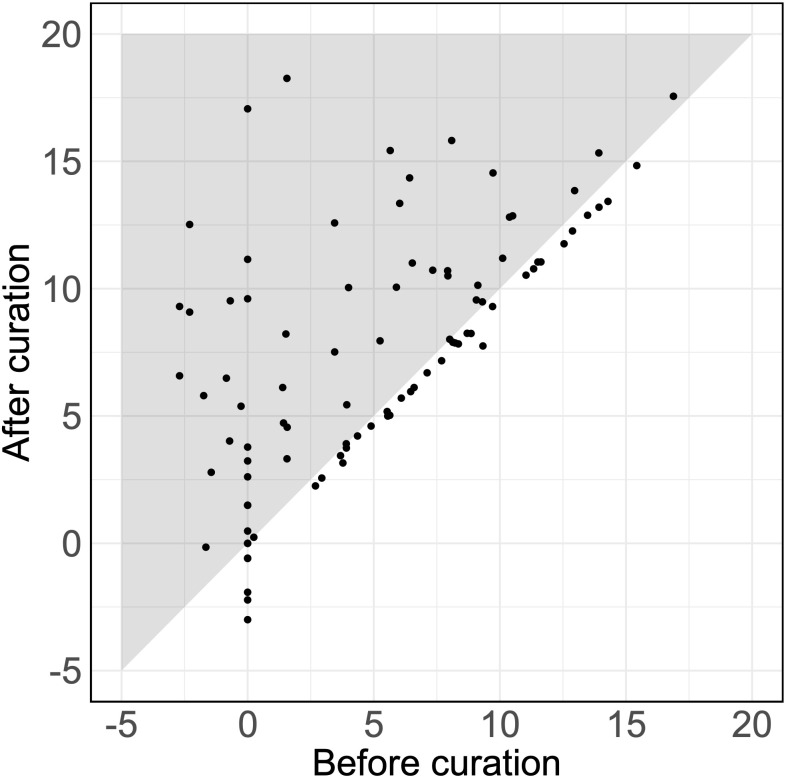
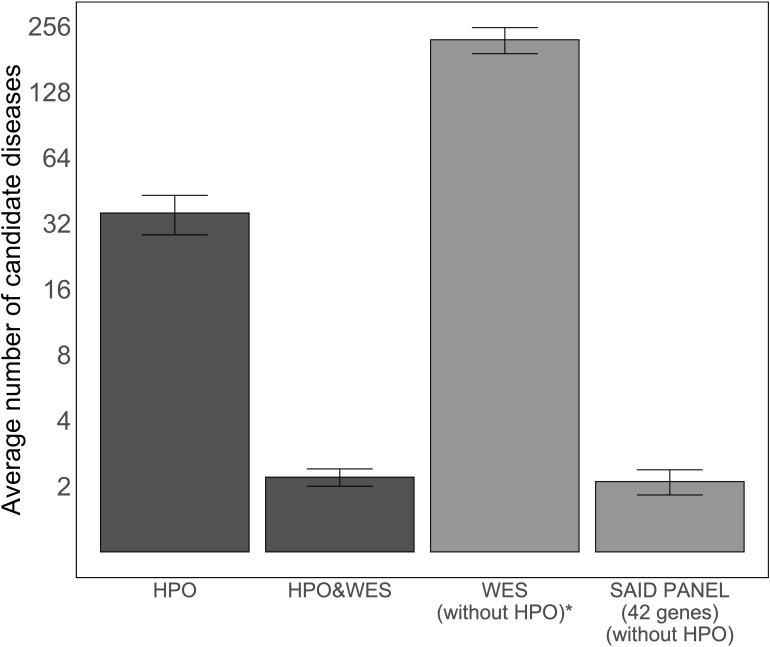
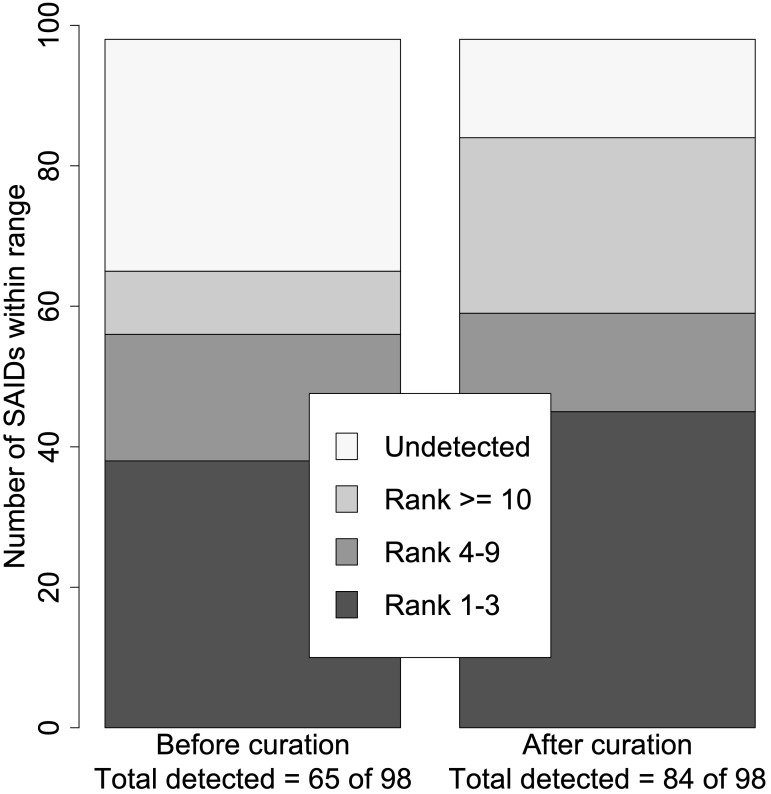
Our results show that the percentage of correct diagnoses increased from 66% to 86% and that the number of diagnoses with the highest ranking increased from 38 to 45. In a further pilot study, curation also improved HPO-based whole-exome sequencing (WES) analysis, diagnosing 10/12 patients before and 12/12 after curation. In addition, the average number of candidate diseases that needed to be interpreted decreased from 35 to 2.
This study demonstrates that curation of HPO terms can increase identification of the correct diagnosis, emphasizing the high potential of HPO-based genome diagnostics for SAIDs.
准确和标准化的表型描述对于诊断罕见疾病和发现新疾病至关重要,人类表型本体(HPO)系统就是为了提供丰富的分层表型描述而开发的。然而,尽管先天性免疫缺陷的 HPO 术语已经得到了改进和整理,但尚未研究这种整理是否能改善系统性自身炎症性疾病(SAID)患者的诊断。在这里,我们旨在研究改进的 SAID 的 HPO 注释是否增强了 SAID 的识别,并展示使用经过整理的 SAID 的 HPO 术语进行表型驱动的基因组诊断的潜力。
我们收集了来自 8 个不同的欧洲 SAID 专业中心的 98 位经基因证实的 SAID 患者的 HPO 术语,并使用 LIRICAL(临床异常的似然比解释)计算算法来估计 HPO 整理对每个患者正确 SAID 优先级的影响。
我们的结果表明,正确诊断的百分比从 66%增加到 86%,并且具有最高排名的诊断数量从 38 增加到 45。在进一步的试点研究中,整理还改进了基于 HPO 的全外显子组测序(WES)分析,在整理前诊断出 10/12 例患者,整理后诊断出 12/12 例患者。此外,需要解释的候选疾病的平均数量从 35 减少到 2。
这项研究表明,HPO 术语的整理可以增加正确诊断的识别,强调了基于 HPO 的基因组诊断在 SAID 中的巨大潜力。