Camões Correia Pedro, Leite Ana, Marques Pedro Alves, Lugarinho Teresa
Anesthesiology, Centro Hospitalar Universitário de Coimbra, Coimbra, PRT.
Cureus. 2023 Sep 2;15(9):e44561. doi: 10.7759/cureus.44561. eCollection 2023 Sep.
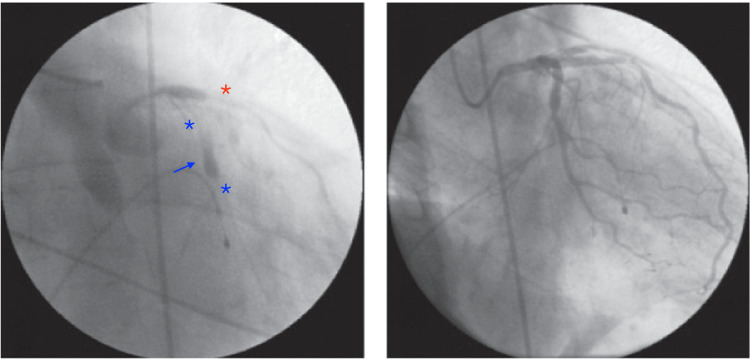
Prinzmetal's angina typically features spasms of the coronary arteries due to the hyperreactivity of the vascular smooth muscle cells of the vessels to a nonspecific stimulus. Reports of coronary spasm during general anesthesia are rare, but in such cases, diagnosis is suggested by a framework of angina at rest and changes in the electrocardiogram (ECG) or coronary reactivity tests with ergonovine or acetylcholine. The present study describes a case of coronary spasm induced by general anesthesia associated with several cardiovascular risk factors and the usage of vasoactive drugs that was documented by angiography without using stimulating drugs and treated with intracoronary nitroglycerin. The patient was a 58-year-old male who was designated for carotid endarterectomy due to the stenosis (70%) of the right internal carotid artery by an atheromatous plaque after visiting the emergency department with a sensorimotor deficit in the left upper limb and bifrontal headaches with sudden onset. During the surgical intervention, after the administration of 10 mg of intravenous ephedrine, cardiorespiratory arrest occurred, with alternation between defibrillable and non-defibrillable heart paces. After the recovery of spontaneous circulation after 50 minutes of resuscitation maneuvers, the patient was transported to the hemodynamics laboratory, where there were recurrent episodes of ventricular fibrillation during the angioplasty of the anterior descending artery. After direct stent implantation, pre- and post-stent spasms were verified and reversed after the administration of intracardiac nitroglycerin. The spasm was a possible complication of anesthesia and responded to treatment with nitrates and calcium channel blockers. We would like to emphasize the importance of cardiac monitoring during surgery and anesthesia.
变异型心绞痛通常表现为冠状动脉痉挛,这是由于血管平滑肌细胞对非特异性刺激反应过度所致。全身麻醉期间发生冠状动脉痉挛的报道很少,但在这种情况下,静息性心绞痛以及心电图(ECG)变化或使用麦角新碱或乙酰胆碱进行的冠状动脉反应性测试有助于诊断。本研究描述了一例由全身麻醉诱发的冠状动脉痉挛病例,该病例伴有多种心血管危险因素且使用了血管活性药物,通过血管造影记录下来,未使用刺激药物,并采用冠状动脉内硝酸甘油进行治疗。患者为一名58岁男性,因右颈内动脉粥样斑块狭窄(70%),在因左上肢感觉运动障碍和突发双额头痛就诊急诊科后,被安排进行颈动脉内膜切除术。在手术干预过程中,静脉注射10mg麻黄碱后,发生心肺骤停,心脏节律在可除颤和不可除颤之间交替。经过50分钟的复苏操作后自主循环恢复,患者被转运至血流动力学实验室,在前降支血管成形术期间出现反复室颤。直接植入支架后,证实存在支架置入前后的痉挛,并在给予心内硝酸甘油后缓解。痉挛可能是麻醉的并发症,对硝酸盐和钙通道阻滞剂治疗有反应。我们想强调手术和麻醉期间心脏监测的重要性。