Shin Taehwan, Song Janet H T, Kosicki Michael, Kenny Connor, Beck Samantha G, Kelley Lily, Qian Xuyu, Bonacina Julieta, Papandile Frances, Antony Irene, Gonzalez Dilenny, Scotellaro Julia, Bushinsky Evan M, Andersen Rebecca E, Maury Eduardo, Pennacchio Len A, Doan Ryan N, Walsh Christopher A
Division of Genetics and Genomics, Boston Children's Hospital; Departments of Pediatrics and Neurology, Harvard Medical School; Allen Discovery Center for Human Brain Evolution; Howard Hughes Medical Institute, Boston Children's Hospital, Boston, MA, 02115, USA.
Environmental Genomics & Systems Biology Division, Lawrence Berkeley National Laboratory, Berkeley, CA, USA.
medRxiv. 2023 Sep 22:2023.09.19.23295780. doi: 10.1101/2023.09.19.23295780.
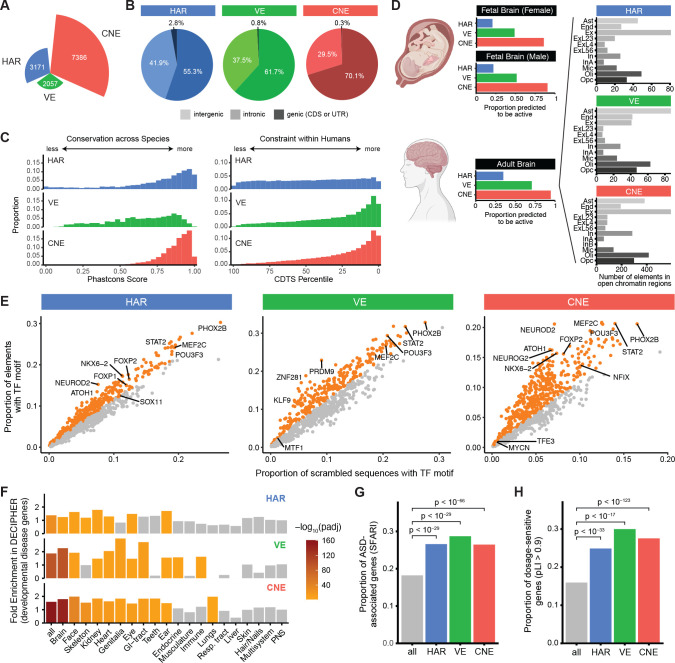
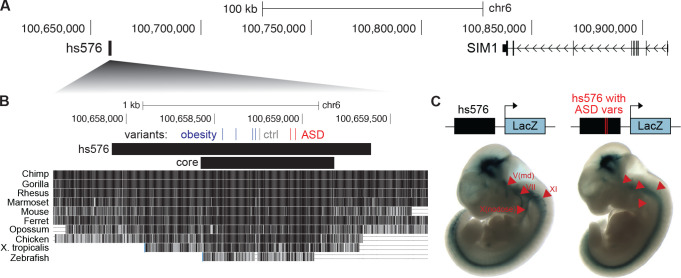
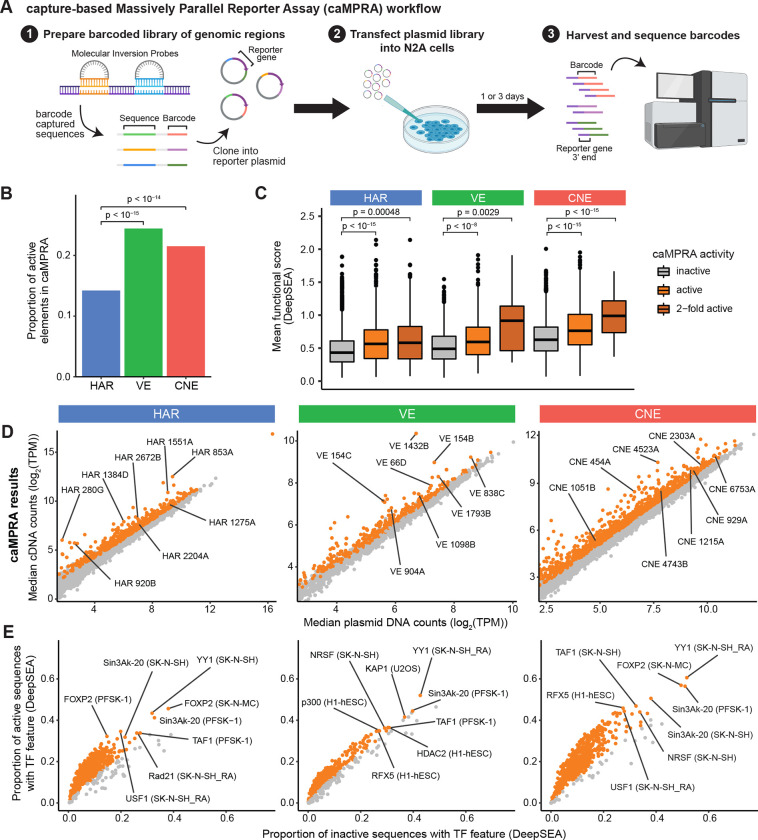
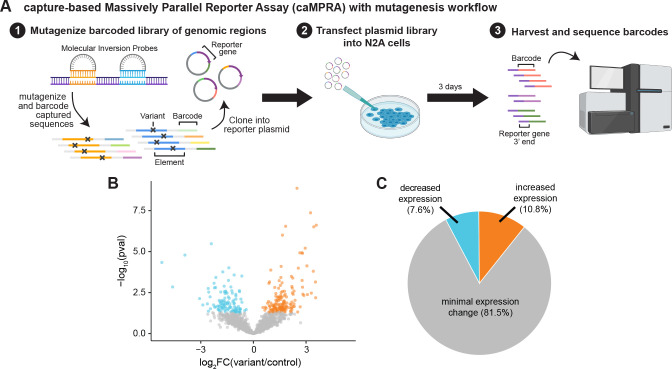
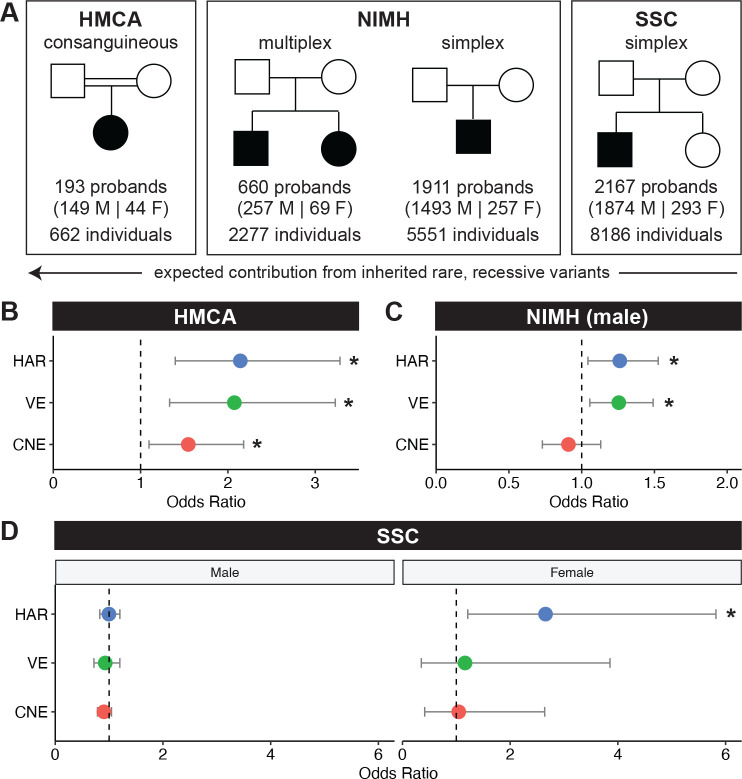
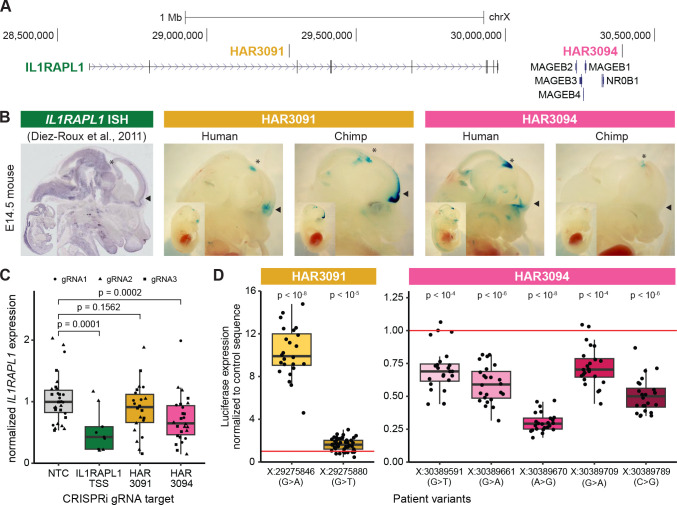
Little is known about the role of noncoding regions in the etiology of autism spectrum disorder (ASD). We examined three classes of noncoding regions: Human Accelerated Regions (HARs), which show signatures of positive selection in humans; experimentally validated neural Vista Enhancers (VEs); and conserved regions predicted to act as neural enhancers (CNEs). Targeted and whole genome analysis of >16,600 samples and >4900 ASD probands revealed that likely recessive, rare, inherited variants in HARs, VEs, and CNEs substantially contribute to ASD risk in probands whose parents share ancestry, which enriches for recessive contributions, but modestly, if at all, in simplex family structures. We identified multiple patient variants in HARs near and in a VE near and showed that they change enhancer activity. Our results implicate both human-evolved and evolutionarily conserved noncoding regions in ASD risk and suggest potential mechanisms of how changes in regulatory regions can modulate social behavior.
关于非编码区域在自闭症谱系障碍(ASD)病因学中的作用,目前所知甚少。我们研究了三类非编码区域:人类加速区域(HARs),其在人类中表现出正选择的特征;经实验验证的神经Vista增强子(VEs);以及预测可作为神经增强子的保守区域(CNEs)。对超过16,600个样本和超过4900名ASD先证者进行的靶向和全基因组分析表明,在父母有共同祖先的先证者中,HARs、VEs和CNEs中可能隐性、罕见、遗传的变异对ASD风险有显著贡献,这丰富了隐性贡献,但在单纯家庭结构中,这种贡献即使有也很微小。我们在 附近的HARs和 附近的一个VE中鉴定出多个患者变异,并表明它们会改变增强子活性。我们的结果表明,人类进化和进化保守的非编码区域都与ASD风险有关,并提示了调控区域的变化如何调节社会行为的潜在机制。