Department of Biomedical Engineering, Duke University, Durham, NC, USA.
Center for Genomic Medicine, Massachusetts General Hospital, Boston, MA, USA.
Nat Commun. 2023 Oct 4;14(1):6175. doi: 10.1038/s41467-023-41829-y.
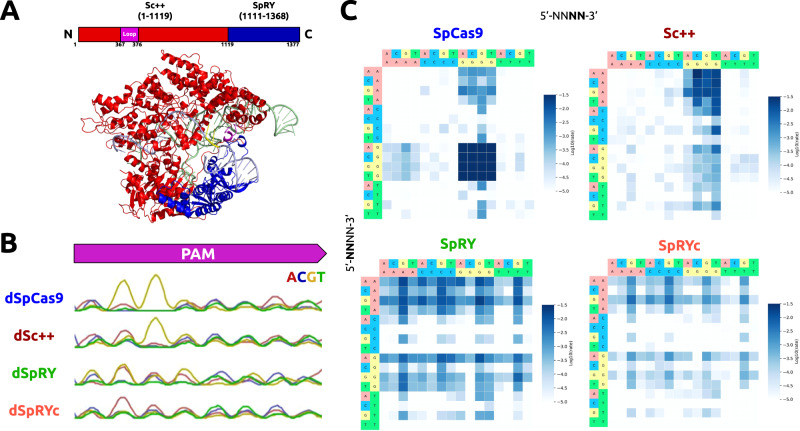
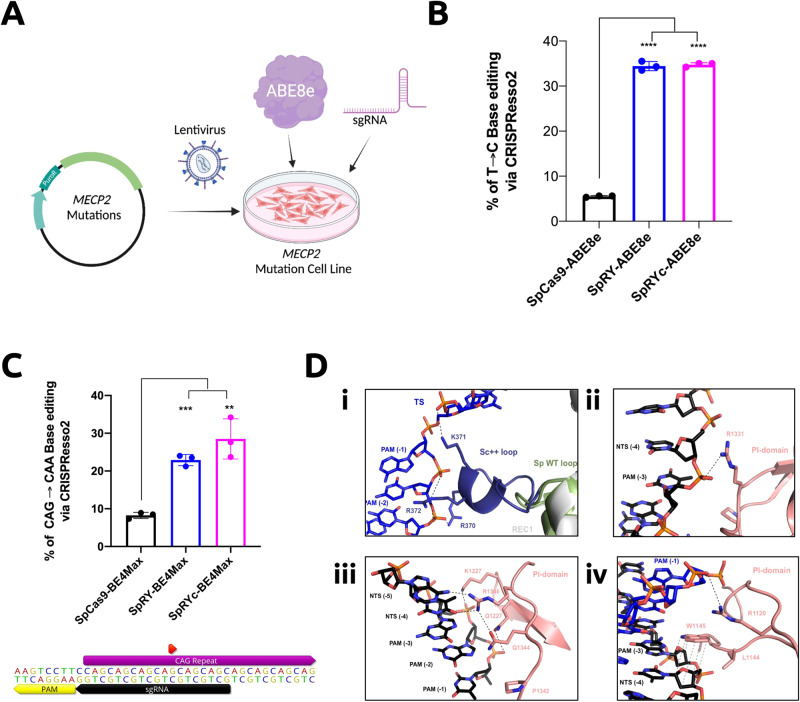
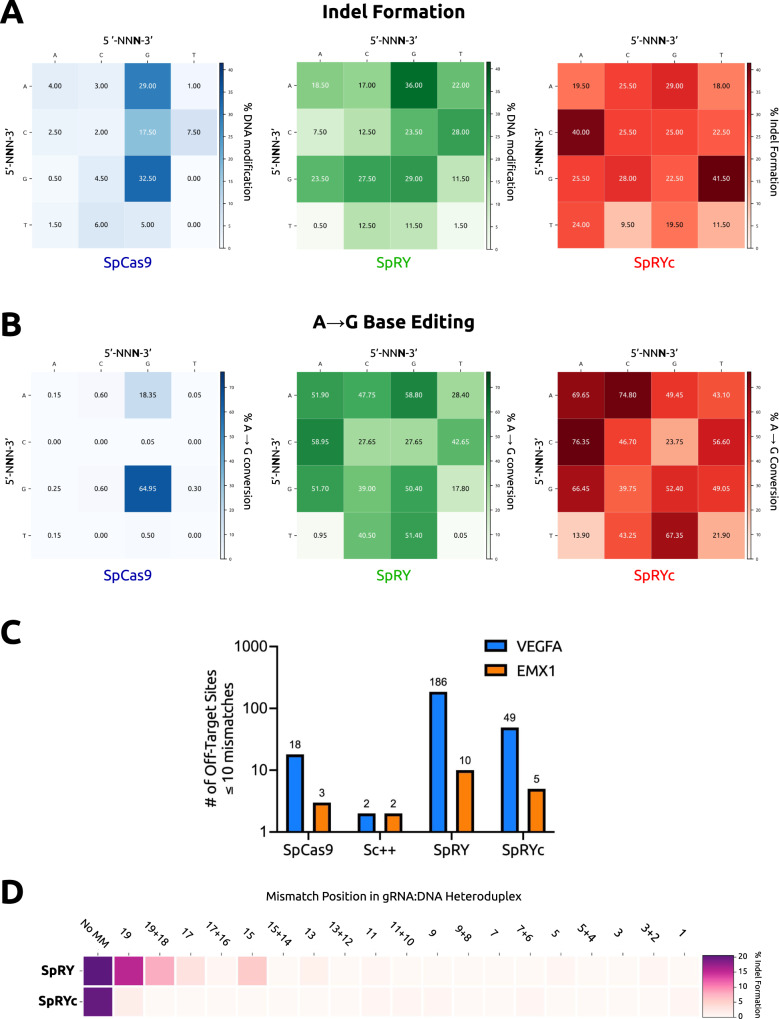
CRISPR enzymes require a defined protospacer adjacent motif (PAM) flanking a guide RNA-programmed target site, limiting their sequence accessibility for robust genome editing applications. In this study, we recombine the PAM-interacting domain of SpRY, a broad-targeting Cas9 possessing an NRN > NYN (R = A or G, Y = C or T) PAM preference, with the N-terminus of Sc + +, a Cas9 with simultaneously broad, efficient, and accurate NNG editing capabilities, to generate a chimeric enzyme with highly flexible PAM preference: SpRYc. We demonstrate that SpRYc leverages properties of both enzymes to specifically edit diverse PAMs and disease-related loci for potential therapeutic applications. In total, the approaches to generate SpRYc, coupled with its robust flexibility, highlight the power of integrative protein design for Cas9 engineering and motivate downstream editing applications that require precise genomic positioning.
CRISPR 酶需要一个定义明确的邻近基序 (PAM) 侧翼的指导 RNA 编程的靶位点,这限制了它们在强大的基因组编辑应用中的序列可及性。在这项研究中,我们重组了 SpRY 的 PAM 相互作用域,SpRY 是一种具有广泛靶向的 Cas9,具有 NRN>NYN(R=A 或 G,Y=C 或 T)PAM 偏好,与 Sc++的 N 端相结合,Sc++是一种同时具有广泛、高效和准确的 NNG 编辑能力的 Cas9,生成一种具有高度灵活 PAM 偏好的嵌合酶:SpRYc。我们证明 SpRYc 利用两种酶的特性来特异性编辑不同的 PAMs 和与疾病相关的基因座,用于潜在的治疗应用。总之,生成 SpRYc 的方法,加上其强大的灵活性,突出了 Cas9 工程中整合蛋白设计的力量,并为需要精确基因组定位的下游编辑应用提供了动力。