Institute of Clinical Pharmacy and Pharmaceutical Sciences, College of Medicine, National Cheng Kung University, 1 University Road, Tainan, 701, Taiwan.
Division of Nephrology, Department of Internal Medicine, National Cheng Kung University Hospital, College of Medicine, National Cheng Kung University, Tainan, Taiwan.
Cardiovasc Diabetol. 2023 Oct 4;22(1):272. doi: 10.1186/s12933-023-01991-5.
Effectiveness of glucagon-like peptide-1 receptor agonists (GLP-1RAs) versus long-acting insulins (LAIs) on preventing progressive chronic kidney outcomes is uncertain for type 2 diabetes (T2D) patients requiring intensive glycemic control. This study aimed to evaluate comparative effectiveness of GLP-1RA versus LAI therapies on progressive chronic kidney outcomes among patients having poor glycemic control and requiring these injectable glucose-lowering agents (GLAs).
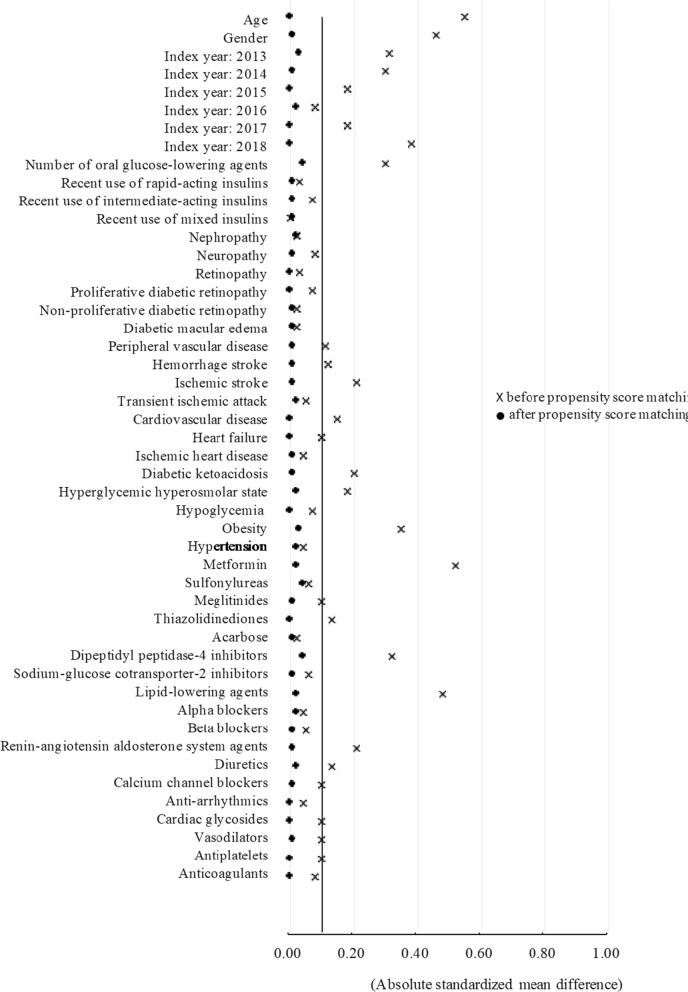
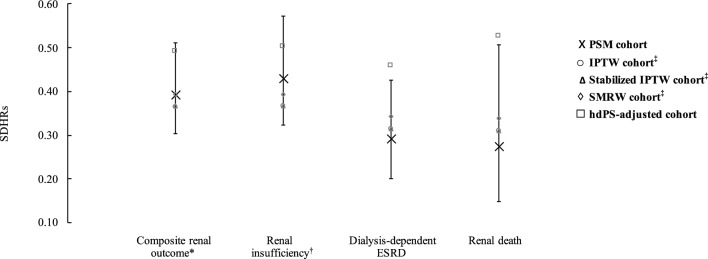
7279 propensity-score-matched pairs of newly stable GLP-1RA and LAI users in 2013-2018 were identified from Taiwan's National Health Insurance Research Database and followed until death or 12/31/2019 (intention-to-treat). Subdistributional hazard model was utilized to assess the comparative effectiveness on a composite renal outcome (i.e., renal insufficiency [eGFR < 15 mL/min/1.73 m], dialysis-dependent end-stage renal disease [ESRD], or renal death) and its individual components. Sensitivity analyses with the as-treated scenario, PS weighting, high-dimensional PS techniques, using cardiovascular diseases (CVDs) as positive control outcomes, and interaction testing were performed.
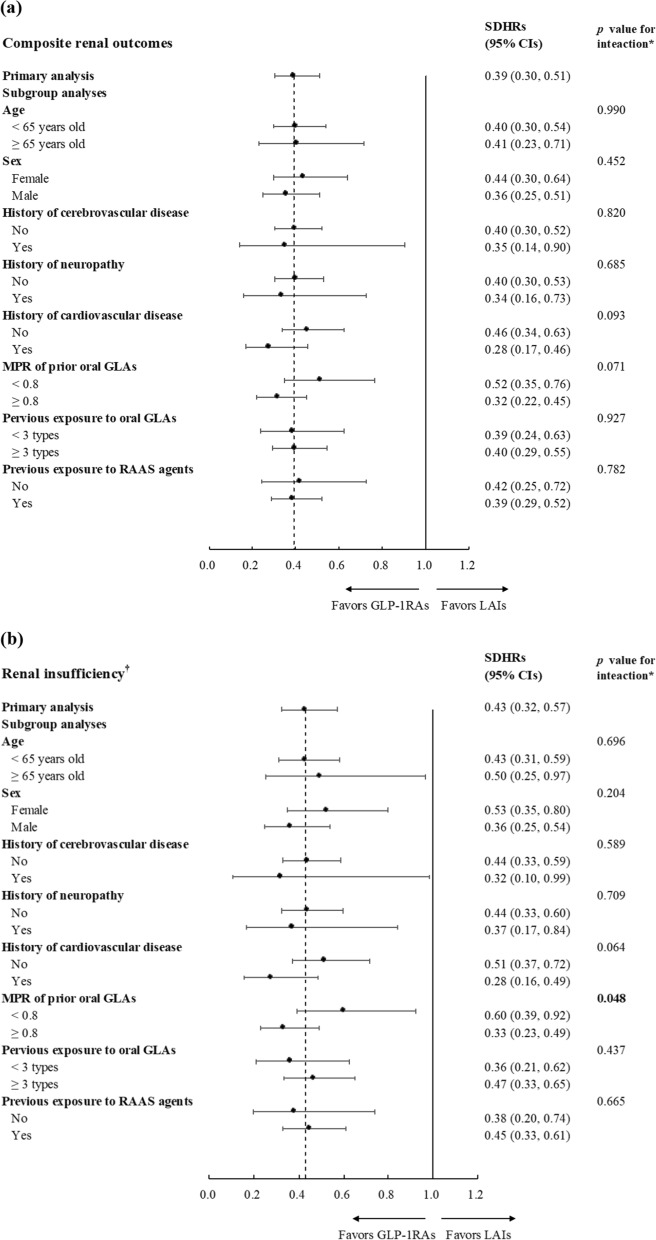
In primary analyses, subdistribution hazard ratios (95% CIs) for initiating GLP-1RAs versus LAIs for the composite renal outcome, renal insufficiency, dialysis-dependent ESRD, and renal death were 0.39 (0.30-0.51), 0.43 (0.32-0.57), 0.29 (0.20-0.43), and 0.28 (0.15-0.51), respectively. Sensitivity analysis results were consistent with the primary findings. CVD history and the medication possession ratio of prior oral GLAs possessed modification effects on GLP-1RA-associated kidney outcomes.
Using GLP-1RAs versus LAIs was associated with kidney benefits in T2D patients requiring intensive glycemic control and potentially at high risk of kidney progression. GLP-1RAs should be prioritized to patients with CVDs or adherence to prior oral GLAs to maximize kidney benefits.
对于需要强化血糖控制的 2 型糖尿病(T2D)患者,胰高血糖素样肽-1 受体激动剂(GLP-1RAs)与长效胰岛素(LAIs)在预防慢性肾脏病进展方面的疗效尚不确定。本研究旨在评估在血糖控制不佳且需要这些注射用降血糖药物(GLAs)的患者中,GLP-1RA 与 LAI 治疗在慢性肾脏病进展方面的比较效果。
2013-2018 年,从台湾全民健康保险研究数据库中确定了 7279 对新稳定的 GLP-1RA 和 LAI 使用者,并进行了随访,直至死亡或 2019 年 12 月 31 日(意向治疗)。利用亚分布风险模型评估了复合肾脏结局(即肾功能不全[eGFR<15mL/min/1.73m]、透析依赖的终末期肾病[ESRD]或肾脏死亡)及其各个组成部分的比较效果。进行了基于实际治疗情况、PS 加权、高维 PS 技术、将心血管疾病(CVDs)作为阳性对照结局以及交互检验的敏感性分析。
在主要分析中,对于复合肾脏结局、肾功能不全、透析依赖的 ESRD 和肾脏死亡,起始 GLP-1RA 与 LAI 的亚分布风险比(95%CI)分别为 0.39(0.30-0.51)、0.43(0.32-0.57)、0.29(0.20-0.43)和 0.28(0.15-0.51)。敏感性分析结果与主要发现一致。CVD 病史和既往口服 GLAs 的药物维持率对 GLP-1RA 相关肾脏结局具有修饰作用。
对于需要强化血糖控制且可能有肾脏进展高风险的 T2D 患者,使用 GLP-1RA 与 LAI 相关联可带来肾脏获益。应优先考虑患有 CVD 或对既往口服 GLAs 依从性高的患者使用 GLP-1RA,以最大程度地发挥肾脏获益。