Department of Endocrinology & Diabetes, St Vincent's Hospital Melbourne, Fitzroy, Victoria, Australia.
Department of Medicine St Vincent's Hospital Melbourne, University of Melbourne, Fitzroy, Victoria, Australia.
J Diabetes. 2024 Oct;16(10):e13609. doi: 10.1111/1753-0407.13609.
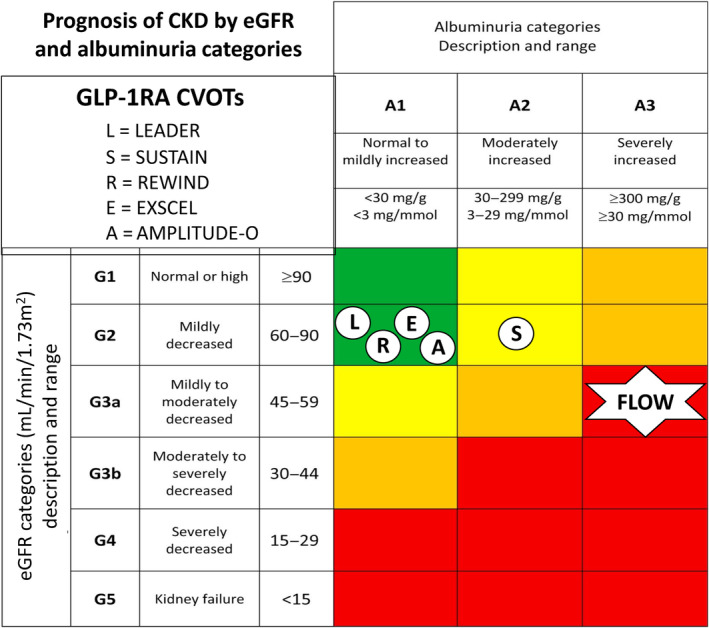
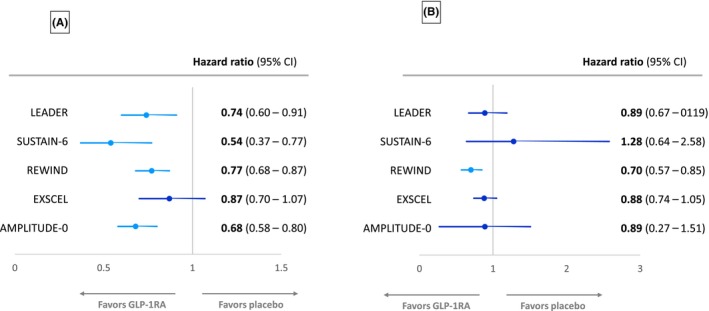
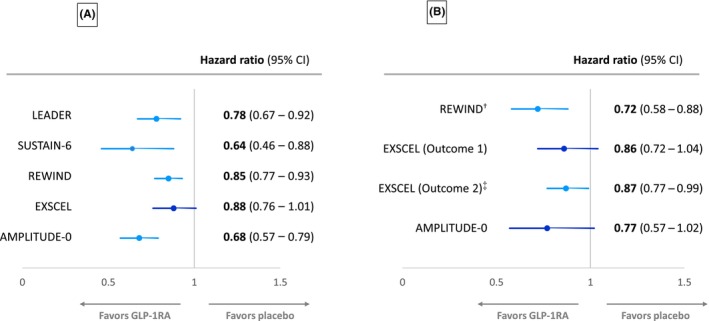
Glucagon-like peptide-1 receptor agonists (GLP-1RAs) have gained increasing attention for their potential benefits in people with type 2 diabetes mellitus (T2DM) with chronic kidney disease (CKD). Most supportive evidence of a kidney-protective effect of the GLP-1RA class of medications has been derived from kidney-related outcomes reported from cardiovascular outcome trials (CVOTs). GLP-1RAs have been shown to reduce albuminuria, mitigate cardiovascular risk, and possibly attenuate estimated glomerular filtration rate (eGFR) decline. The kidney-protective effects of GLP-1RAs are thought to be attributed to their anti-inflammatory, antioxidant, and vasodilatory properties. Despite these promising findings, the use of GLP-RAs has yet to be definitively shown to slow progression to chronic kidney failure in people with T2DM. The Research Study to See How Semaglutide Works Compared to Placebo in People With Type 2 Diabetes and Chronic Kidney Disease (FLOW trial) is the first major trial assessing the potential of a GLP-1RA to slow progression of kidney disease in people with established CKD to clinically important kidney end points. On March 5, 2024, the top line result from FLOW was announced with semaglutide 1.0 mg being reported to reduce the primary end point of the trial by a significant 24% compared with placebo. Here, we summarize the kidney outcomes reported from CVOTs for the GLP-1RA class of medication and briefly describe kidney outcomes from other major GLP-1RAs trials. We also discuss a potential role of the dual GLP-1/glucose-dependent insulinotropic polypeptide (GIP) receptor agonist, tirzepatide, as a kidney-protective agent.
胰高血糖素样肽-1 受体激动剂(GLP-1RAs)因其在伴有慢性肾脏病(CKD)的 2 型糖尿病(T2DM)患者中的潜在益处而受到越来越多的关注。GLP-1RA 类药物具有肾脏保护作用的大部分支持证据来自心血管结局试验(CVOT)报告的肾脏相关结局。GLP-1RAs 已被证明可减少蛋白尿、降低心血管风险,并可能减缓估计肾小球滤过率(eGFR)下降。GLP-1RAs 的肾脏保护作用被认为归因于其抗炎、抗氧化和血管舒张特性。尽管有这些有希望的发现,但 GLP-RAs 的使用尚未被明确证明可延缓 T2DM 患者慢性肾衰竭的进展。研究赛麦格汀与安慰剂在 2 型糖尿病和慢性肾脏病患者中的疗效比较的研究(FLOW 试验)是第一个评估 GLP-1RA 潜力的主要试验,旨在评估 GLP-1RA 减缓已确诊 CKD 患者的肾脏疾病进展以达到临床重要肾脏终点的潜力。2024 年 3 月 5 日,公布了 FLOW 的顶线结果,与安慰剂相比,赛麦格汀 1.0mg 显著降低了试验的主要终点 24%。在这里,我们总结了 GLP-1RA 类药物的 CVOT 报告的肾脏结局,并简要描述了其他主要 GLP-1RA 试验的肾脏结局。我们还讨论了双重 GLP-1/葡萄糖依赖性胰岛素释放肽(GIP)受体激动剂替西帕肽作为一种肾脏保护剂的潜在作用。