Zheng Guanghui, Shi Yijun, Sun Jialu, Wang Siqi, Li Xiang, Lv Hong, Zhang Guojun
Clinical Diagnosis Laboratory of Beijing Tiantan Hospital, Capital Medical University, NO. 119 Nansihuan West Road, Fengtai District, Beijing, 100076, China.
NMPA Key Laboratory for Quality Control of In Vitro Diagnostics, Beijing, 100076, China.
Eur J Med Res. 2023 Oct 4;28(1):396. doi: 10.1186/s40001-023-01399-7.
To evaluate the effect of antibiotic prophylaxis(AP) in the prognosis of Post-neurosurgical meningitis(PNM) patients.
A cohort analysis was performed using the clinical database in Beijing Tiantan Hospital and Capital Medical University. Data were collected on patients with the diagnosis of PNM (n = 3931) during 2012.01 to 2022.04. The microbial distribution, types of AP, and 42 and 90 days survival analysis of AP patients were evaluated using probable statistical methods. Independent risk factors for mortality were established by constructing a logistic regression analysis.
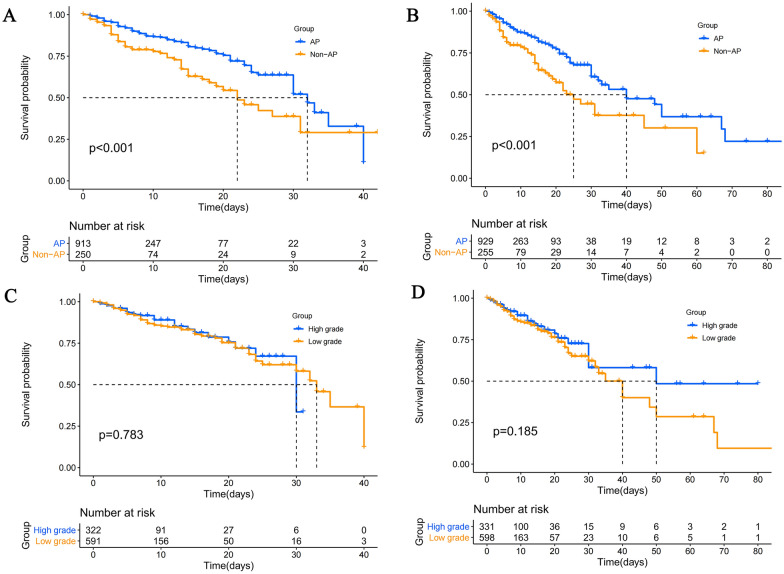
A total of 1,190 patients were included in this study, Klebsiella pneumoniae, Acinetobacter baumannii, and Staphylococcus aureus occupied the highest proportion. Of them, 929 cases received AP, cefuroxime and ceftriaxone are the most frequent used antibiotics. In addition, We found that PNM patients without AP significantly increased the 42 days and 90 days all-cause mortality rates. The use of different levels of AP did not improve patient outcomes, and ICU admission and assisted mechanical ventilation (AMV) were identified as independent mortality risk factors for PNM patient received AP.
AP plays an important role in the prognosis of PNM patients and has a significant function in improving prognosis. The prevention of PNM with antibiotics prior to neurosurgery should be emphasized in clinical practice, and appropriate selection of antibiotics is necessary to prevent the occurrence of infection and inhibit the emergence of antibiotic-resistant bacteria.
评估抗生素预防(AP)对神经外科术后脑膜炎(PNM)患者预后的影响。
利用首都医科大学附属北京天坛医院的临床数据库进行队列分析。收集2012年1月至2022年4月期间诊断为PNM的患者(n = 3931)的数据。采用适当的统计学方法评估AP患者的微生物分布、AP类型以及42天和90天生存分析。通过构建逻辑回归分析确定死亡的独立危险因素。
本研究共纳入1190例患者,肺炎克雷伯菌、鲍曼不动杆菌和金黄色葡萄球菌占比最高。其中,929例接受了AP,头孢呋辛和头孢曲松是最常用的抗生素。此外,我们发现未接受AP的PNM患者42天和90天全因死亡率显著增加。使用不同级别的AP并未改善患者预后,入住重症监护病房(ICU)和接受机械通气(AMV)被确定为接受AP的PNM患者的独立死亡危险因素。
AP在PNM患者的预后中起重要作用,对改善预后具有显著作用。临床实践中应强调在神经外科手术前使用抗生素预防PNM,并且有必要适当选择抗生素以预防感染的发生并抑制耐药菌的出现。