Department of Applied Physiology and Kinesiology, University of Florida, Gainesville, FL, 32611, USA.
Division of Vascular Surgery and Endovascular Therapy, University of Florida, Gainesville, FL, 32611, USA.
Sci Rep. 2023 Oct 5;13(1):16811. doi: 10.1038/s41598-023-43664-z.
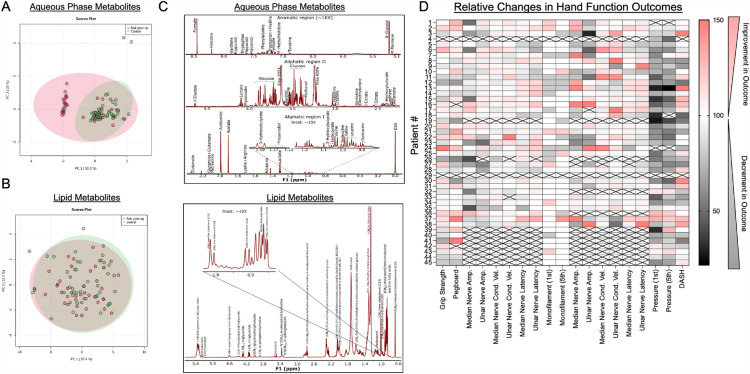
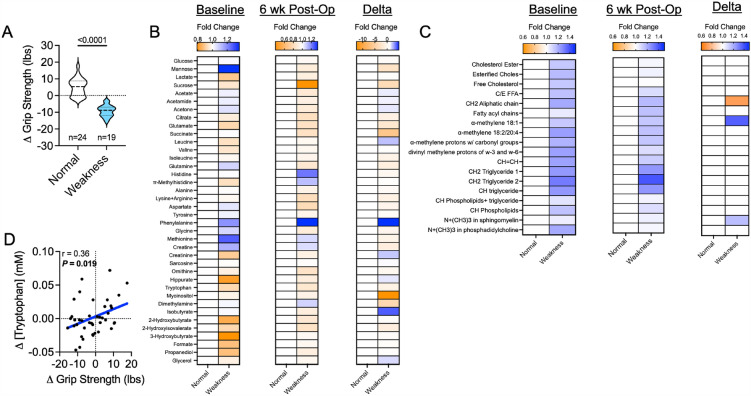
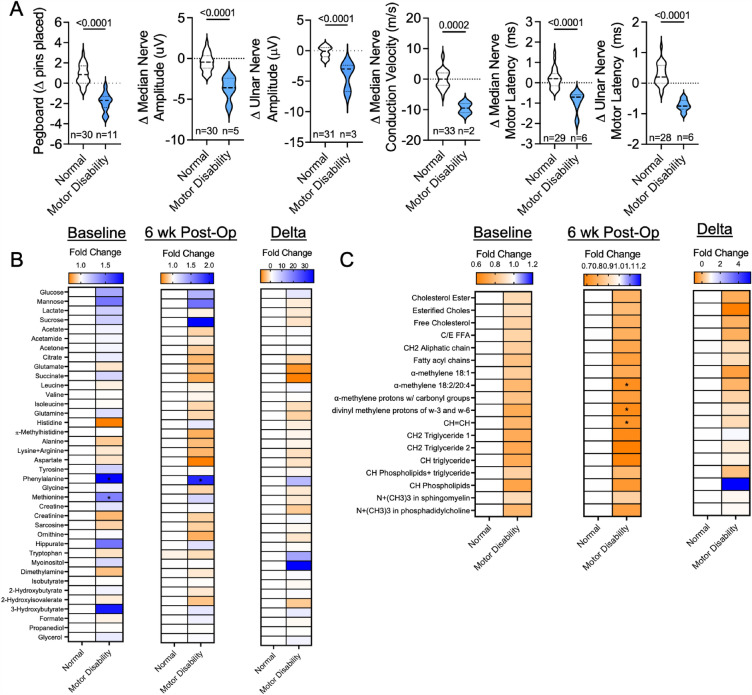
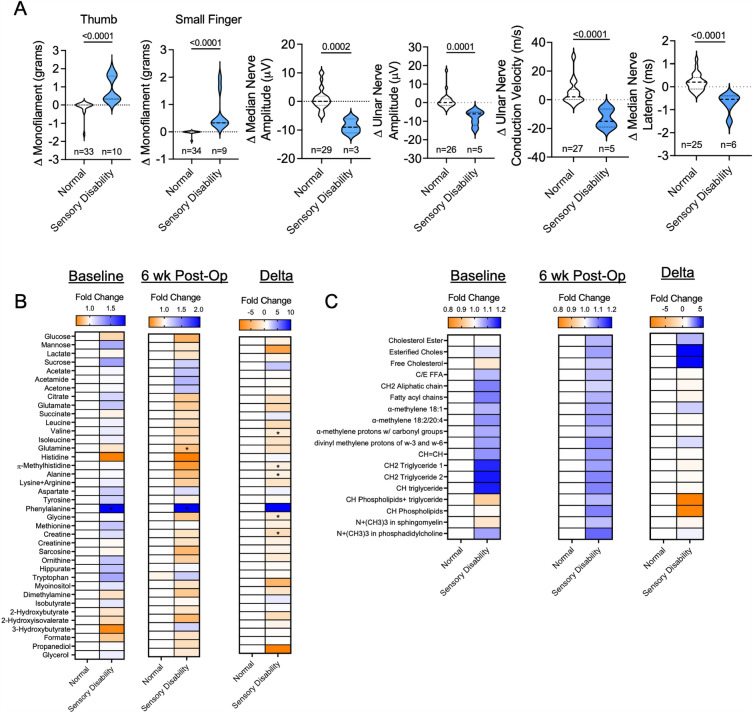
For end-stage kidney disease (ESKD) patients, hemodialysis requires durable vascular access which is often surgically created using an arteriovenous fistula (AVF). However, some ESKD patients that undergo AVF placement develop access-related hand dysfunction (ARHD) through unknown mechanisms. In this study, we sought to determine if changes in the serum metabolome could distinguish ESKD patients that develop ARHD from those that have normal hand function following AVF creation. Forty-five ESKD patients that underwent first-time AVF creation were included in this study. Blood samples were obtained pre-operatively and 6-weeks post-operatively and metabolites were extracted and analyzed using nuclear magnetic resonance spectroscopy. Patients underwent thorough examination of hand function at both timepoints using the following assessments: grip strength manometry, dexterity, sensation, motor and sensory nerve conduction testing, hemodynamics, and the Disabilities of the Arm, Shoulder, and Hand (DASH) questionnaire. Nineteen of the forty-five patients displayed overt weakness using grip strength manometry (P < 0.0001). Unfortunately, the serum metabolome was indistinguishable between patients with and without weakness following AVF surgery. However, a significant correlation was found between the change in tryptophan levels and the change in grip strength suggesting a possible role of tryptophan-derived uremic metabolites in post-AVF hand-associated weakness. Compared to grip strength, changes in dexterity and sensation were smaller than those observed in grip strength, however, post-operative decreases in phenylalanine, glycine, and alanine were unique to patients that developed signs of motor or sensory disability following AVF creation.
对于终末期肾病(ESKD)患者,血液透析需要持久的血管通路,通常通过手术使用动静脉瘘(AVF)来建立。然而,一些接受 AVF 放置的 ESKD 患者通过未知机制发展为与通路相关的手部功能障碍(ARHD)。在这项研究中,我们试图确定血清代谢组是否可以区分在 AVF 建立后发展为 ARHD 的 ESKD 患者与手部功能正常的患者。本研究纳入了 45 名首次接受 AVF 建立的 ESKD 患者。在术前和术后 6 周采集血液样本,使用核磁共振波谱法提取和分析代谢物。在这两个时间点,使用以下评估方法对患者的手部功能进行全面检查:握力压力测定、灵巧性、感觉、运动和感觉神经传导测试、血液动力学和手臂、肩部和手部残疾(DASH)问卷。在 45 名患者中,有 19 名患者使用握力压力测定出现明显的无力(P<0.0001)。不幸的是,AVF 手术后,有无无力的患者之间的血清代谢组没有区别。然而,发现色氨酸水平的变化与握力的变化之间存在显著相关性,表明色氨酸衍生的尿毒症代谢物可能在 AVF 后与手部相关的无力中起作用。与握力相比,灵巧性和感觉的变化小于握力的变化,但术后苯丙氨酸、甘氨酸和丙氨酸的减少仅发生在 AVF 建立后出现运动或感觉障碍的患者中。