Henson Christina E, Abou-Foul Ahmad K, Morton Daniel J, McDowell Lachlan, Baliga Sujith, Bates James, Lee Anna, Bonomo Pierluigi, Szturz Petr, Nankivell Paul, Huang Shao Hui, Lydiatt William M, O'Sullivan Brian, Mehanna Hisham
Department of Radiation Oncology and Stephenson Cancer Center, University of Oklahoma Health Sciences Center, Oklahoma City, OK, United States.
Institute of Head and Neck Studies and Education, School of Cancer Sciences, University of Birmingham, Birmingham, United Kingdom.
Front Oncol. 2023 Sep 20;13:1263347. doi: 10.3389/fonc.2023.1263347. eCollection 2023.
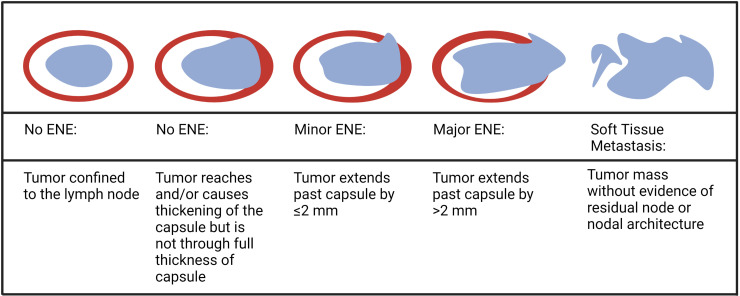
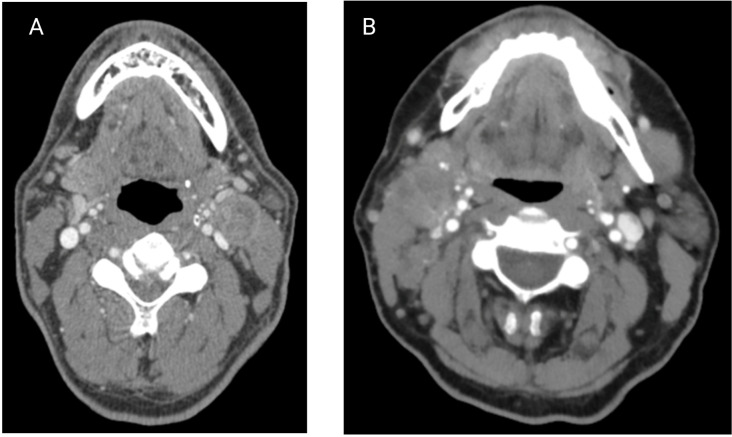
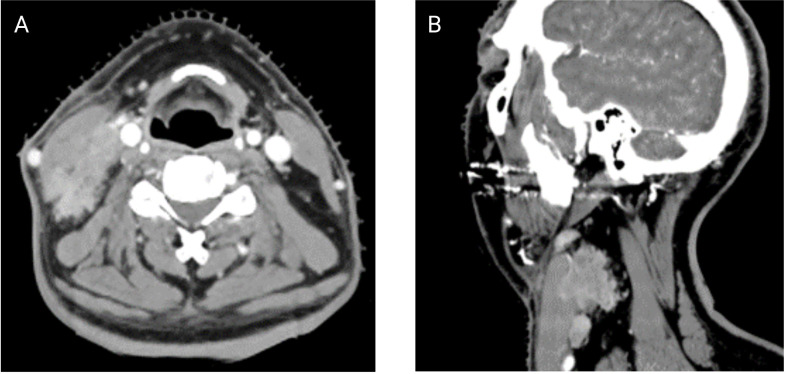
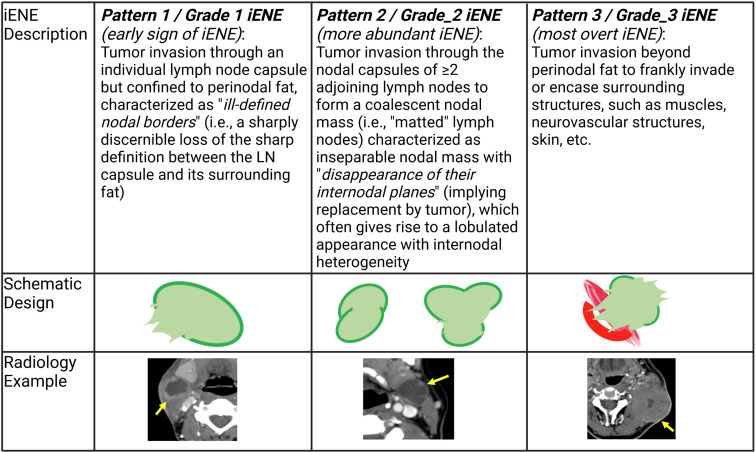
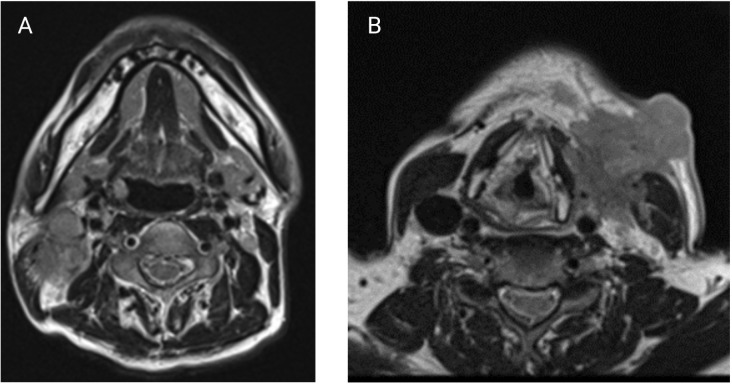
Extranodal extension (ENE) is a pattern of cancer growth from within the lymph node (LN) outward into perinodal tissues, critically defined by disruption and penetration of the tumor through the entire thickness of the LN capsule. The presence of ENE is often associated with an aggressive cancer phenotype in various malignancies including head and neck squamous cell carcinoma (HNSCC). In HNSCC, ENE is associated with increased risk of distant metastasis and lower rates of locoregional control. ENE detected on histopathology (pathologic ENE; pENE) is now incorporated as a risk-stratification factor in human papillomavirus (HPV)-negative HNSCC in the eighth edition of the American Joint Committee on Cancer (AJCC) and the Union for International Cancer Control (UICC) TNM classification. Although ENE was first described almost a century ago, several issues remain unresolved, including lack of consensus on definitions, terminology, and widely accepted assessment criteria and grading systems for both pENE and ENE detected on radiological imaging (imaging-detected ENE; iENE). Moreover, there is conflicting data on the prognostic significance of iENE and pENE, particularly in the context of HPV-associated HNSCC. Herein, we review the existing literature on ENE in HNSCC, highlighting areas of controversy and identifying critical gaps requiring concerted research efforts.
结外侵犯(ENE)是一种癌症生长模式,即癌症从淋巴结(LN)内部向外生长至结周组织,其关键定义为肿瘤贯穿淋巴结包膜全层的破坏和穿透。ENE的存在通常与包括头颈部鳞状细胞癌(HNSCC)在内的多种恶性肿瘤的侵袭性癌症表型相关。在HNSCC中,ENE与远处转移风险增加和局部区域控制率降低相关。组织病理学检测到的ENE(病理ENE;pENE)现已被纳入美国癌症联合委员会(AJCC)第八版和国际癌症控制联盟(UICC)TNM分类中,作为人乳头瘤病毒(HPV)阴性HNSCC的风险分层因素。尽管ENE在近一个世纪前就首次被描述,但仍有几个问题尚未解决,包括对于pENE和影像学检测到的ENE(影像检测ENE;iENE)的定义、术语、广泛接受的评估标准和分级系统缺乏共识。此外,关于iENE和pENE的预后意义存在相互矛盾的数据,尤其是在HPV相关HNSCC的背景下。在此,我们回顾了关于HNSCC中ENE的现有文献,突出了争议领域,并确定了需要共同研究努力的关键差距。