Lin Xuwen, Zong Chenyu, Zhang Zhihan, Fang Weiyi, Xu Ping
Department of Pulmonary and Critical Care Medicine Peking University Shenzhen Hospital Shenzhen Guangdong Province China.
Department of Internal Medicine Shantou University Medical College Shantou Guangdong Province China.
MedComm (2020). 2023 Oct 3;4(5):e387. doi: 10.1002/mco2.387. eCollection 2023 Oct.
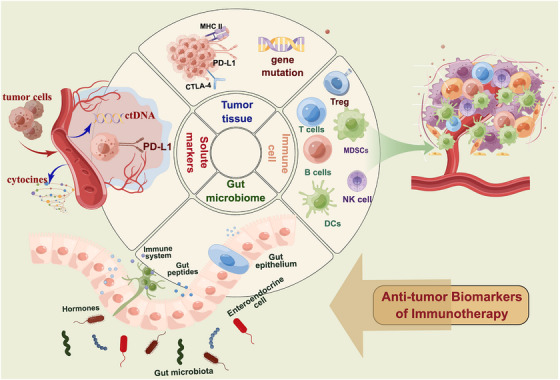
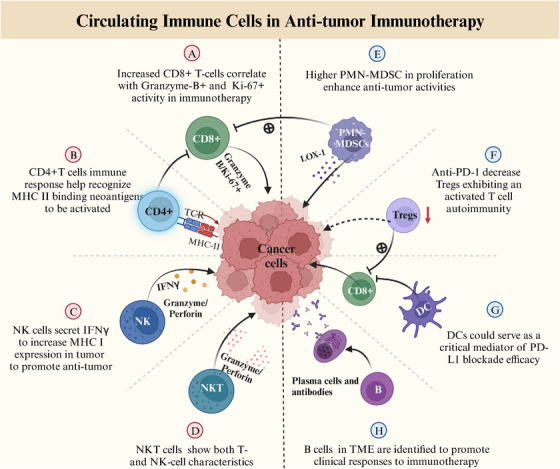
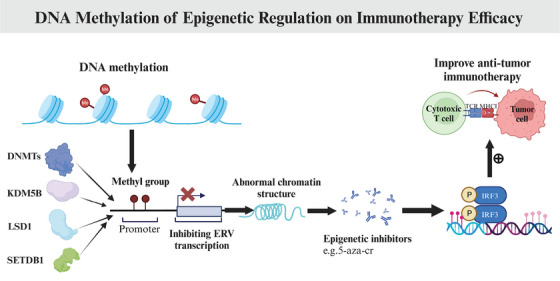
Currently, checkpoint inhibitor-based immunotherapy has emerged as prevailing treatment modality for diverse cancers. However, immunotherapy as a first-line therapy has not consistently yielded durable responses. Moreover, the risk of immune-related adverse events increases with combination regimens. Thus, the development of predictive biomarkers is needed to optimize individuals benefit, minimize risk of toxicities, and guide combination approaches. The greatest focus has been on tumor programmed cell death-ligand 1 (PD-L1), microsatellite instability (MSI), and tumor mutational burden (TMB). However, there remains a subject of debate due to thresholds variability and significant heterogeneity. Major unmet challenges in immunotherapy are the discovery and validation of predictive biomarkers. Here, we show the status of tumor PD-L1, MSI, TMB, and emerging data on novel biomarker strategies with oncogenic signaling and epigenetic regulation. Considering the exploration of peripheral and intestinal immunity has served as noninvasive alternative in predicting immunotherapy, this review also summarizes current data in systemic immunity, encompassing solute PD-L1 and TMB, circulating tumor DNA and infiltrating lymphocytes, routine emerging inflammatory markers and cytokines, as well as gut microbiota. This review provides up-to-date information on the evolving field of currently available biomarkers in predicting immunotherapy. Future exploration of novel biomarkers is warranted.
目前,基于检查点抑制剂的免疫疗法已成为多种癌症的主流治疗方式。然而,免疫疗法作为一线治疗并未始终产生持久的反应。此外,免疫相关不良事件的风险会随着联合治疗方案而增加。因此,需要开发预测性生物标志物,以优化个体获益、将毒性风险降至最低并指导联合治疗方法。最大的关注点一直是肿瘤程序性细胞死亡配体1(PD-L1)、微卫星不稳定性(MSI)和肿瘤突变负荷(TMB)。然而,由于阈值的变异性和显著的异质性,这仍然是一个有争议的话题。免疫疗法的主要未解决挑战是预测性生物标志物的发现和验证。在这里,我们展示了肿瘤PD-L1、MSI、TMB的现状以及关于具有致癌信号和表观遗传调控的新型生物标志物策略的新数据。考虑到对外周和肠道免疫的探索已成为预测免疫疗法的非侵入性替代方法,本综述还总结了全身免疫的当前数据,包括可溶性PD-L1和TMB、循环肿瘤DNA和浸润淋巴细胞、常规出现的炎症标志物和细胞因子,以及肠道微生物群。本综述提供了有关当前可用生物标志物在预测免疫疗法这一不断发展领域的最新信息。有必要对新型生物标志物进行未来探索。