The First School of Clinical Medicine, Lanzhou University, 222 Tianshui South Road, Lanzhou, 730000, China.
Department of General Surgery, The First Hospital of Lanzhou University, Lanzhou, China.
Mol Cancer. 2023 Feb 16;22(1):34. doi: 10.1186/s12943-023-01737-7.
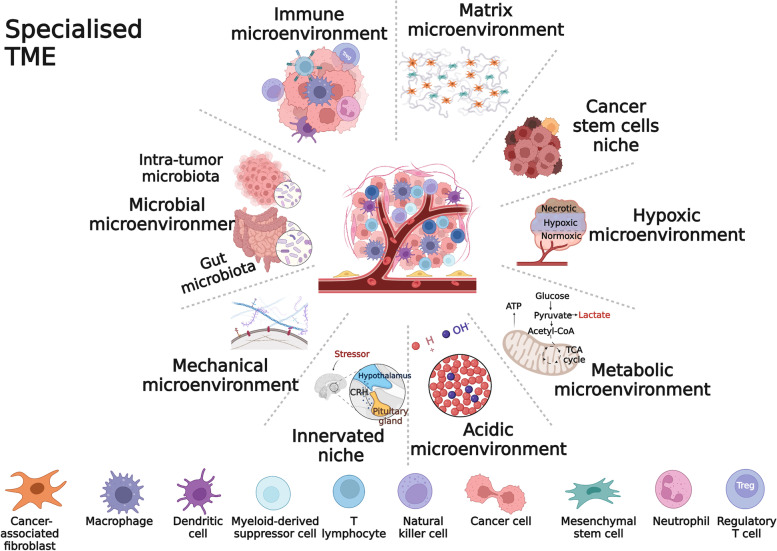
Immune escape is a hallmark of cancer. The dynamic and heterogeneous tumour microenvironment (TME) causes insufficient infiltration and poor efficacy of natural killer (NK) cell-based immunotherapy, which becomes a key factor triggering tumour progression. Understanding the crosstalk between NK cells and the TME provides new insights for optimising NK cell-based immunotherapy. Here, we present new advances in direct or indirect crosstalk between NK cells and 9 specialised TMEs, including immune, metabolic, innervated niche, mechanical, and microbial microenvironments, summarise TME-mediated mechanisms of NK cell function inhibition, and highlight potential targeted therapies for NK-TME crosstalk. Importantly, we discuss novel strategies to overcome the inhibitory TME and provide an attractive outlook for the future.
免疫逃逸是癌症的一个标志。动态且异质性的肿瘤微环境 (TME) 导致自然杀伤 (NK) 细胞为基础的免疫疗法的浸润不足和疗效不佳,这成为触发肿瘤进展的关键因素。了解 NK 细胞与 TME 之间的相互作用为优化 NK 细胞为基础的免疫疗法提供了新的见解。在这里,我们介绍了 NK 细胞与 9 种专门的 TME 之间直接或间接相互作用的新进展,包括免疫、代谢、神经支配的生态位、机械和微生物微环境,总结了 TME 介导的 NK 细胞功能抑制机制,并强调了针对 NK-TME 相互作用的潜在靶向治疗方法。重要的是,我们讨论了克服抑制性 TME 的新策略,并为未来提供了有吸引力的前景。