Institute of Cardiovascular Surgical Diseases, Jiangxi Academy of Clinical Medical Sciences, The First Affiliated Hospital of Nanchang University, Nanchang, Jiangxi 330006, P.R. China.
Department of Cardiovascular Surgery, The Second Affiliated Hospital of Nanchang University, Nanchang, Jiangxi 330006, P.R. China.
Int J Mol Med. 2023 Nov;52(5). doi: 10.3892/ijmm.2023.5312. Epub 2023 Oct 6.
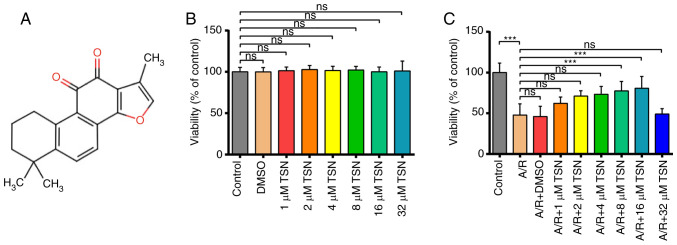
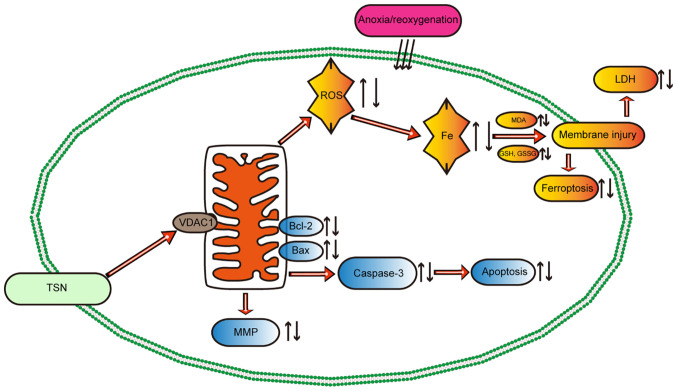
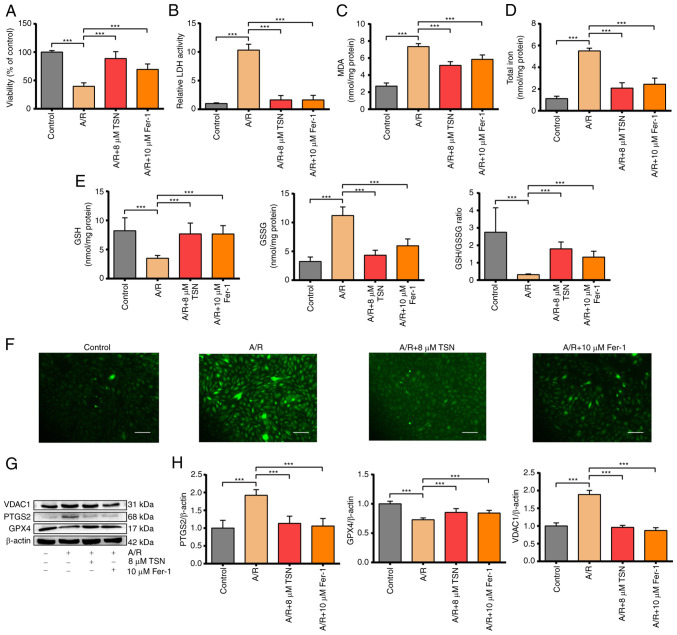
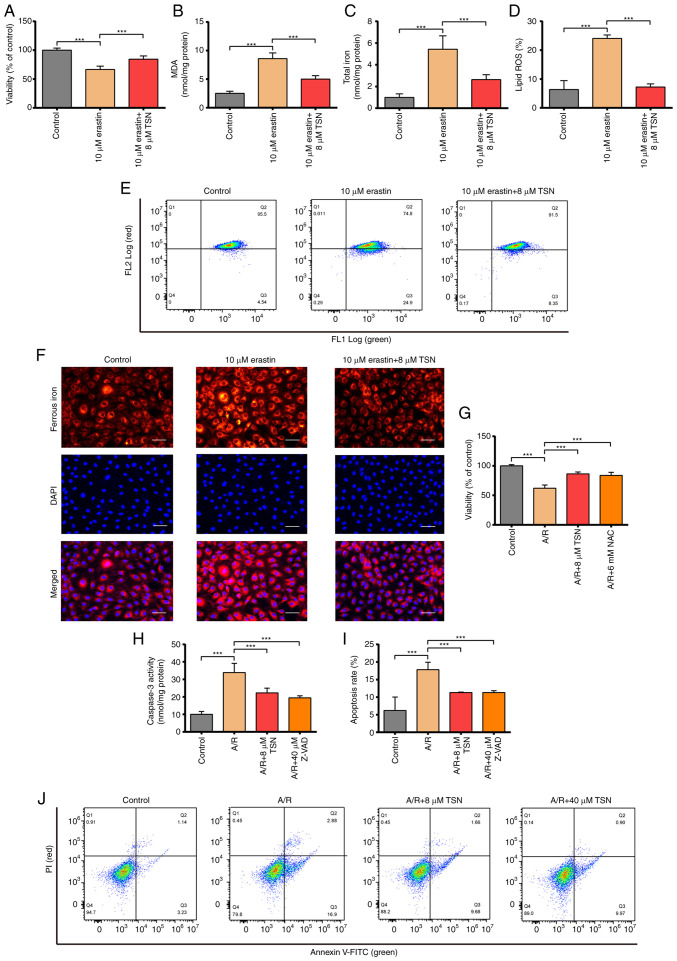
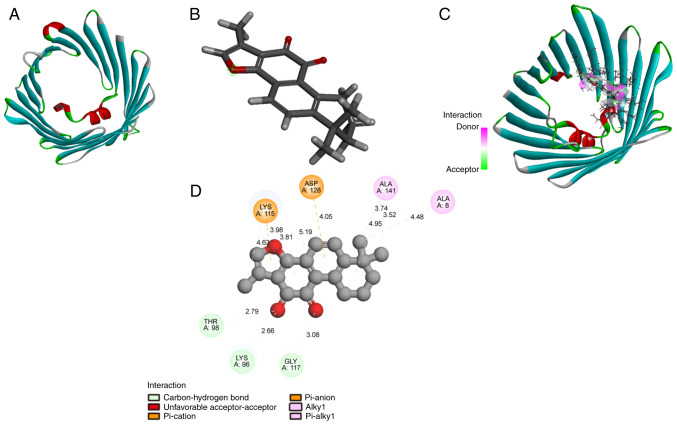
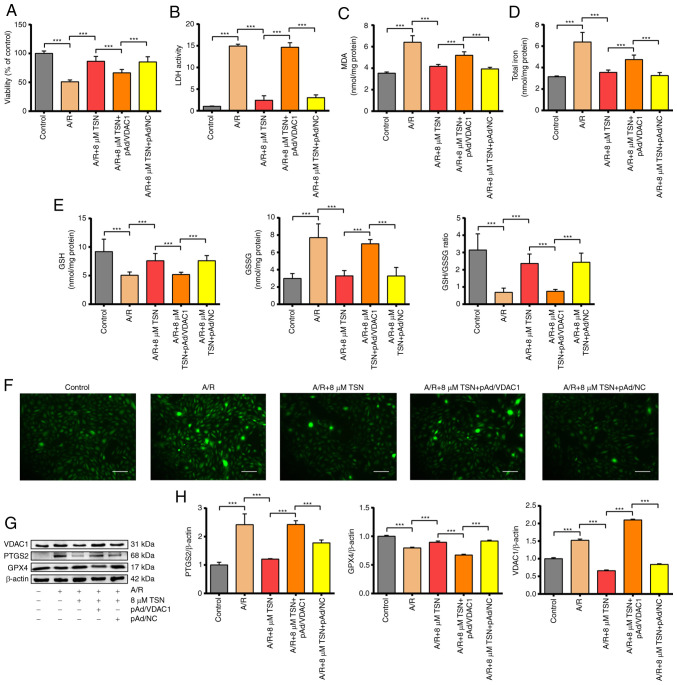
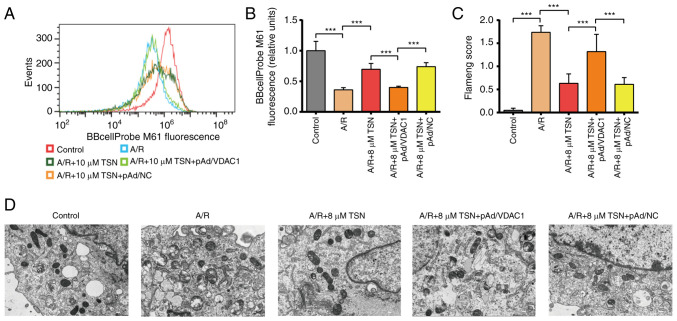
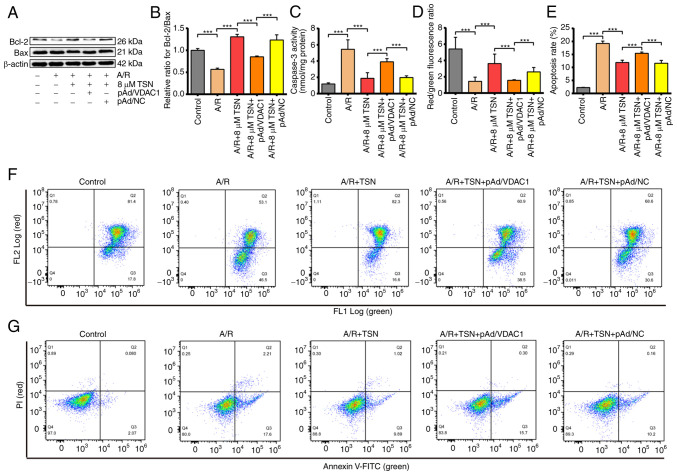
Tanshinone IIA (TSN) extracted from danshen () could protect cardiomyocytes against myocardial ischemia/reperfusion injury (IRI), however the underlying molecular mechanisms of action remain unclear. The aim of the present study was to identify the protective effects of TSN and its mechanisms of action through studies. An anoxia/reoxygenation (A/R) injury model was established using H9c2 cells to simulate myocardial IRI . Before A/R, H9c2 cardiomyoblasts were pretreated with 8 µM TSN or 10 µM ferrostatin‑1 (Fer‑1) or erastin. The cell counting kit 8 (CCK‑8) and lactate dehydrogenase (LDH) assay kit were used to detect the cell viability and cytotoxicity. The levels of total iron, glutathione (GSH), glutathione disulfide (GSSG), malondialdehyde (MDA), ferrous iron, caspase‑3 activity, and reactive oxygen species (ROS) were assessed using commercial kit. The levels of mitochondrial membrane potential (MMP), lipid ROS, cell apoptosis, and mitochondrial permeability transition pore (mPTP) opening were detected by flow cytometry. Transmission electron microscopy (TEM) was used to observed the mitochondrial damage. Protein levels were detected by western blot analysis. The interaction between TSN and voltage‑dependent anion channel 1 (VDAC1) was evaluated by molecular docking simulation. The results showed that pretreatment with TSN and Fer‑1 significantly decreased cell viability, glutathione peroxidase 4 (GPX4) protein and GSH expression and GSH/GSSG ratio and inhibited upregulation of LDH activity, prostaglandin endoperoxide synthase 2 and VDAC1 protein expression, ROS levels, mitochondrial injury and GSSG induced by A/R. TSN also effectively inhibited the damaging effects of erastin treatment. Additionally, TSN increased MMP and Bcl‑2/Bax ratio, while decreasing levels of apoptotic cells, activating Caspase‑3 and closing the mPTP. These effects were blocked by VDAC1 overexpression and the results of molecular docking simulation studies revealed a direct interaction between TSN and VDAC1. In conclusion, TSN pretreatment effectively attenuated H9c2 cardiomyocyte damage in an A/R injury model and VDAC1‑mediated ferroptosis and apoptosis served a vital role in the protective effects of TSN.
丹参酮 IIA(TSN)从丹参中提取,可保护心肌细胞免受心肌缺血/再灌注损伤(IRI),但其作用的潜在分子机制尚不清楚。本研究旨在通过研究鉴定 TSN 的保护作用及其作用机制。使用 H9c2 细胞建立缺氧/复氧(A/R)损伤模型,模拟心肌 IRI。在 A/R 之前,用 8 μM TSN 或 10 μM 铁抑素-1(Fer-1)或 erastin 预处理 H9c2 心肌细胞。使用细胞计数试剂盒 8(CCK-8)和乳酸脱氢酶(LDH)试剂盒检测细胞活力和细胞毒性。使用商业试剂盒评估总铁、谷胱甘肽(GSH)、谷胱甘肽二硫化物(GSSG)、丙二醛(MDA)、亚铁、半胱天冬酶-3 活性和活性氧(ROS)水平。通过流式细胞术检测线粒体膜电位(MMP)、脂质 ROS、细胞凋亡和线粒体通透性转换孔(mPTP)开放。透射电子显微镜(TEM)用于观察线粒体损伤。通过 Western blot 分析检测蛋白水平。通过分子对接模拟评估 TSN 与电压依赖性阴离子通道 1(VDAC1)的相互作用。结果表明,TSN 和 Fer-1 预处理可显著降低细胞活力、谷胱甘肽过氧化物酶 4(GPX4)蛋白和 GSH 表达及 GSH/GSSG 比值,并抑制 A/R 引起的 LDH 活性、前列腺素内过氧化物合酶 2 和 VDAC1 蛋白表达、ROS 水平、线粒体损伤和 GSSG 的上调。TSN 还能有效抑制 erastin 处理的损伤作用。此外,TSN 增加了 MMP 和 Bcl-2/Bax 比值,同时降低了凋亡细胞的水平,激活了 Caspase-3 并关闭了 mPTP。VDAC1 过表达和分子对接模拟研究的结果阻断了这些作用,揭示了 TSN 与 VDAC1 之间的直接相互作用。综上所述,TSN 预处理可有效减轻 A/R 损伤模型中 H9c2 心肌细胞的损伤,VDAC1 介导线粒体铁死亡和细胞凋亡在 TSN 的保护作用中起着至关重要的作用。