Department of Dermatology, Yonsei University Wonju College of Medicine, Wonju, Republic of Korea.
Department of Dermatology, St Vincent's Hospital, College of Medicine, The Catholic University of Korea, Suwon, Korea.
JAMA Netw Open. 2023 Oct 2;6(10):e2336120. doi: 10.1001/jamanetworkopen.2023.36120.
Multiple cases of autoimmune and autoinflammatory diseases after COVID-19 have been reported. However, their incidences and risks have rarely been quantified.
To investigate the incidences and risks of autoimmune and autoinflammatory connective tissue disorders after COVID-19.
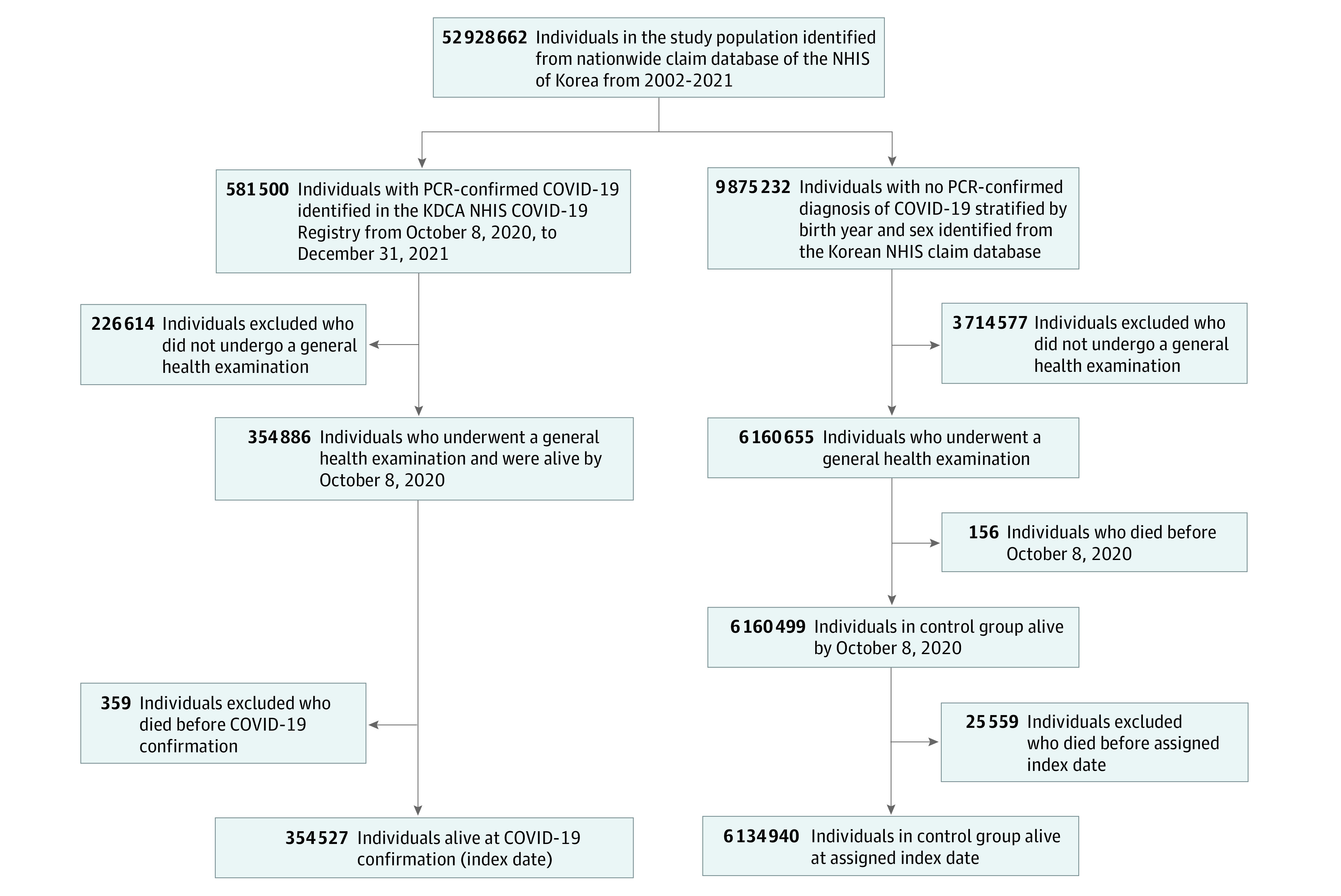
DESIGN, SETTING, AND PARTICIPANTS: This was a retrospective population-based study conducted between October 8, 2020, and December 31, 2021, that used nationwide data from the Korea Disease Control and Prevention Agency COVID-19 National Health Insurance Service cohort and included individuals who received a diagnosis of COVID-19 via polymerase chain reaction testing and a control group with no evidence of COVID-19 identified from National Health Insurance Service of Korea cohort. Data analysis was conducted from September 2022 to August 2023.
Receipt of diagnosis of COVID-19.
The primary outcomes were the incidence and risk of autoimmune and autoinflammatory connective tissue disorders following COVID-19. A total of 32 covariates, including demographics, socioeconomic statuses, lifestyle factors, and comorbidity profiles, were balanced through inverse probability weighting. The incidences and risks of autoimmune and autoinflammatory connective tissue disorders were compared between the groups using multivariable Cox proportional hazard analyses.
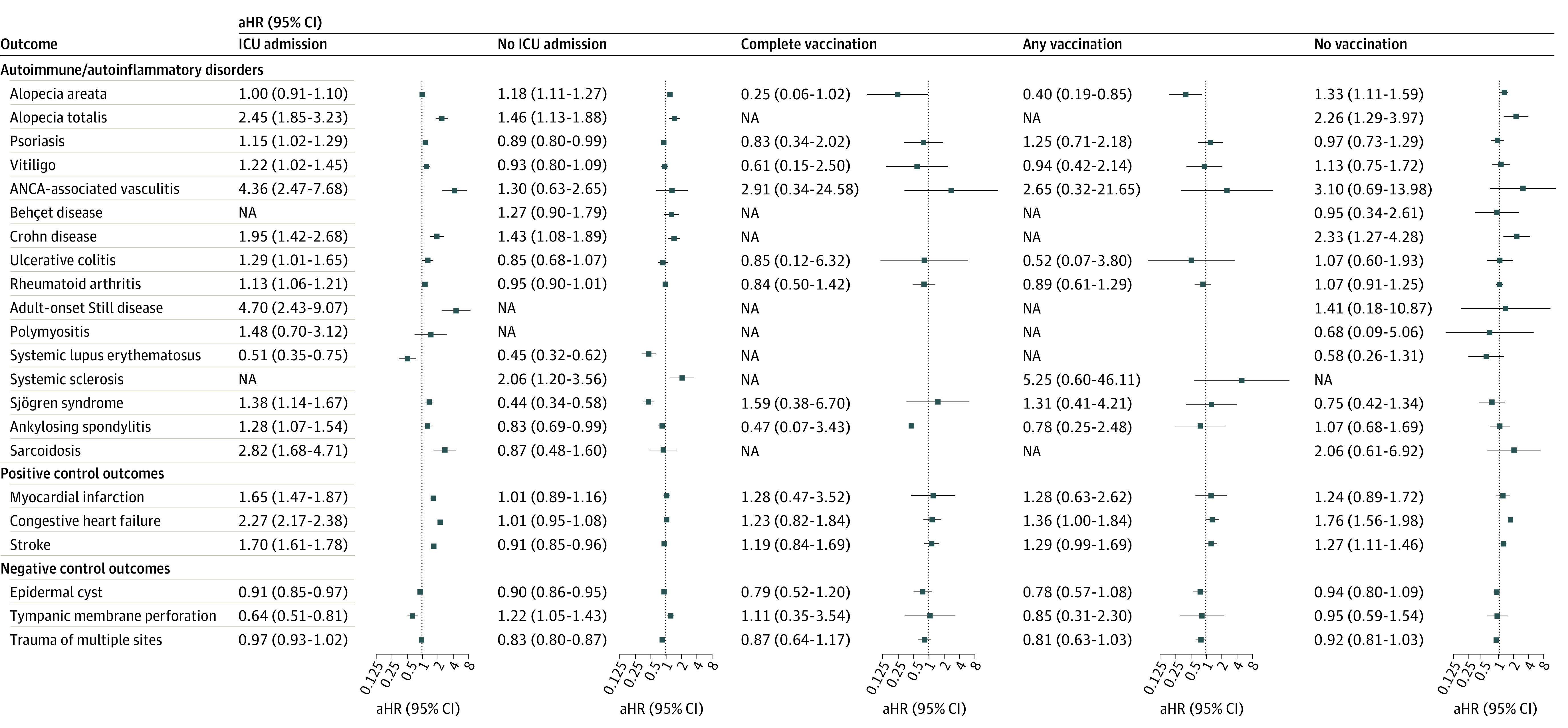
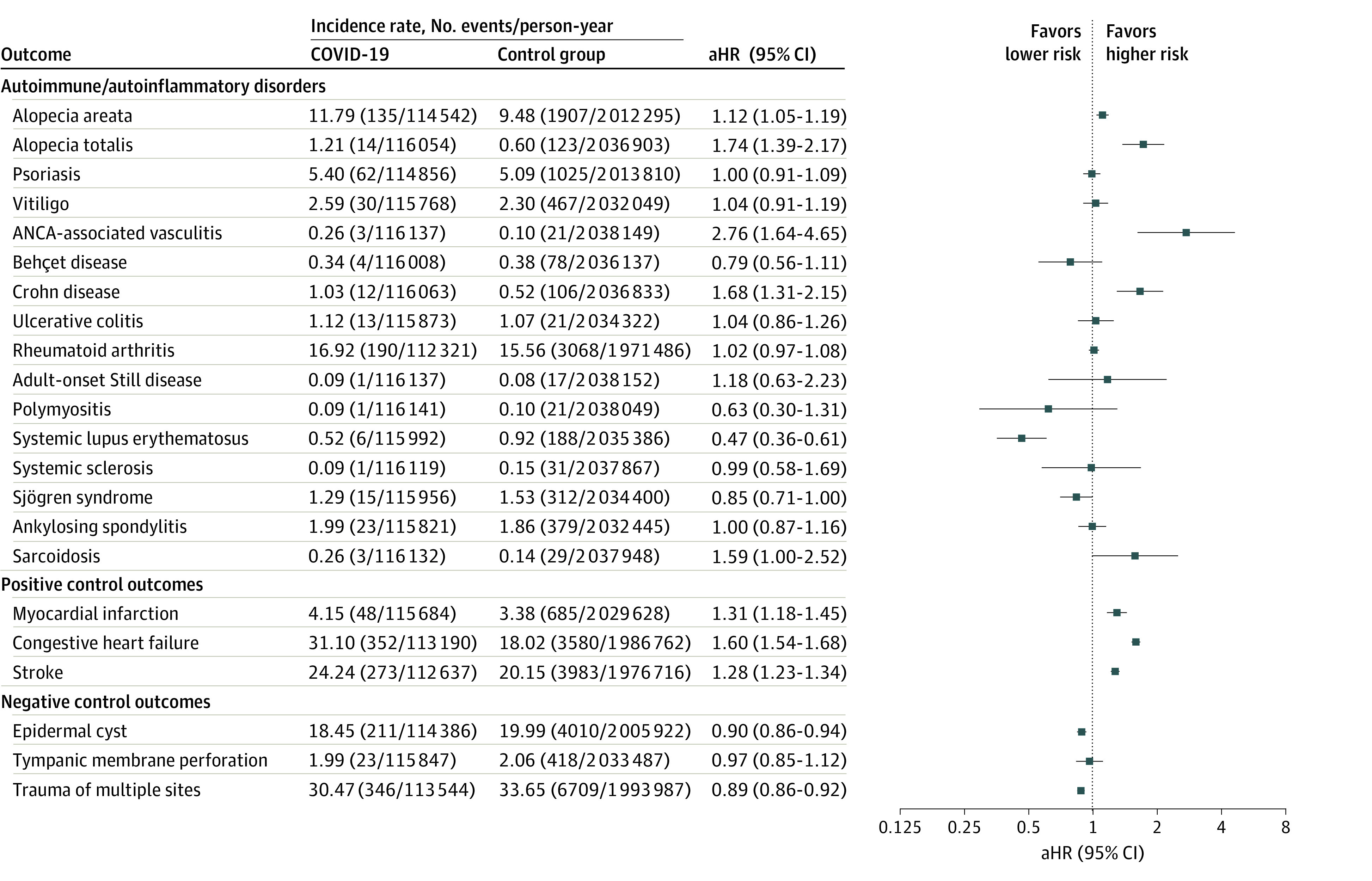
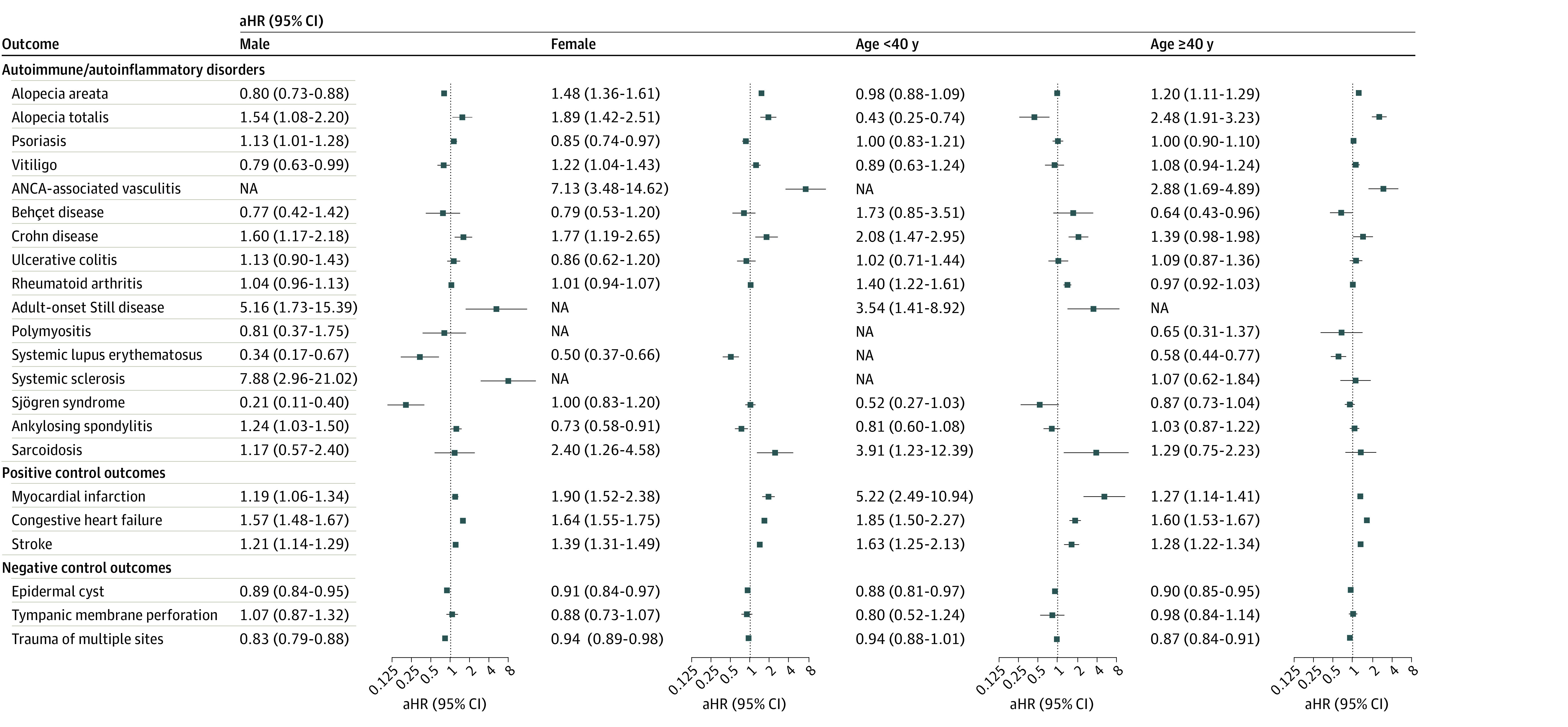
A total of 354 527 individuals with COVID-19 (mean [SD] age, 52.24 [15.55] years; 179 041 women [50.50%]) and 6 134 940 controls (mean [SD] age, 52.05 [15.63] years; 3 074 573 women [50.12%]) were included. The risks of alopecia areata (adjusted hazard ratio [aHR], 1.12; 95% CI, 1.05-1.19), alopecia totalis (aHR, 1.74; 95% CI, 1.39-2.17), antineutrophil cytoplasmic antibody-associated vasculitis (aHR, 2.76; 95% CI, 1.64-4.65), Crohn disease (aHR, 1.68; 95% CI, 1.31-2.15), and sarcoidosis (aHR, 1.59; 95% CI, 1.00-2.52) were higher in the COVID-19 group. The risks of alopecia totalis, psoriasis, vitiligo, vasculitis, Crohn disease, ulcerative colitis, rheumatoid arthritis, adult-onset Still disease, Sjögren syndrome, ankylosing spondylitis, and sarcoidosis were associated with the severity of COVID-19.
In this retrospective cohort study, COVID-19 was associated with a substantial risk for autoimmune and autoinflammatory connective tissue disorders, indicating that long-term management of patients with COVID-19 should include evaluation for such disorders.
已经有多项关于 COVID-19 后自身免疫和自身炎症性疾病的病例报告。然而,它们的发病率和风险很少被量化。
调查 COVID-19 后自身免疫和自身炎症性结缔组织疾病的发病率和风险。
设计、设置和参与者:这是一项回顾性基于人群的研究,于 2020 年 10 月 8 日至 2021 年 12 月 31 日进行,使用了来自韩国疾病控制和预防机构 COVID-19 国家健康保险服务队列的全国数据,并包括通过聚合酶链反应检测诊断为 COVID-19 的个体和从韩国国家健康保险服务队列中确定没有 COVID-19 证据的对照组。数据分析于 2022 年 9 月至 2023 年 8 月进行。
诊断为 COVID-19。
主要结果是 COVID-19 后自身免疫和自身炎症性结缔组织疾病的发病率和风险。通过逆概率加权平衡了总共 32 个协变量,包括人口统计学、社会经济地位、生活方式因素和合并症概况。使用多变量 Cox 比例风险分析比较了两组之间自身免疫和自身炎症性结缔组织疾病的发病率和风险。
共纳入 354527 例 COVID-19 患者(平均[标准差]年龄 52.24[15.55]岁;179041 名女性[50.50%])和 6134940 名对照组(平均[标准差]年龄 52.05[15.63]岁;3074573 名女性[50.12%])。斑秃(调整后的危险比[aHR],1.12;95%置信区间[CI],1.05-1.19)、全秃(aHR,1.74;95%CI,1.39-2.17)、抗中性粒细胞胞质抗体相关性血管炎(aHR,2.76;95%CI,1.64-4.65)、克罗恩病(aHR,1.68;95%CI,1.31-2.15)和结节病(aHR,1.59;95%CI,1.00-2.52)的风险更高。全秃、银屑病、白癜风、血管炎、克罗恩病、溃疡性结肠炎、类风湿关节炎、成人斯蒂尔病、干燥综合征、强直性脊柱炎和结节病的风险与 COVID-19 的严重程度相关。
在这项回顾性队列研究中,COVID-19 与自身免疫和自身炎症性结缔组织疾病的风险显著增加相关,这表明 COVID-19 患者的长期管理应包括对这些疾病的评估。