Department of Neurology, Tongji Hospital, Tongji Medical College, Huazhong University of Science and Technology, Wuhan, 430030, China.
Department of Pediatrics, Tongji Hospital, Tongji Medical College, Huazhong University of Science and Technology, Wuhan, 430030, China.
Transl Psychiatry. 2023 Oct 6;13(1):310. doi: 10.1038/s41398-023-02614-z.
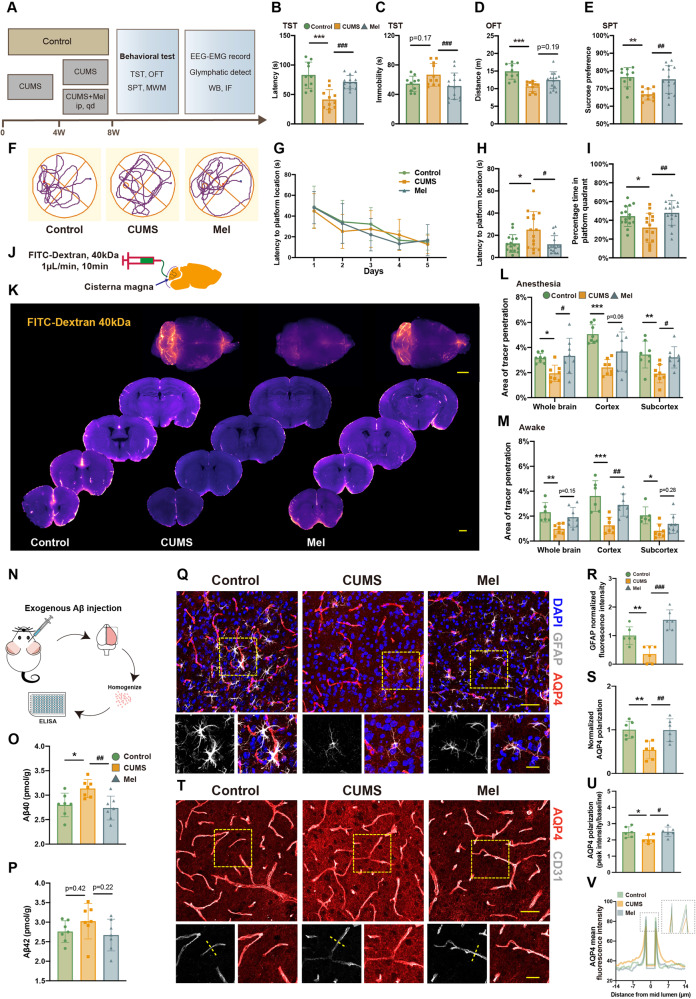
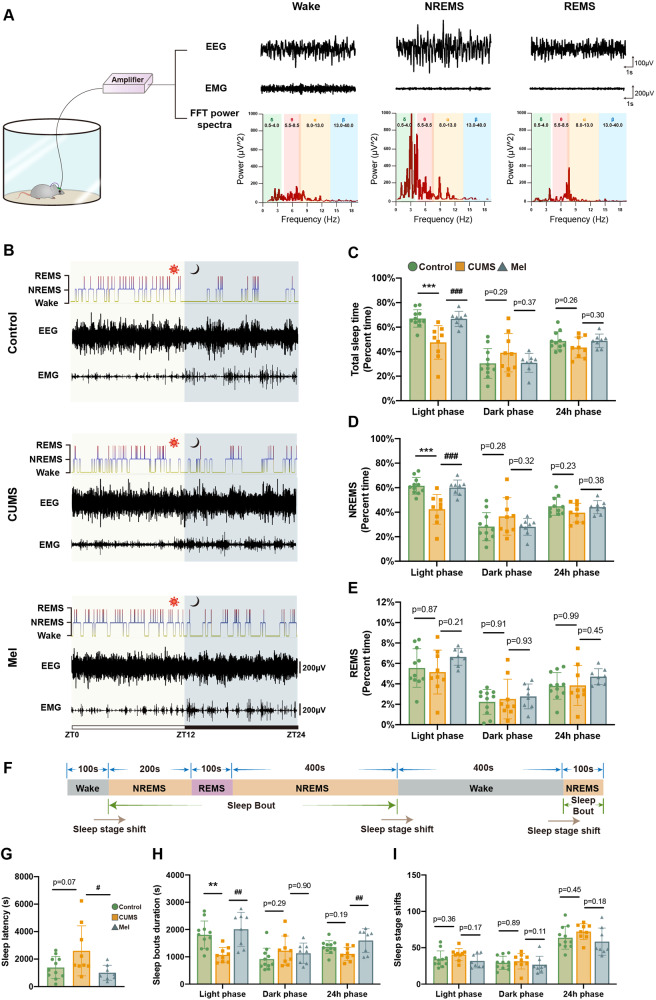
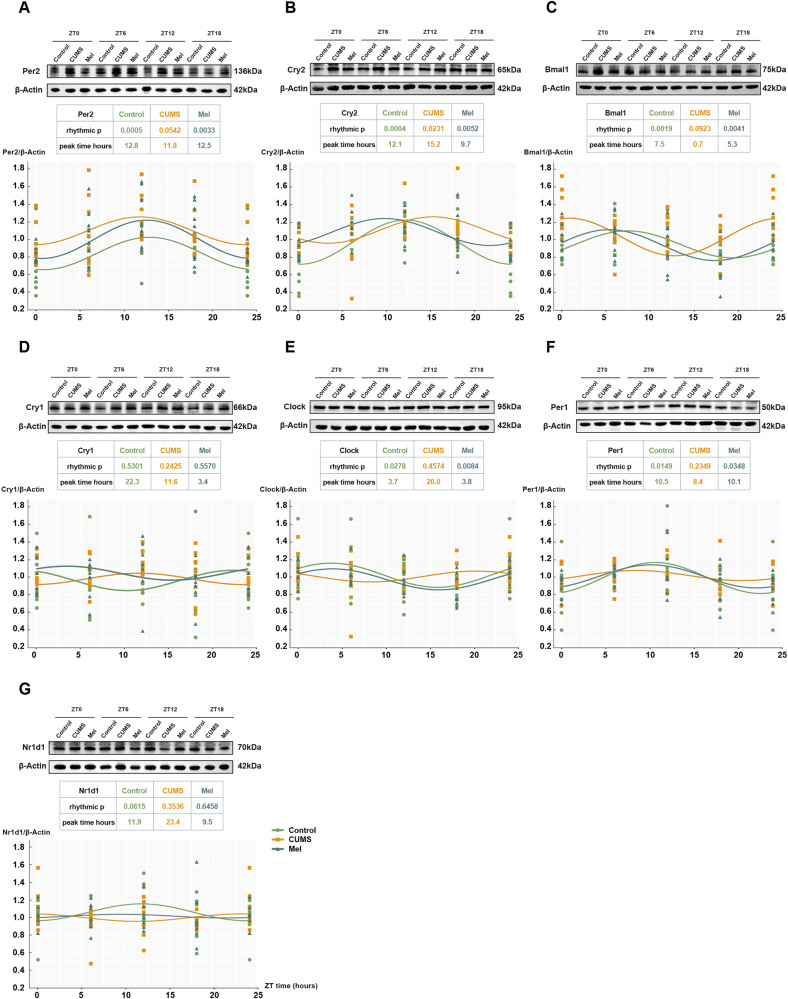
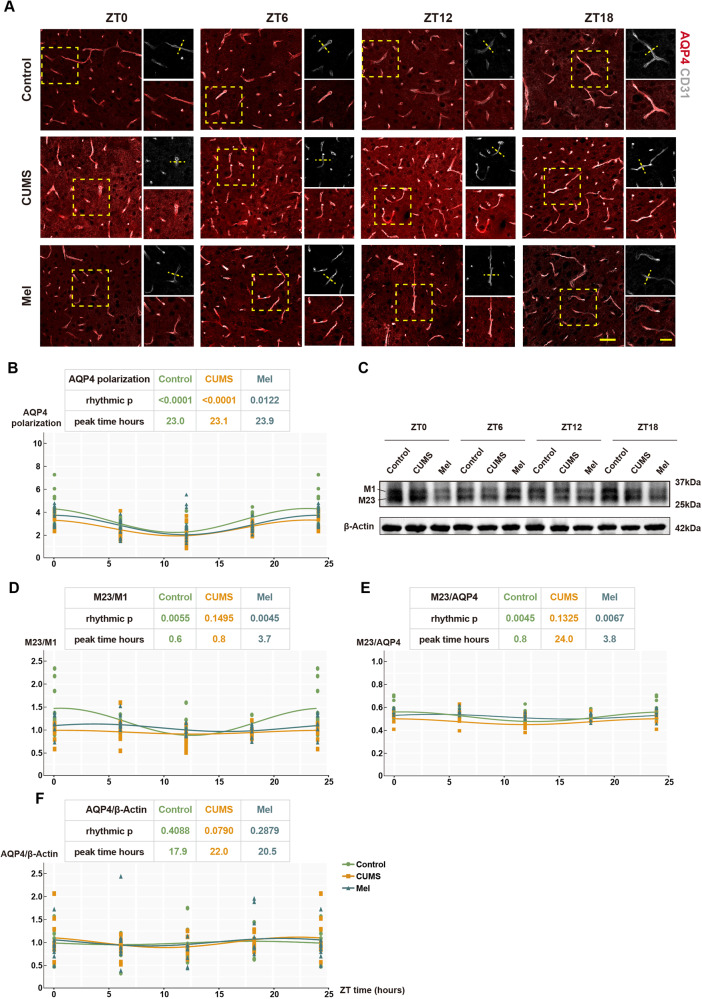
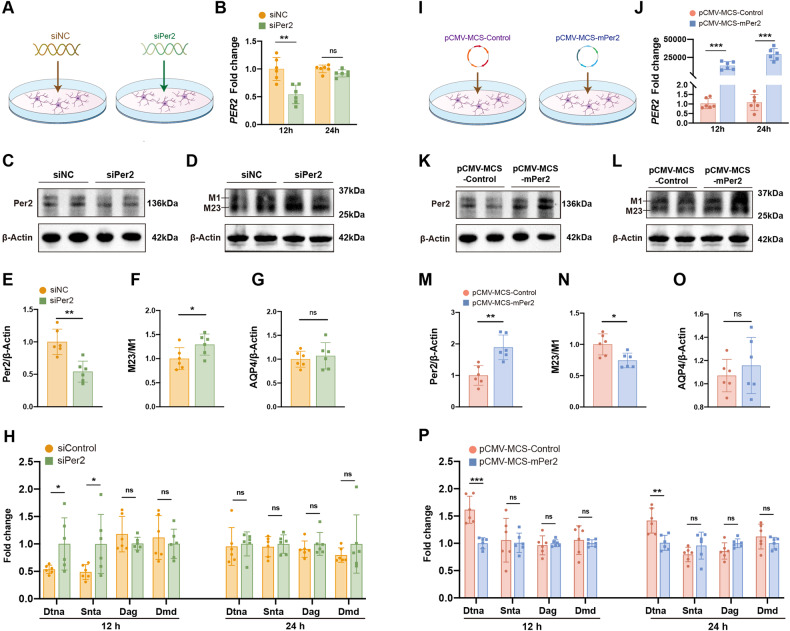
Depression is a common chronic psychiatric illness, which is resistant to medical treatments. While melatonin may alleviate certain depression symptoms, evidence for its efficacy against core symptoms is lacking. Here, we tested a mechanism whereby melatonin rescues the behavioral outcomes of the chronic unpredictable mild stress (CUMS) mouse model of depression. CUMS mice showed depressive behaviors to tail suspension, open field behavior, and sucrose preference test, and cognitive dysfunction in the Morris water maze. Impairments in these measures were relieved by melatonin treatment. Moreover, CUMS mice had impaired glymphatic function across the sleep-wake cycle due to the astrocytic loss and disturbance of circadian regulation of the polarized expression of aquaporin-4 (AQP4) water channels in perivascular astrocytes. EEG results in CUMS mice showed a reduced total sleep time and non-rapid eye movement (NREM) sleep, due to sleep fragmentation in the light phase. CUMS mice lost the normal rhythmic expressions of circadian proteins Per2, Cry2, Bmal1, Clock, and Per1. However, the melatonin treatment restored glymphatic system function and the polarization of AQP4, while improving sleep structure, and rectifying the abnormal expression of Per2, Bmal1, Clock, and Per1 in CUMS mice. Interestingly, Per2 expression correlated negatively with the polarization of AQP4. Further studies demonstrated that Per2 directed the location of AQP4 expression via interactions with the α-dystrobrevin (Dtna) subunit of AQP4 in primary cultured astrocytes. In conclusion, we report a new mechanism whereby melatonin improves depression outcomes by regulating the expression of the circadian protein Per2, maintaining the circadian rhythm of astrocytic AQP4 polarization, and restoring glymphatic function.
抑郁症是一种常见的慢性精神疾病,对药物治疗有抗性。虽然褪黑素可能缓解某些抑郁症状,但缺乏其对核心症状疗效的证据。在这里,我们测试了一种机制,即褪黑素通过该机制挽救慢性不可预测轻度应激(CUMS)小鼠抑郁症模型的行为结果。CUMS 小鼠在悬尾、旷场行为和蔗糖偏好测试中表现出抑郁行为,以及在 Morris 水迷宫中的认知功能障碍。褪黑素治疗缓解了这些测量值的损伤。此外,由于星形胶质细胞的丧失和对水通道蛋白-4(AQP4)极性表达的昼夜节律调节的干扰,CUMS 小鼠在睡眠-觉醒周期中出现了神经胶淋巴功能障碍。CUMS 小鼠的 EEG 结果显示总睡眠时间和非快速眼动(NREM)睡眠减少,这是由于光相中的睡眠碎片化。CUMS 小鼠失去了昼夜节律蛋白 Per2、Cry2、Bmal1、Clock 和 Per1 的正常节律表达。然而,褪黑素治疗恢复了神经胶淋巴系统功能和 AQP4 的极化,同时改善了睡眠结构,并纠正了 CUMS 小鼠中 Per2、Bmal1、Clock 和 Per1 的异常表达。有趣的是,Per2 表达与 AQP4 的极化呈负相关。进一步的研究表明,Per2 通过与 AQP4 的α-肌营养不良蛋白(Dtna)亚基相互作用,指导 AQP4 表达的位置。总之,我们报告了一种新的机制,即褪黑素通过调节昼夜节律蛋白 Per2 的表达、维持星形胶质细胞 AQP4 极化的昼夜节律以及恢复神经胶淋巴功能来改善抑郁结果。