Department of Urology, Hunan Children's Hospital, Changsha, 410007, Hunan, China.
BMC Pediatr. 2023 Oct 7;23(1):504. doi: 10.1186/s12887-023-04339-w.
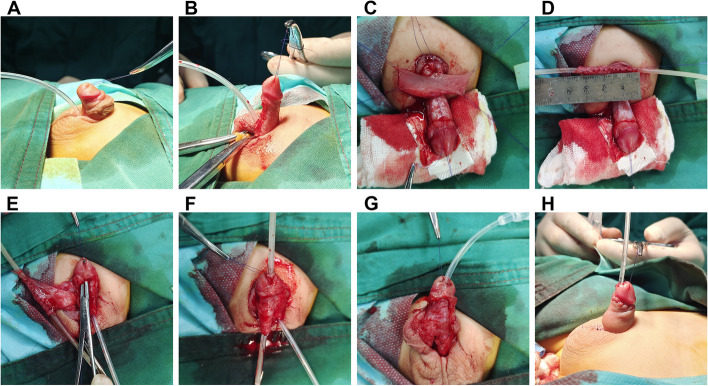
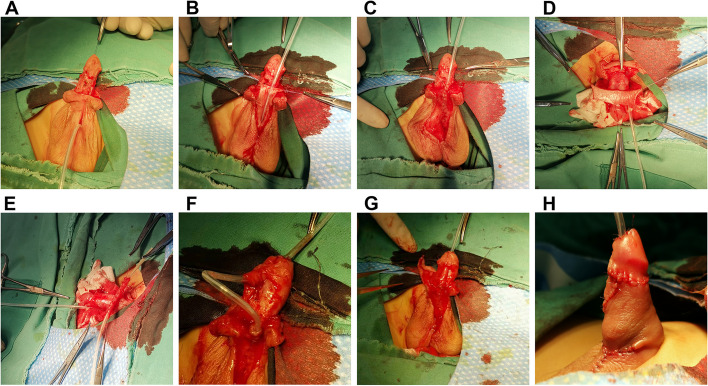
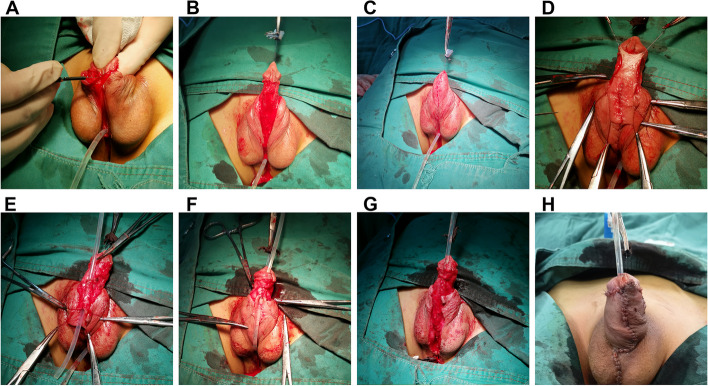
Children with hypospadias are at risk of serious physical and mental health problems, including abnormal urination, sexual dysfunction, and infertility. The sole available treatment is the surgical restoration of genital appearance and function. Proximal hypospadias (PH) correction is more challenging and carries a higher risk of complications than does distal hypospadias correction, with a higher likelihood of postoperative complications requiring additional surgery, resulting in considerable economic and psychological strain for families. Herein, we aimed to identify factors associated with complications following one-stage PH repair with urethral plate disconnection.
We retrospectively analyzed data from 236 children who underwent PH repair at our center between December 2020 and December 2022. We collected information on age, surgical procedure, length of the reconstructed urethra (LRU), glans width (GW), ventral curvature, surgical approach, preoperative androgen use, suture type, presence of prostatic utricle, body mass index, season of surgery, anesthesia type, low birth weight, preterm birth, follow-up period, and complications. Surgical complications included urethral fistulas, urethral diverticula, anastomotic strictures, urethral strictures, glans dehiscence, and penile curvature recurrences. The study population was divided into complication and no-complication groups, and univariate and multivariate analyses were conducted.
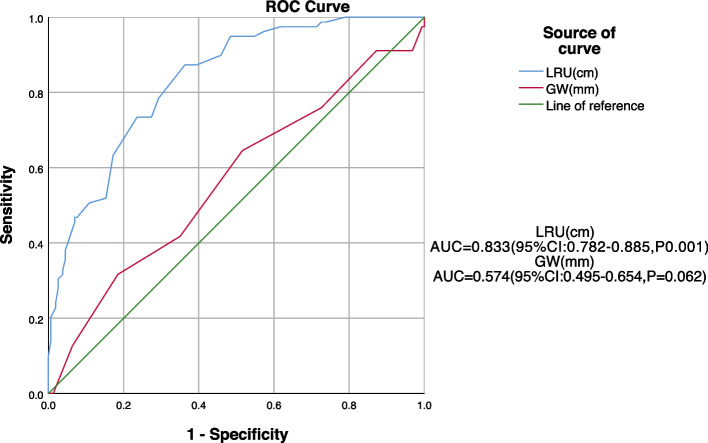
Of the 236 patients with PH who had a median follow-up of 10.0 (8.0, 14.0) months, 79 were included (33.5%) in the complication group and 157 were included (66.5%) in the no-complication group. In the univariate analysis, age (P < 0.001), LRU (P < 0.001), degree of penile curvature (P = 0.049), and PH with prostatic utricle (P = 0.014) were significantly associated with complications after PH repair. In the multivariate logistic regression analysis, LRU (P<0.001, odds ratio [OR] = 3.396, 95% confidence interval [CI]: 2.229-5.174) and GW (P = 0.004, OR = 0.755, 95%CI: 0.625-0.912) were independent factors influencing postoperative complications. The optimal LRU threshold was 4.45 cm (area under the curve, 0.833; sensitivity, 0.873; specificity, 0.873; P<0.001, OR = 3.396, 95% CI: 2.229-5.174).
LRU and GW are independent factors affecting PH complications. An LRU of < 4.45 cm and an increased GW can reduce the risk of complications.
患有尿道下裂的儿童存在严重的身心健康问题,包括异常排尿、性功能障碍和不育。唯一可用的治疗方法是手术恢复生殖器的外观和功能。近端尿道下裂(PH)的矫正比远端尿道下裂的矫正更具挑战性,且并发症风险更高,术后更有可能发生需要再次手术的并发症,这给家庭带来了相当大的经济和心理压力。在此,我们旨在确定与经尿道板离断一期 PH 修复术后并发症相关的因素。
我们回顾性分析了 2020 年 12 月至 2022 年 12 月在我们中心接受 PH 修复的 236 名儿童的数据。我们收集了年龄、手术过程、重建尿道长度(LRU)、龟头宽度(GW)、腹侧曲率、手术入路、术前雄激素使用、缝合类型、前列腺囊、体重指数、手术季节、麻醉类型、低出生体重、早产、随访期和并发症等信息。手术并发症包括尿道瘘、尿道憩室、吻合口狭窄、尿道狭窄、龟头裂开和阴茎弯曲复发。研究人群分为并发症组和无并发症组,进行了单变量和多变量分析。
在中位随访 10.0(8.0,14.0)个月的 236 名 PH 患者中,79 名(33.5%)患者进入并发症组,157 名(66.5%)患者进入无并发症组。单变量分析显示,年龄(P<0.001)、LRU(P<0.001)、阴茎弯曲程度(P=0.049)和带前列腺囊的 PH(P=0.014)与 PH 修复后并发症显著相关。多变量 logistic 回归分析显示,LRU(P<0.001,比值比 [OR] = 3.396,95%置信区间 [CI]:2.229-5.174)和 GW(P=0.004,OR=0.755,95%CI:0.625-0.912)是影响术后并发症的独立因素。最佳 LRU 阈值为 4.45 cm(曲线下面积,0.833;灵敏度,0.873;特异性,0.873;P<0.001,OR=3.396,95%CI:2.229-5.174)。
LRU 和 GW 是影响 PH 并发症的独立因素。LRU<4.45 cm 和 GW 增加可降低并发症风险。