
猪到猴心脏异种移植后长期和短期存活之间的比较转录组分析揭示了心力衰竭发展的差异。
Comparative transcriptome analysis between long- and short-term survival after pig-to-monkey cardiac xenotransplantation reveals differential heart failure development.
作者信息
Lim Byeonghwi, Jang Min-Jae, Oh Seung-Mi, No Jin Gu, Lee Jungjae, Kim Sang Eun, Ock Sun A, Yun Ik Jin, Kim Junseok, Chee Hyun Keun, Kim Wan Seop, Kang Hee Jung, Cho Kahee, Oh Keon Bong, Kim Jun-Mo
机构信息
Department of Animal Science and Technology, Chung-Ang University, Anseong, Republic of Korea.
Animal Biotechnology Division, National Institute of Animal Science, RDA, Wanju, Republic of Korea.
出版信息
Anim Cells Syst (Seoul). 2023 Oct 4;27(1):234-248. doi: 10.1080/19768354.2023.2265150. eCollection 2023.
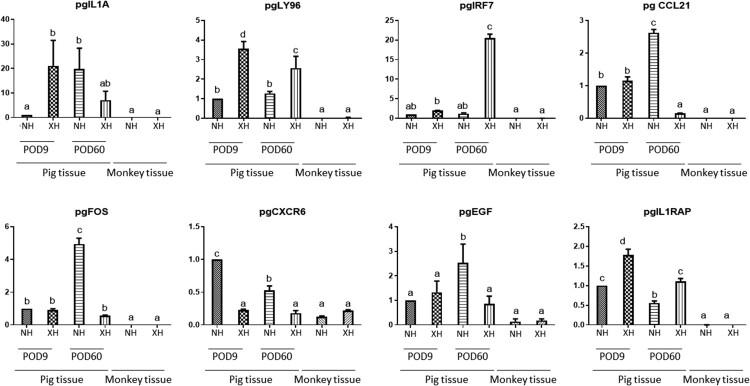
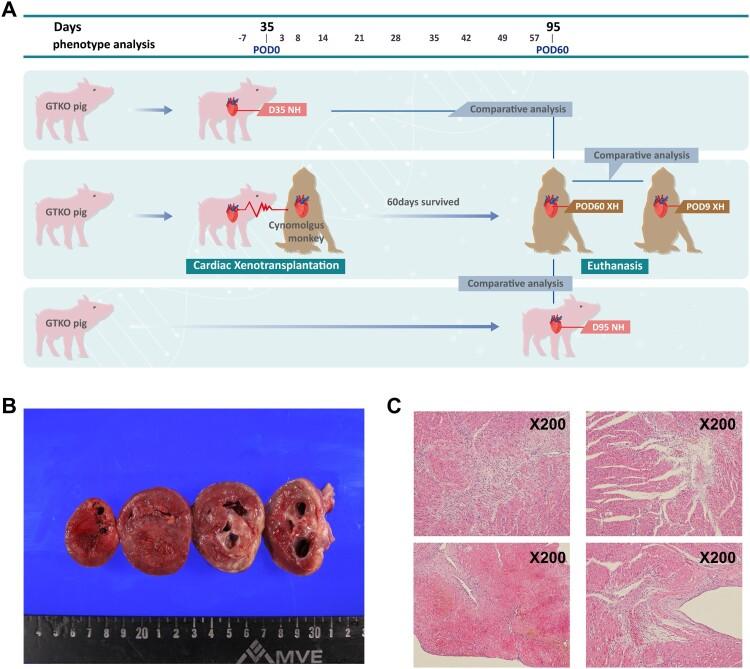
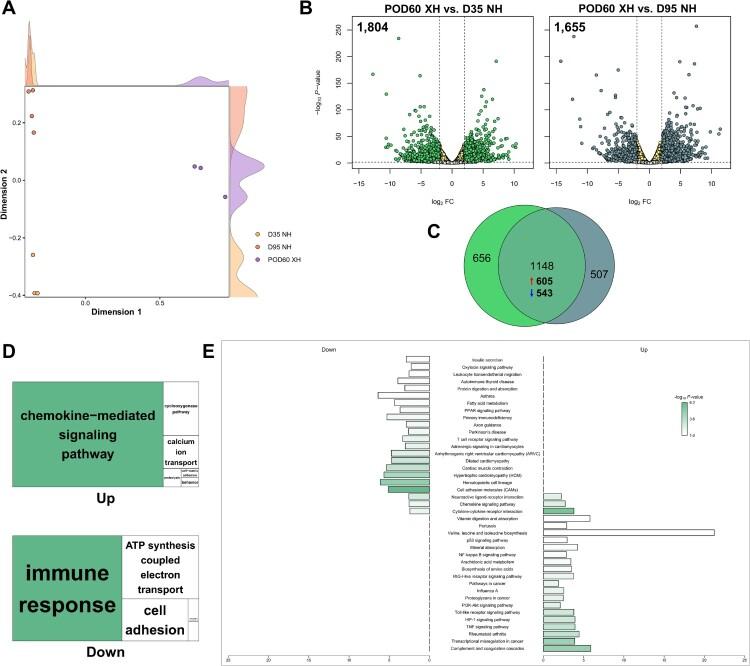
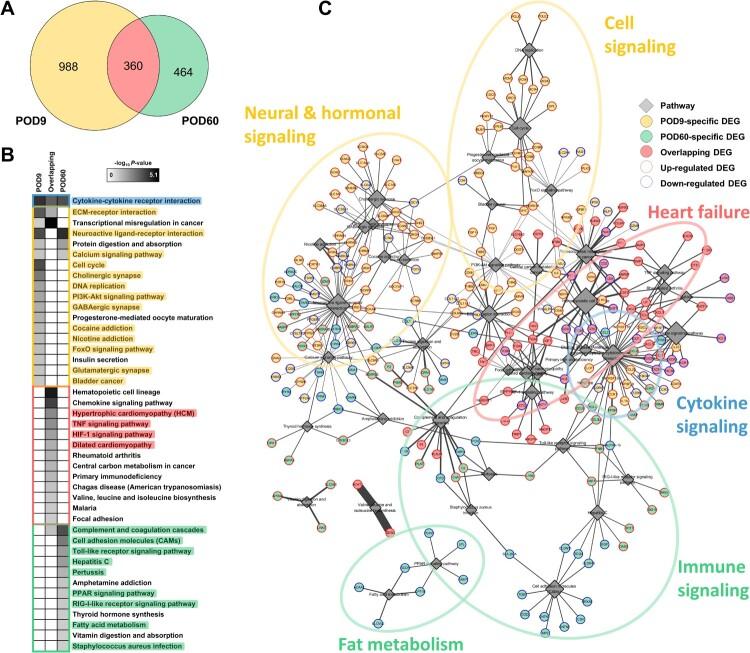
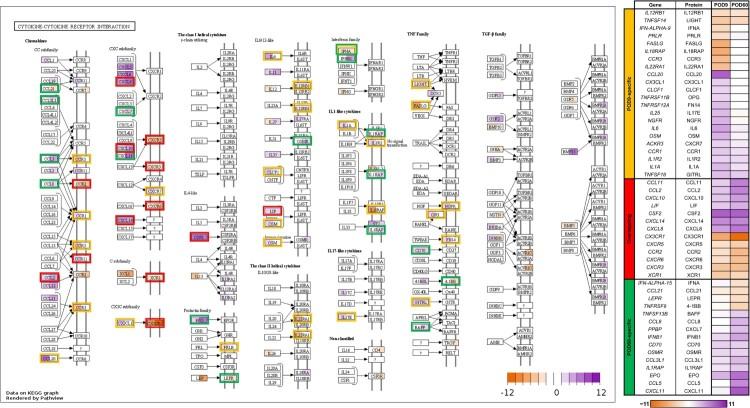
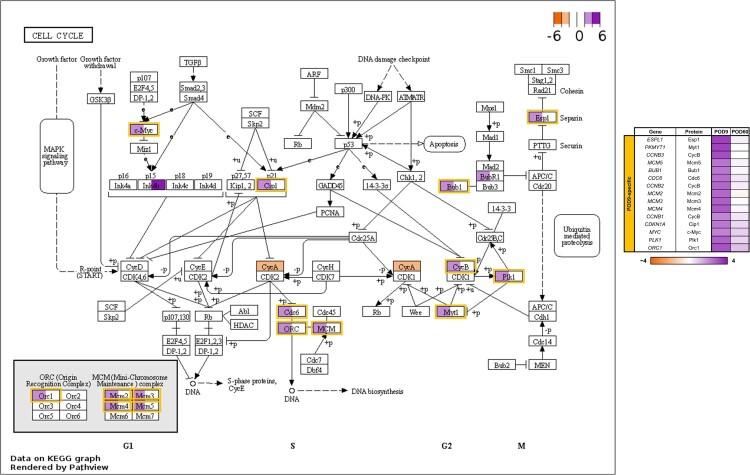
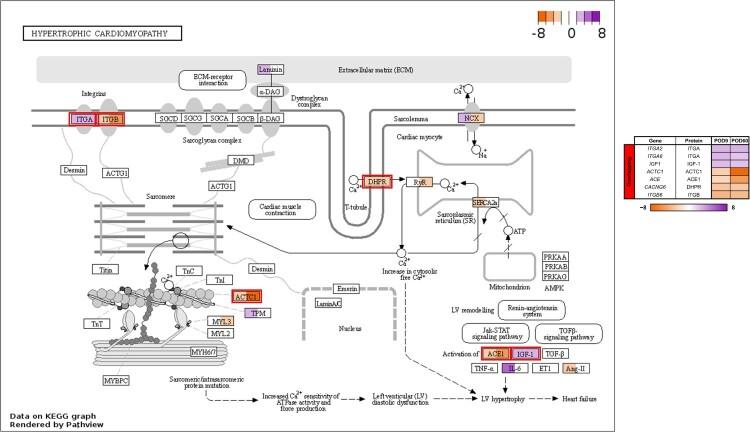
Cardiac xenotransplantation is the potential treatment for end-stage heart failure, but the allogenic organ supply needs to catch up to clinical demand. Therefore, genetically-modified porcine heart xenotransplantation could be a potential alternative. So far, pig-to-monkey heart xenografts have been studied using multi-transgenic pigs, indicating various survival periods. However, functional mechanisms based on survival period-related gene expression are unclear. This study aimed to identify the differential mechanisms between pig-to-monkey post-xenotransplantation long- and short-term survivals. Heterotopic abdominal transplantation was performed using a donor CD46-expressing GTKO pig and a recipient cynomolgus monkey. RNA-seq was performed using samples from POD60 XH from monkey and NH from age-matched pigs, D35 and D95. Gene-annotated DEGs for POD60 XH were compared with those for POD9 XH (Park et al. 2021). DEGs were identified by comparing gene expression levels in POD60 XH versus either D35 or D95 NH. 1,804 and 1,655 DEGs were identified in POD60 XH versus D35 NH and POD60 XH versus D95 NH, respectively. Overlapped 1,148 DEGs were annotated and compared with 1,348 DEGs for POD9 XH. Transcriptomic features for heart failure and inhibition of T cell activation were observed in both long (POD60)- and short (POD9)-term survived monkeys. Only short-term survived monkey showed heart remodeling and regeneration features, while long-term survived monkey indicated multi-organ failure by neural and hormonal signaling as well as suppression of B cell activation. Our results reveal differential heart failure development and survival at the transcriptome level and suggest candidate genes for specific signals to control adverse cardiac xenotransplantation effects.
心脏异种移植是终末期心力衰竭的潜在治疗方法,但同种异体器官供应需要跟上临床需求。因此,基因编辑猪心脏异种移植可能是一种潜在的替代方案。到目前为止,已使用多转基因猪对猪到猴的心脏异种移植进行了研究,显示出不同的存活期。然而,基于存活期相关基因表达的功能机制尚不清楚。本研究旨在确定猪到猴异种移植后长期和短期存活之间的差异机制。使用表达CD46的GTKO供体猪和食蟹猴受体进行异位腹部移植。使用来自移植后60天(POD60)的猴心脏异种移植样本(XH)以及来自年龄匹配猪的正常心脏样本(NH)、移植后35天(D35)和95天(D95)的样本进行RNA测序。将POD60 XH的基因注释差异表达基因(DEG)与POD9 XH的进行比较(Park等人,2021年)。通过比较POD60 XH与D35或D95 NH中的基因表达水平来鉴定DEG。在POD60 XH与D35 NH以及POD60 XH与D95 NH中分别鉴定出1804个和1655个DEG。对1148个重叠的DEG进行注释,并与POD9 XH的1348个DEG进行比较。在长期(POD60)和短期(POD9)存活的猴中均观察到心力衰竭和T细胞激活抑制的转录组特征。只有短期存活的猴表现出心脏重塑和再生特征,而长期存活的猴则表明通过神经和激素信号传导以及B细胞激活的抑制导致多器官衰竭。我们的结果揭示了转录组水平上心力衰竭发展和存活的差异,并为控制不良心脏异种移植效应的特定信号提供了候选基因。
 Zotero 插件