Department of Animal Science and Technology, College of Biotechnology and Natural Resources, Chung-Ang University, Gyeonggi-do 17546, Korea.
Animal Biotechnology Division, National Institute of Animal Science, RDA, Jeollabukdo 55365, Korea.
Int J Mol Sci. 2021 Jan 13;22(2):751. doi: 10.3390/ijms22020751.
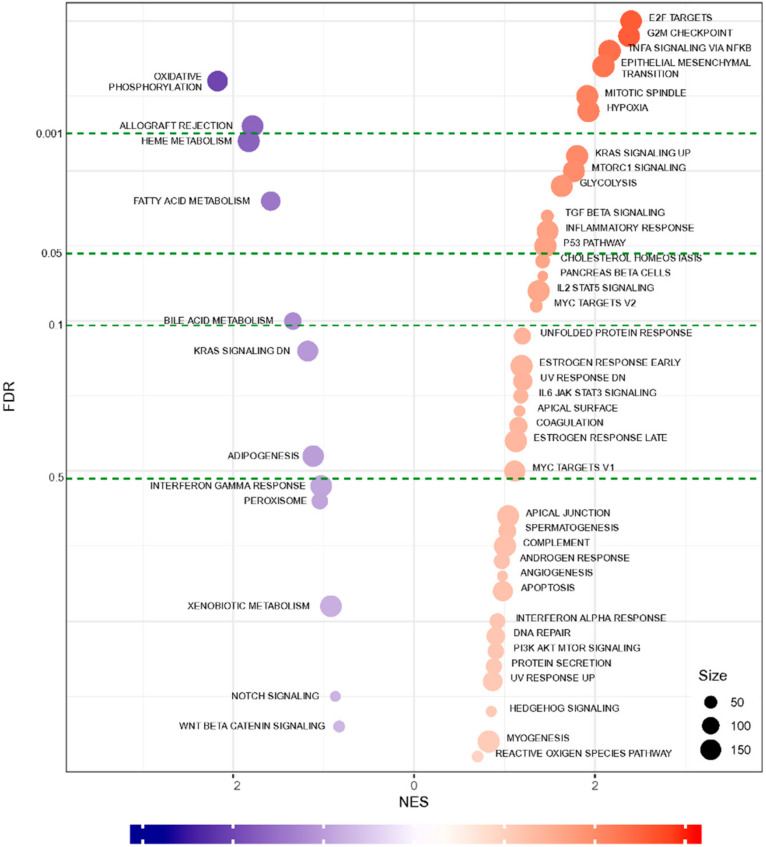
Porcine heart xenotransplantation is a potential treatment for patients with end-stage heart failure. To understand molecular mechanisms of graft rejection after heart transplantation, we transplanted a 31-day-old (GTKO) porcine heart to a five-year-old cynomolgus monkey. Histological and transcriptome analyses were conducted on xenografted cardiac tissue at rejection (nine days after transplantation). The recipient monkey's blood parameters were analyzed on days -7, -3, 1, 4, and 7. Validation was conducted by quantitative real-time PCR (qPCR) with selected genes. A non-transplanted GTKO porcine heart from an age-matched litter was used as a control. The recipient monkey showed systemic inflammatory responses, and the rejected cardiac graft indicated myocardial infarction and cardiac fibrosis. The transplanted heart exhibited a total of 3748 differentially expressed genes compared to the non-transplanted heart transcriptome, with 2443 upregulated and 1305 downregulated genes. Key biological pathways involved at the terminal stage of graft rejection were cardiomyopathies, extracellular interactions, and ion channel activities. The results of qPCR evaluation were in agreement with the transcriptome data. Transcriptome analysis of porcine cardiac tissue at graft rejection reveals dysregulation of the key molecules and signaling pathways, which play relevant roles on structural and functional integrities of the heart.
猪心异种移植是治疗终末期心力衰竭患者的一种潜在方法。为了了解心脏移植后移植物排斥的分子机制,我们将一只 31 天大的(GTKO)猪心移植到一只五岁的食蟹猴体内。在排斥(移植后 9 天)时对异种移植的心脏组织进行了组织学和转录组分析。在第-7、-3、1、4 和 7 天分析了受体猴的血液参数。通过定量实时 PCR(qPCR)对选定基因进行了验证。将来自年龄匹配的 GTKO 猪心作为对照,未进行移植。受体猴表现出全身炎症反应,排斥的心脏移植物显示心肌梗塞和心脏纤维化。与未移植的心脏转录组相比,移植的心脏总共显示出 3748 个差异表达基因,其中 2443 个上调,1305 个下调。在移植物排斥的终末阶段涉及的关键生物学途径有心肌病、细胞外相互作用和离子通道活性。qPCR 评估的结果与转录组数据一致。对排斥时猪心脏组织的转录组分析揭示了关键分子和信号通路的失调,这些失调对心脏的结构和功能完整性起着重要作用。