Khan Abid, Metts James M, Collins Lucas C, Mills C Allie, Li Kelin, Brademeyer Amanda L, Bowman Brittany M, Major M Ben, Aubé Jeffrey, Herring Laura E, Davis Ian J, Strahl Brian D
Department of Biochemistry and Biophysics, University of North Carolina, Chapel Hill, North Carolina 27599, USA.
UNC Proteomics Core Facility, Department of Pharmacology, University of North Carolina, Chapel Hill, North Carolina, 27599, USA.
bioRxiv. 2023 Sep 28:2023.09.28.560032. doi: 10.1101/2023.09.28.560032.
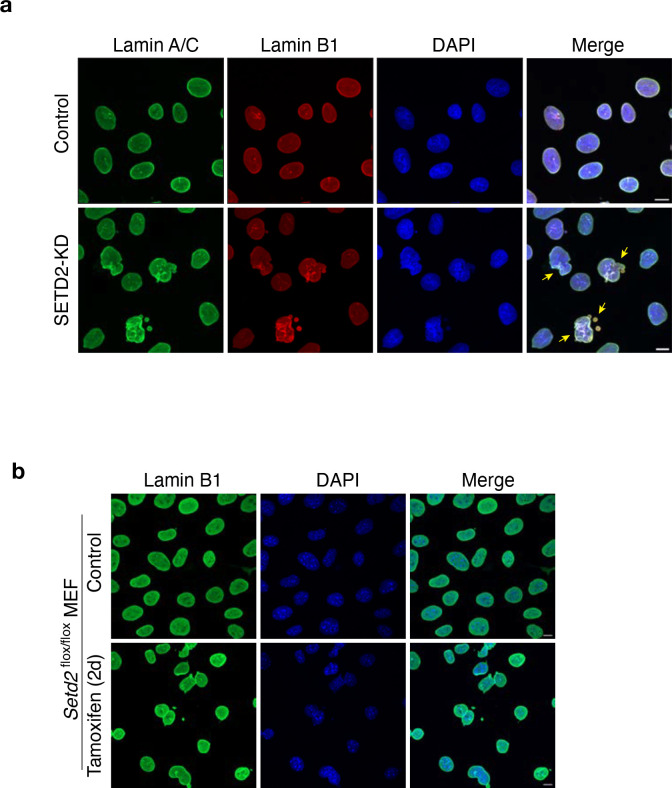
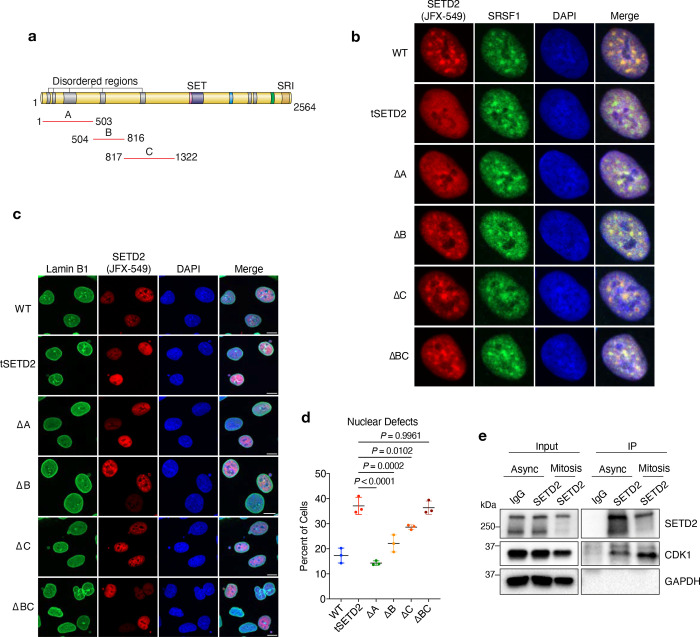
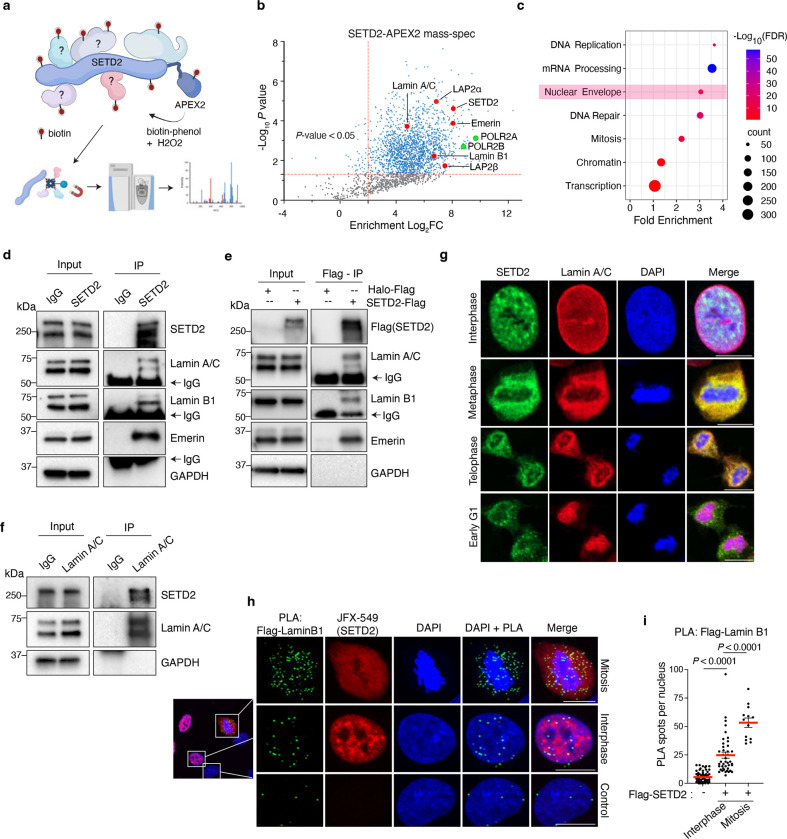
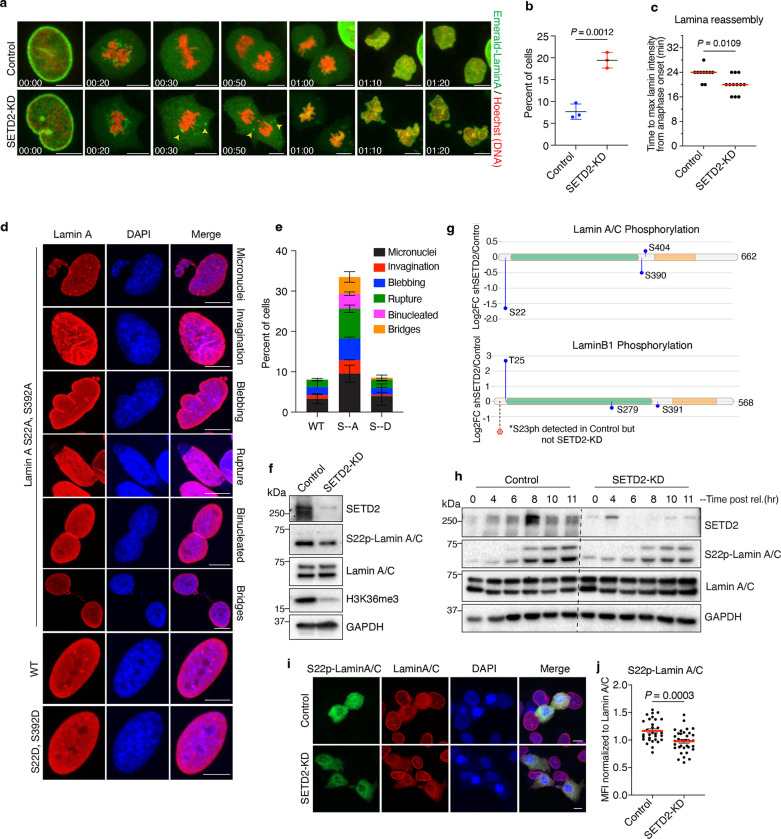
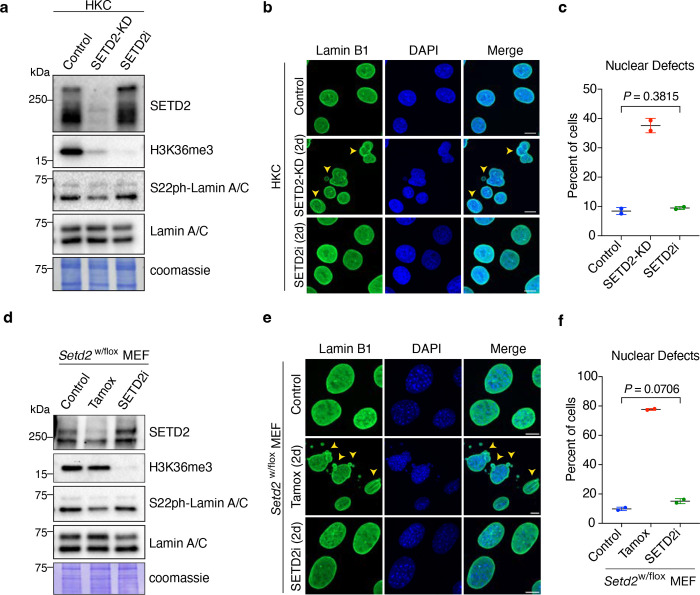
Histone methyltransferases play essential roles in the organization and function of chromatin. They are also frequently mutated in human diseases including cancer. One such often mutated methyltransferase, SETD2, associates co-transcriptionally with RNA polymerase II and catalyzes histone H3 lysine 36 trimethylation (H3K36me3) - a modification that contributes to gene transcription, splicing, and DNA repair. While studies on SETD2 have largely focused on the consequences of its catalytic activity, the non-catalytic functions of SETD2 are largely unknown. Here we report a catalysis-independent function of SETD2 in maintaining nuclear lamina stability and genome integrity. We found that SETD2, via its intrinsically disordered N-terminus, associates with nuclear lamina proteins including lamin A/C, lamin B1, and emerin. Depletion of SETD2, or deletion of its N-terminus, resulted in widespread nuclear morphology abnormalities and genome stability defects that were reminiscent of a defective nuclear lamina. Mechanistically, the N-terminus of SETD2 facilitates the association of the mitotic kinase CDK1 with lamins, thereby promoting lamin phosphorylation and depolymerization required for nuclear envelope disassembly during mitosis. Taken together, our findings reveal an unanticipated link between the N-terminus of SETD2 and nuclear lamina organization that may underlie how SETD2 acts as a tumor suppressor.
组蛋白甲基转移酶在染色质的组织和功能中发挥着重要作用。它们在包括癌症在内的人类疾病中也经常发生突变。其中一种经常发生突变的甲基转移酶SETD2,在转录过程中与RNA聚合酶II结合,并催化组蛋白H3赖氨酸36三甲基化(H3K36me3)——一种有助于基因转录、剪接和DNA修复的修饰。虽然对SETD2的研究主要集中在其催化活性的后果上,但其非催化功能在很大程度上尚不清楚。在这里,我们报告了SETD2在维持核纤层稳定性和基因组完整性方面的一种不依赖催化作用的功能。我们发现,SETD2通过其内在无序的N端,与包括核纤层蛋白A/C、核纤层蛋白B1和emerin在内的核纤层蛋白结合。SETD2的缺失或其N端的缺失,导致广泛的核形态异常和基因组稳定性缺陷,这让人联想到有缺陷的核纤层。从机制上讲,SETD2的N端促进有丝分裂激酶CDK1与核纤层蛋白的结合,从而促进有丝分裂期间核膜解体所需的核纤层蛋白磷酸化和解聚。综上所述,我们的发现揭示了SETD2的N端与核纤层组织之间意想不到的联系,这可能是SETD2作为肿瘤抑制因子发挥作用的基础。