Amarh Margaret Amerley, Laryea Michael Konney, Borquaye Lawrence Sheringham
Department of Chemistry, Kwame Nkrumah University of Science and Technology, Kumasi, Ghana.
Central Laboratory, Kwame Nkrumah University of Science and Technology, Kumasi, Ghana.
Heliyon. 2023 Aug 30;9(9):e19641. doi: 10.1016/j.heliyon.2023.e19641. eCollection 2023 Sep.
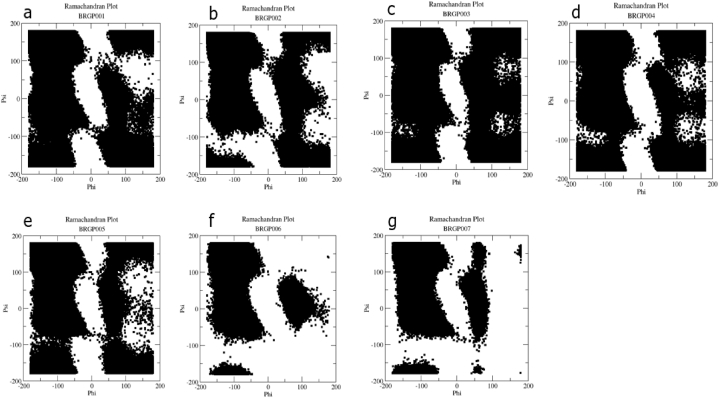
The phenomenon of antimicrobial resistance threatens our ability to treat common infections. The clinical pipeline for new antimicrobials is pretty much dry and hence, there is a need for the development of new antimicrobial agents with low toxicities to help fight resistant microorganisms. This work aimed to design antimicrobial peptides with low toxicities using a database filtering technology and evaluate their bioactivities. The physicochemical properties of the designed peptides were explored with molecular dynamics (MD) simulations. Microbroth dilution and hemolytic assays were used to assess the peptides' antimicrobial activity and toxicity. The activity of combinations of the peptides and some standard antibiotics was tested by the checkerboard method. In general, the designed peptides had a charge of +2, chain length of 13, and hydrophobicity of 61%. The predicted secondary structures of the peptides were either extended conformations or alpha-helices, and these structures were found to fluctuate during the MD simulations, where coils, bends, and helices dominated. , of the peptides, BRG003, BRG004 and BRG002 had the greatest aggregation propensities, whereas BRG001, BRG005, and BRG006 exhibited lower aggregation propensities. The minimum inhibitory concentration (MIC) of the peptides ranged from 0.015 to >1.879 μM, with BRGP-001 exhibiting high activity against with an MIC of 15 nM. BRGP-005 and BRGP-006 exhibited synergistic effects against when used in combination with erythromycin. At the minimum hemolytic concentration, the percentage of lysed erythrocytes was lower for all the peptides in comparison to the reference peptide, indicating low hemolytic activity. The study revealed the importance of peptide self-association in the antimicrobial activity of the peptides. These peptides provide a basis for the design of potent antimicrobial peptides that can further be developed for use in antimicrobial therapy.
抗菌耐药现象威胁着我们治疗常见感染的能力。新抗菌药物的临床研发渠道几乎枯竭,因此,需要开发对毒性低的新型抗菌剂,以帮助对抗耐药微生物。这项工作旨在利用数据库筛选技术设计低毒抗菌肽,并评估其生物活性。通过分子动力学(MD)模拟探索了所设计肽的物理化学性质。采用微量肉汤稀释法和溶血试验评估肽的抗菌活性和毒性。通过棋盘法测试了肽与一些标准抗生素组合的活性。总体而言,所设计的肽带 +2 电荷,链长为 13,疏水性为 61%。肽的预测二级结构为伸展构象或α-螺旋,并且在 MD 模拟过程中发现这些结构会波动,其中卷曲、弯曲和螺旋占主导。在所研究的肽中,BRG003、BRG004 和 BRG002 具有最大的聚集倾向,而 BRG001、BRG005 和 BRG006 表现出较低的聚集倾向。肽的最低抑菌浓度(MIC)范围为 0.015 至 >1.879 μM,BRGP - 001 对[具体菌株未提及]表现出高活性,MIC 为 15 nM。BRGP - 005 和 BRGP - 006 与红霉素联合使用时对[具体菌株未提及]表现出协同作用。在最低溶血浓度下,与参考肽相比,所有肽的红细胞裂解百分比均较低,表明溶血活性低。该研究揭示了肽自组装在肽抗菌活性中的重要性。这些肽为设计强效抗菌肽提供了基础,可进一步开发用于抗菌治疗。