Fernandes Nathália, Achemchem Fouad, Gonzales-Barron Ursula, Cadavez Vasco
Mountain Research Center, Campus of Santa Apolónia, Polytechnic Institute of Bragança, Portugal.
Laboratory for Sustainability and Technology in Mountain Regions, Campus of Santa Apolónia, Polytechnic Institute of Bragança, Portugal.
Ital J Food Saf. 2024 Oct 17;13(4):12558. doi: 10.4081/ijfs.2024.12558. eCollection 2024 Nov 12.
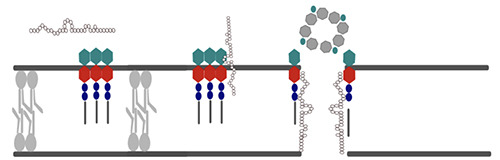
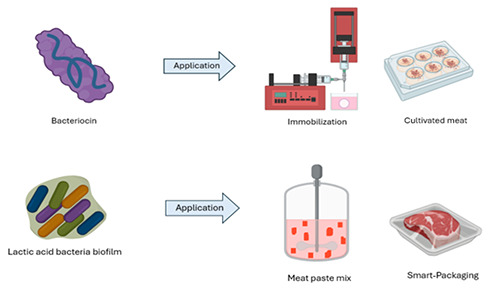
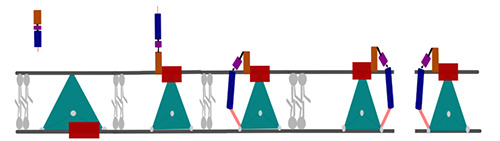
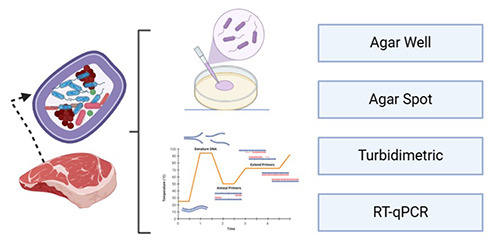
Fresh meat is highly perishable, presenting challenges in spoilage mitigation and waste reduction globally. Despite the efforts, foodborne outbreaks from meat consumption persist. Biopreservation offers a natural solution to extend shelf life by managing microbial communities. However, challenges include the effective diffusion of bacteriocins through the meat matrix and the potential inhibition of starter cultures by bacteriocins targeting closely related lactic acid bacteria (LAB). LAB, predominant in meat, produce bacteriocins - small, stable peptides with broad antimicrobial properties effective across varying pH and temperature conditions. This review highlights the recent advances in the optimization of bacteriocin use, considering its structure and mode of action. Moreover, the strengths and weaknesses of different techniques for bacteriocin screening, including novel bioengineering methods, are described. Finally, we discuss the advantages and limitations of the modes of application of bacteriocins toward the preservation of fresh, cured, and novel meat products.
鲜肉极易腐败,这在全球范围内的腐败减缓及减少浪费方面带来了挑战。尽管已做出诸多努力,但因食用肉类导致的食源性疾病暴发仍时有发生。生物保鲜提供了一种通过管理微生物群落来延长保质期的天然解决方案。然而,挑战包括细菌素在肉类基质中的有效扩散以及针对密切相关乳酸菌(LAB)的细菌素对发酵剂培养物的潜在抑制作用。LAB在肉类中占主导地位,会产生细菌素——一种小的、稳定的肽,具有广泛的抗菌特性,在不同的pH值和温度条件下均有效。本综述着重介绍了细菌素使用优化方面的最新进展,同时考虑了其结构和作用方式。此外,还描述了包括新型生物工程方法在内的不同细菌素筛选技术的优缺点。最后,我们讨论了细菌素应用模式在保鲜新鲜、腌制和新型肉类产品方面的优势和局限性。