Department of Pediatrics, Vanderbilt University Medical Center, Nashville, TN, USA.
Division of Proteomics of Stem Cell and Cancer, German Cancer Research Center, Heidelberg, Germany.
Gut Microbes. 2023 Dec;15(2):2264456. doi: 10.1080/19490976.2023.2264456. Epub 2023 Oct 10.
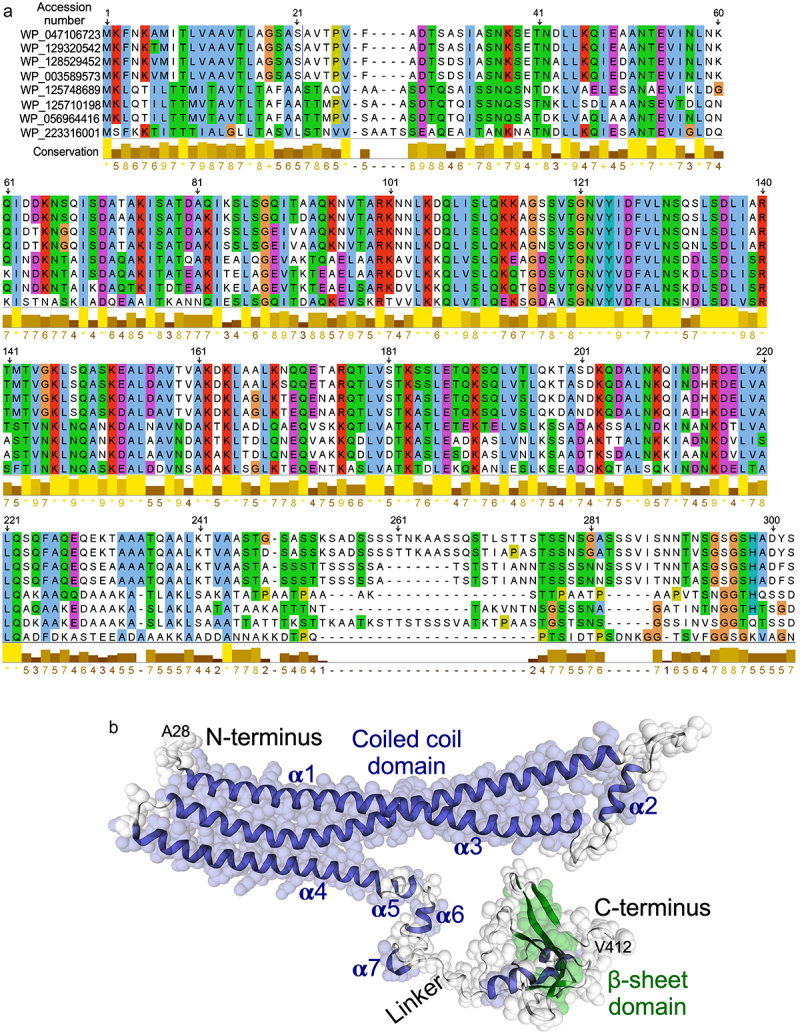
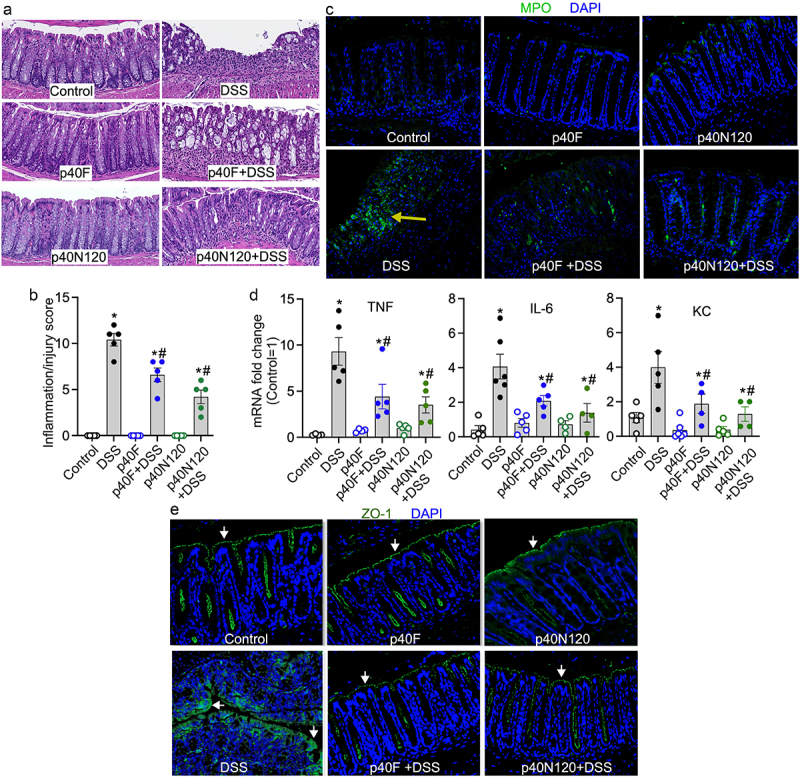
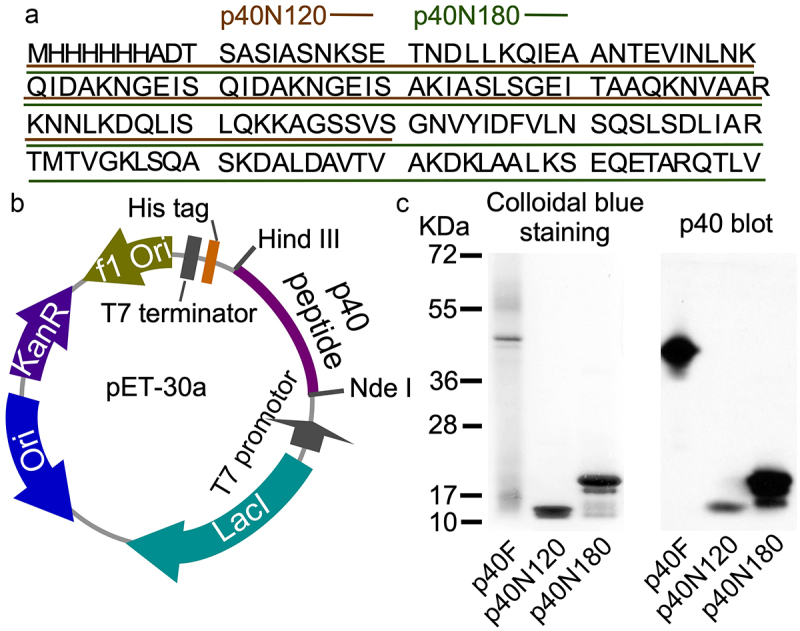
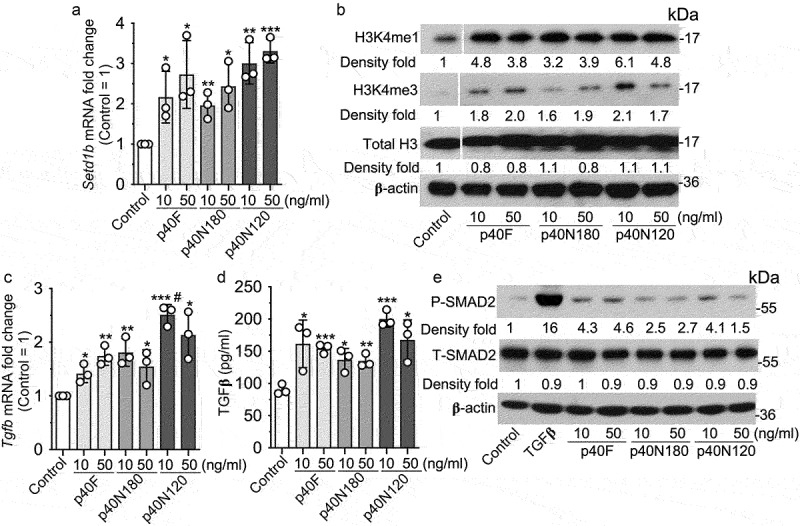
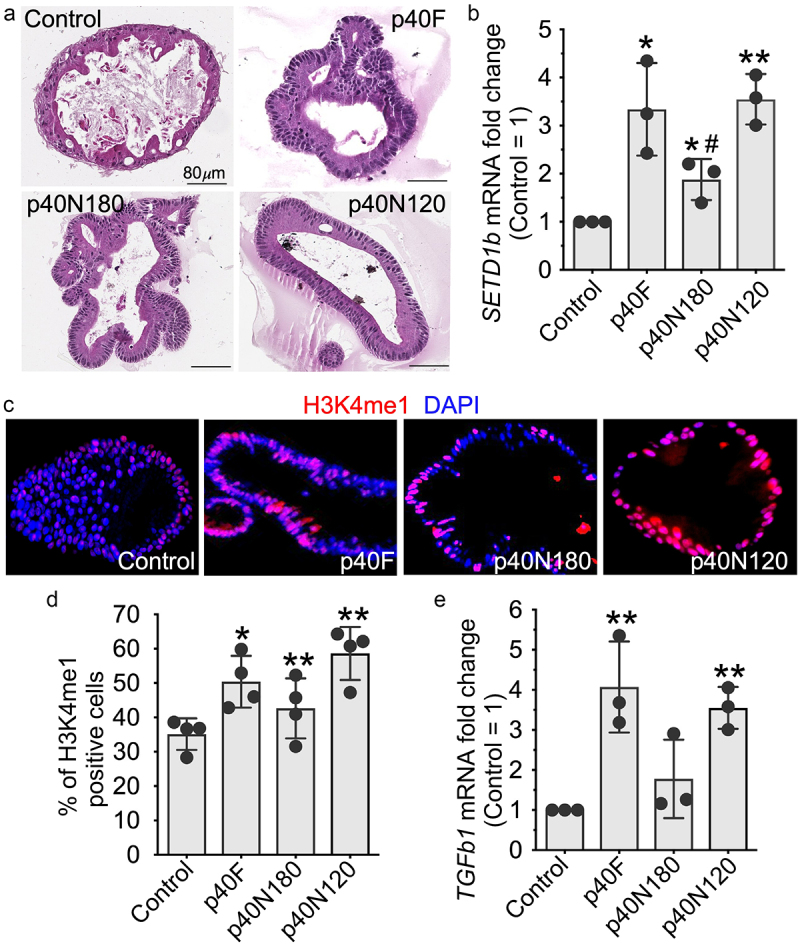
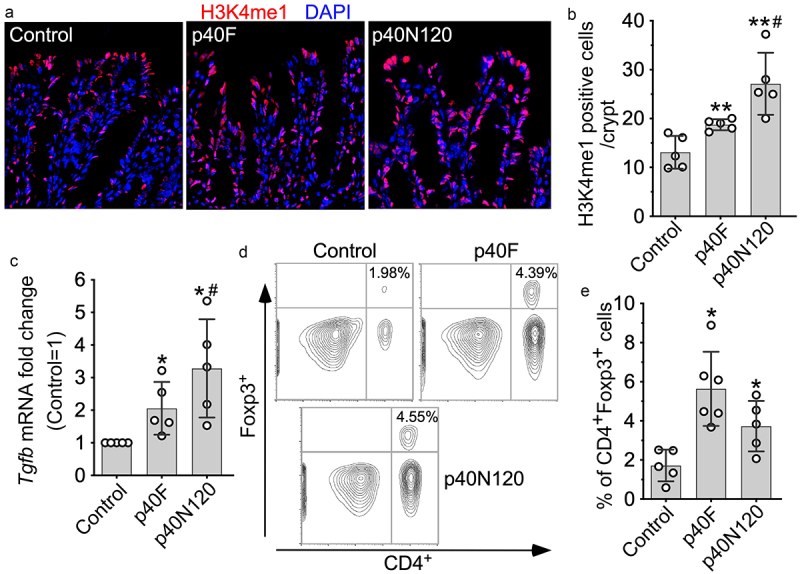
Several probiotic-derived factors have been identified as effectors of probiotics for exerting beneficial effects on the host. However, there is a paucity of studies to elucidate mechanisms of their functions. p40, a secretory protein, is originally isolated from a probiotic bacterium, GG. Thus, this study aimed to apply structure-functional analysis to define the functional peptide of p40 that modulates the epigenetic program in intestinal epithelial cells for sustained prevention of colitis. analysis revealed that p40 is composed of a signal peptide (1-28 residues) followed by a coiled-coil domain with uncharacterized function on the N-terminus, a linker region, and a β-sheet domain with high homology to CHAP on the C-terminus. Based on the p40 three-dimensional structure model, two recombinant p40 peptides were generated, p40N120 (28-120 residues) and p40N180 (28-180 residues) that contain first two and first three coiled coils, respectively. Compared to full-length p40 (p40F) and p40N180, p40N120 showed similar or higher effects on up-regulating expression of (encoding a methyltransferase), promoting mono- and trimethylation of histone 3 on lysine 4 (H3K4me1/3), and enhancing gene expression and protein production that leads to SMAD2 phosphorylation in human colonoids and a mouse colonic epithelial cell line. Furthermore, supplementation with p40F and p40N120 in early life increased H3K4me1, expression and differentiation of regulatory T cells (Tregs) in the colon, and mitigated disruption of epithelial barrier and inflammation induced by DSS in adult mice. This study reveals the structural feature of p40 and identifies a functional peptide of p40 that could maintain intestinal homeostasis.
几种益生菌衍生因子已被确定为益生菌发挥对宿主有益作用的效应因子。然而,阐明其功能机制的研究还很少。p40 是一种分泌蛋白,最初从益生菌 GG 中分离得到。因此,本研究旨在应用结构-功能分析来确定调节肠道上皮细胞表观遗传程序的 p40 功能肽,以持续预防结肠炎。分析表明,p40 由一个信号肽(1-28 个残基)组成,其后是一个具有未明功能的卷曲螺旋结构域,在 N 端,一个连接区,和一个 C 端具有高同源性的 CHAP 的β-折叠结构域。基于 p40 的三维结构模型,生成了两个重组 p40 肽,p40N120(28-120 个残基)和 p40N180(28-180 个残基),它们分别包含前两个和前三个卷曲螺旋结构。与全长 p40(p40F)和 p40N180 相比,p40N120 对上调(编码一种甲基转移酶)的表达、促进组蛋白 3 赖氨酸 4 的单甲基化和三甲基化(H3K4me1/3)、增强基因表达和蛋白产生的作用相似或更高,导致人结肠类器官和小鼠结肠上皮细胞系中 SMAD2 磷酸化。此外,在生命早期补充 p40F 和 p40N120 可增加 H3K4me1、在结肠中的表达和调节性 T 细胞(Tregs)的分化,并减轻 DSS 诱导的成年小鼠上皮屏障破坏和炎症。本研究揭示了 p40 的结构特征,并确定了 p40 的一个功能肽,它可以维持肠道内稳态。