Santé Medical College School of Public Health Department of Reproductive Health, Addis Ababa, Ethiopia.
St. Paul's Hospital Millennium Medical College, Addis Ababa, Ethiopia.
BMC Cancer. 2023 Oct 10;23(1):961. doi: 10.1186/s12885-023-11478-x.
Cervical cancer is a public health problem. It is one of the leading causes of death in women worldwide and the second leading cause of female cancer-related deaths. Cervical cancer screening enables the detection of abnormal cervical cells, including precancerous cervical lesions, as well as early-stage cervical cancer. Routine cervical screening has been shown to reduce both the incidence and mortality of the disease.
The aim of this study was to assess knowledge, practice of cervical cancer screening and associated factors among women police members at Addis Ababa police commission Ethiopia 2022.
An institutional-based cross-sectional study was conducted at the Addis Ababa police commission in the Lidet Sub-city police department from December 1st to January 30th, 2022. The data were collected through a structured, self-administered questionnaire from 361 randomly selected police officers. The collected data were analyzed using SPSS version 26 software in descriptive statistics, binary, and multivariable logistic regression analysis to identify factors associated with the outcome variable at PV = 0.05 with an AOR and 95% CI.
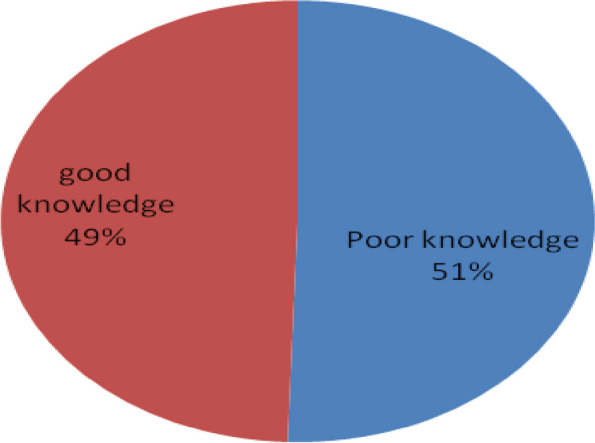
The complete response rate was 97.57% (361/371). This found that 59.5% of the total study participants were aged between 18 and 29 years old, and 47.3% were married in marital status. This study determined knowledge status of police commission towards cervical cancer screening revealed that 183(49.5%) had good knowledge, with identified factors which increases likelihood of good knowledge were attitude [AOR = 2.03, 95%CI;( 1.25-3.3)] and cervical cancer screening practice [AOR = 2.0, 95%CI (1.15-3.53)] respectively. This is determined the prevalence of cervical cancer screening practice was 68(18.4%)with 95% CI(14.3-22.4) with identified factors which increases likelihood of cervical cancer screening practice were age, [AOR = 3.24, 95% CI;( 1.08-9.75)], marital status [AOR = 3.88,95%CI,(1.55-9.73)] monthly income [AOR = 4.82,95%CI;(1.44-16.12)],religion[AOR = 8.65,95%CI,( 1.65-45.46)] and knowledge [AOR = 2.35,95%CI;( 1.22-4.52)] respectively. The main reason reported for not practice of cervical cancer screening was feeling healthy.
This study identified that the knowledge status of female police commissioners were poor and practice of cervical cancer screening were found to be very low. Some of the factors associated with the cervical cancer screening practice were age, marital status, monthly income and knowledge of the women. In addition, feeling being health was associated poor practice of cervical cancer screening. To alleviate this problem the health authorities at different level of the health system should take massive awareness creation activities through various communication channels about screening service prepare screening campaign.
宫颈癌是一个公共卫生问题。它是全球女性死亡的主要原因之一,也是女性癌症相关死亡的第二大原因。宫颈癌筛查可检测异常宫颈细胞,包括癌前宫颈病变和早期宫颈癌。常规宫颈癌筛查已被证明可以降低疾病的发病率和死亡率。
本研究旨在评估埃塞俄比亚亚的斯亚贝巴警察委员会女性警察对宫颈癌筛查的知识、实践情况及其相关因素。
2022 年 12 月 1 日至 1 月 30 日,在亚的斯亚贝巴警察局利德特分区警察局,进行了一项基于机构的横断面研究。通过从 361 名随机选择的警察那里收集的结构化、自我管理问卷收集数据。使用 SPSS 版本 26 软件进行描述性统计、二项和多变量逻辑回归分析,以确定与结果变量相关的因素,PV=0.05,AOR 和 95%CI。
完整响应率为 97.57%(361/371)。这表明,总研究参与者中有 59.5%的年龄在 18 至 29 岁之间,47.3%的人已婚。这项研究确定了警察委员会对宫颈癌筛查的知识状况,发现 183 人(49.5%)有良好的知识,有识别因素增加了良好知识的可能性,包括态度[AOR=2.03,95%CI;(1.25-3.3)]和宫颈癌筛查实践[AOR=2.0,95%CI;(1.15-3.53)]。这确定了宫颈癌筛查实践的流行率为 68%(18.4%),95%CI(14.3-22.4),有识别因素增加了宫颈癌筛查实践的可能性,包括年龄[AOR=3.24,95%CI;(1.08-9.75)]、婚姻状况[AOR=3.88,95%CI;(1.55-9.73)]、月收入[AOR=4.82,95%CI;(1.44-16.12)]、宗教[AOR=8.65,95%CI;(1.65-45.46)]和知识[AOR=2.35,95%CI;(1.22-4.52)]。未进行宫颈癌筛查的主要原因是感觉健康。
本研究发现,女性警察委员的知识状况较差,宫颈癌筛查的实践情况发现非常低。与宫颈癌筛查实践相关的一些因素包括年龄、婚姻状况、月收入和妇女的知识。此外,感觉健康与宫颈癌筛查实践不佳有关。为了缓解这一问题,不同级别的卫生系统的卫生当局应通过各种沟通渠道开展大规模的宣传活动,了解筛查服务并准备筛查活动。