National Center for Soybean Improvement, State Key Laboratory of Crop Genetics & Germplasm Enhancement and Utilization, College of Agriculture, Nanjing Agricultural University, Nanjing 210095, China.
Beijing Key Laboratory of Environmentally Friendly Management of Fruit Diseases and Pests in North China, Institute of Plant and Environment Protection, Beijing Academy of Agriculture and Forestry Sciences, Beijing 100097, China.
Plant Commun. 2024 Feb 12;5(2):100730. doi: 10.1016/j.xplc.2023.100730. Epub 2023 Oct 10.
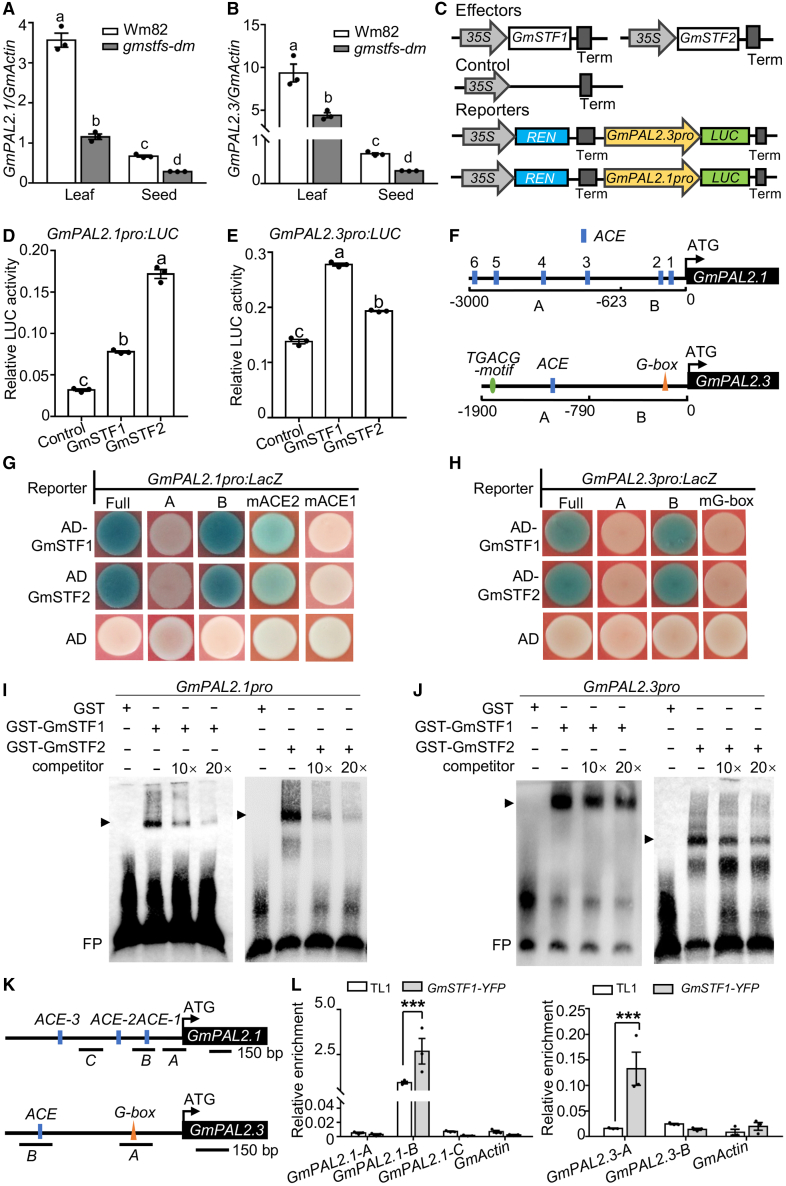
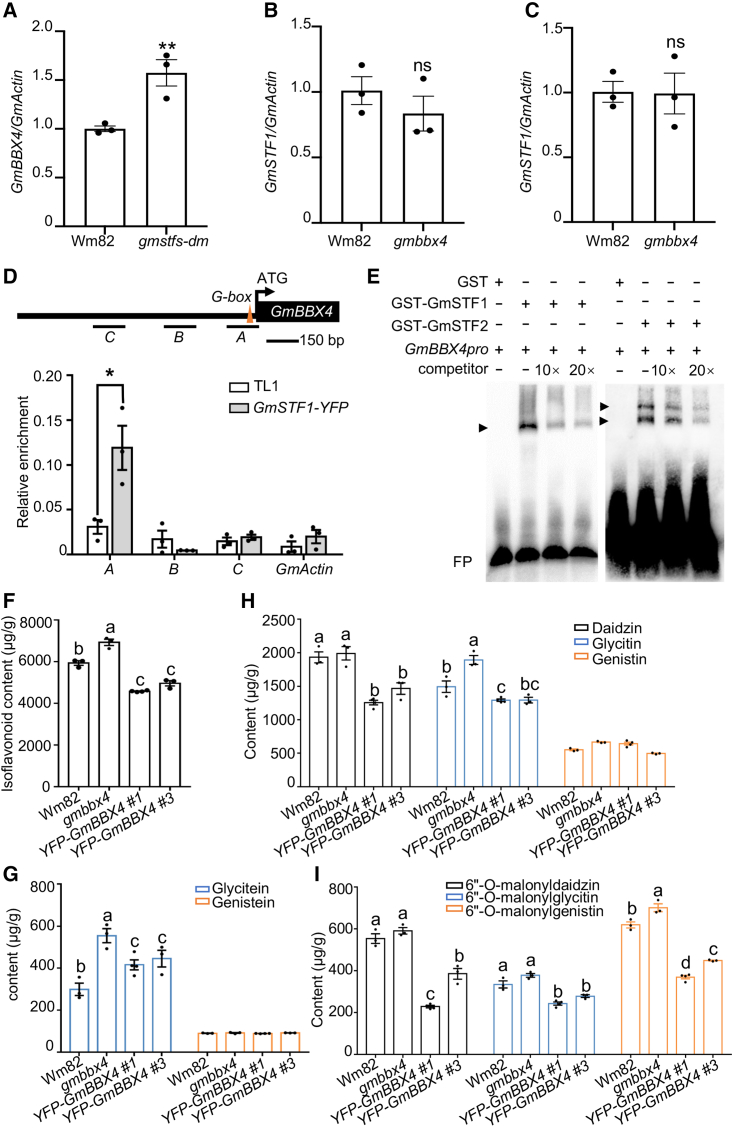
Isoflavonoids, secondary metabolites derived from the phenylalanine pathway, are predominantly biosynthesized in legumes, especially soybean (Glycine max). They are not only essential for plant responses to biotic and abiotic stresses but also beneficial to human health. In this study, we report that light signaling controls isoflavonoid biosynthesis in soybean. Blue-light photoreceptors (GmCRY1s, GmCRY2s, GmPHOT1s, and GmPHOT2s) and the transcription factors GmSTF1 and GmSTF2 promote isoflavonoid accumulation, whereas the E3 ubiquitin ligase GmCOP1b negatively regulates isoflavonoid biosynthesis. GmPHOT1s and GmPHOT2s stabilize GmSTF1/2, whereas GmCOP1b promotes the degradation of these two proteins in soybean. GmSTF1/2 regulate the expression of approximately 27.9% of the genes involved in soybean isoflavonoid biosynthesis, including GmPAL2.1, GmPAL2.3, and GmUGT2. They also repress the expression of GmBBX4, a negative regulator of isoflavonoid biosynthesis in soybean. In addition, GmBBX4 physically interacts with GmSTF1 and GmSTF2 to inhibit their transcriptional activation activity toward target genes related to isoflavonoid biosynthesis. Thus, GmSTF1/2 and GmBBX4 form a negative feedback loop that acts downstream of photoreceptors in the regulation of isoflavonoid biosynthesis. Our study provides novel insights into the control of isoflavonoid biosynthesis by light signaling in soybean and will contribute to the breeding of soybean cultivars with high isoflavonoid content through genetic and metabolic engineering.
异黄酮是苯丙氨酸途径衍生的次生代谢物,主要在豆科植物中合成,尤其是大豆(Glycine max)。它们不仅是植物应对生物和非生物胁迫的必要物质,而且对人类健康有益。在本研究中,我们报告称光信号控制大豆中的异黄酮生物合成。蓝光受体(GmCRY1s、GmCRY2s、GmPHOT1s 和 GmPHOT2s)和转录因子 GmSTF1 和 GmSTF2 促进异黄酮积累,而 E3 泛素连接酶 GmCOP1b 负调控异黄酮生物合成。GmPHOT1s 和 GmPHOT2s 稳定 GmSTF1/2,而 GmCOP1b 促进这两种蛋白质在大豆中的降解。GmSTF1/2 调节约 27.9%参与大豆异黄酮生物合成的基因的表达,包括 GmPAL2.1、GmPAL2.3 和 GmUGT2。它们还抑制 GmBBX4 的表达,GmBBX4 是大豆异黄酮生物合成的负调控因子。此外,GmBBX4 与 GmSTF1 和 GmSTF2 相互作用,抑制它们对与异黄酮生物合成相关的靶基因的转录激活活性。因此,GmSTF1/2 和 GmBBX4 形成一个负反馈回路,在光信号调控异黄酮生物合成中作为光受体的下游发挥作用。我们的研究为大豆中光信号调控异黄酮生物合成提供了新的见解,并将通过遗传和代谢工程为培育具有高异黄酮含量的大豆品种做出贡献。