Chang Cheng-Yen, Armstrong Dominique, Corry David B, Kheradmand Farrah
Department of Medicine, Baylor College of Medicine, Houston, TX, United States.
Department of Pathology and Immunology, Baylor College of Medicine, Houston, TX, United States.
Front Immunol. 2023 Sep 26;14:1268939. doi: 10.3389/fimmu.2023.1268939. eCollection 2023.
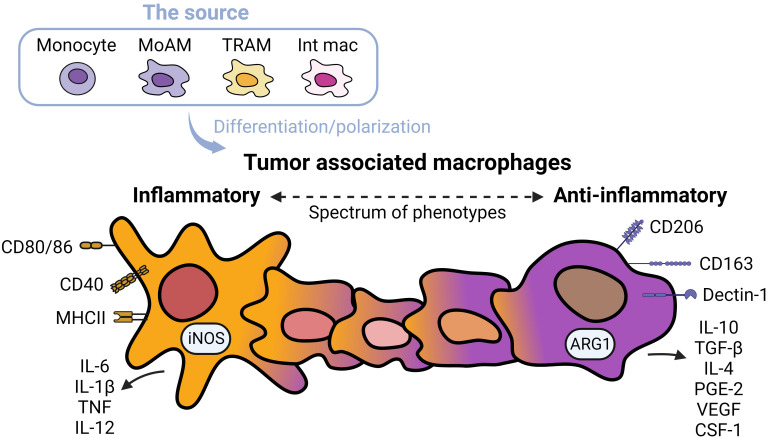
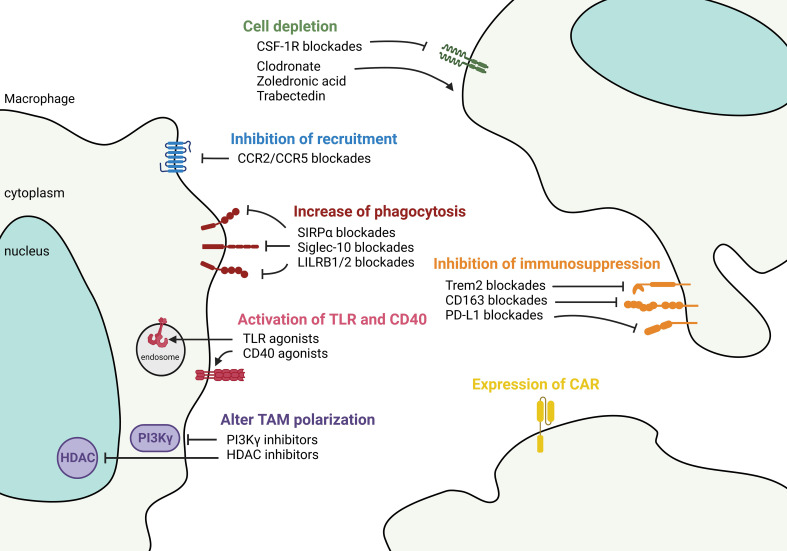
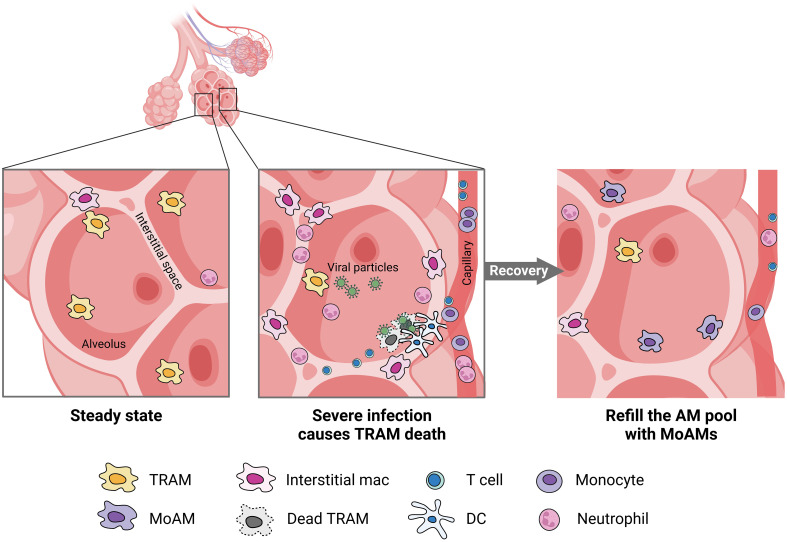
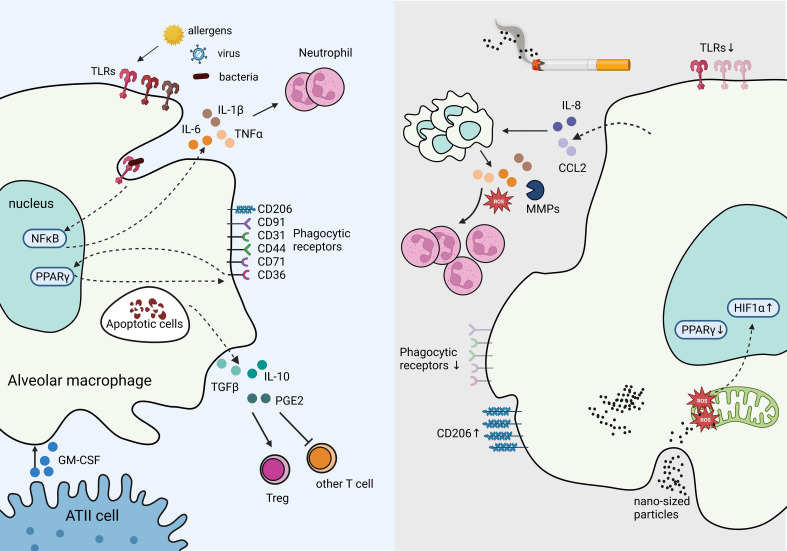
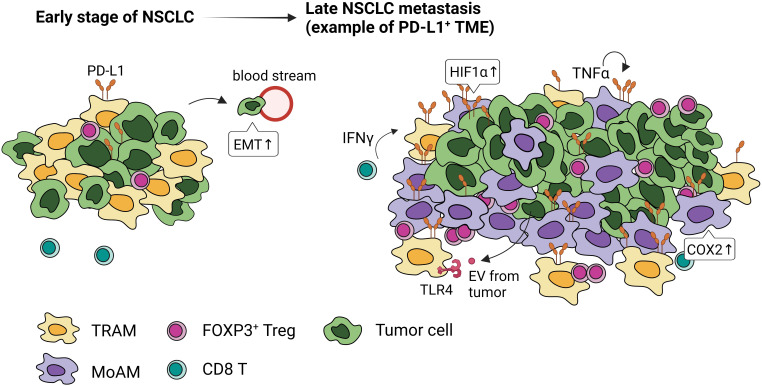
Alveolar macrophages (AMs) are critical components of the innate defense mechanism in the lung. Nestled tightly within the alveoli, AMs, derived from the yolk-sac or bone marrow, can phagocytose foreign particles, defend the host against pathogens, recycle surfactant, and promptly respond to inhaled noxious stimuli. The behavior of AMs is tightly dependent on the environmental cues whereby infection, chronic inflammation, and associated metabolic changes can repolarize their effector functions in the lungs. Several factors within the tumor microenvironment can re-educate AMs, resulting in tumor growth, and reducing immune checkpoint inhibitors (ICIs) efficacy in patients treated for non-small cell lung cancer (NSCLC). The plasticity of AMs and their critical function in altering tumor responses to ICIs make them a desirable target in lung cancer treatment. New strategies have been developed to target AMs in solid tumors reprograming their suppressive function and boosting the efficacy of ICIs. Here, we review the phenotypic and functional changes in AMs in response to sterile inflammation and in NSCLC that could be critical in tumor growth and metastasis. Opportunities in altering AMs' function include harnessing their potential function in trained immunity, a concept borrowed from memory response to infections, which could be explored therapeutically in managing lung cancer treatment.
肺泡巨噬细胞(AMs)是肺部固有防御机制的关键组成部分。AMs源自卵黄囊或骨髓,紧密分布于肺泡内,能够吞噬外来颗粒,保护宿主抵御病原体,循环利用表面活性剂,并迅速对吸入的有害刺激做出反应。AMs的行为紧密依赖于环境线索,感染、慢性炎症及相关代谢变化可使其在肺部的效应功能发生重新极化。肿瘤微环境中的多种因素可重塑AMs,导致肿瘤生长,并降低非小细胞肺癌(NSCLC)患者免疫检查点抑制剂(ICIs)的疗效。AMs的可塑性及其在改变肿瘤对ICIs反应中的关键作用,使其成为肺癌治疗中一个理想的靶点。目前已开发出新策略来靶向实体瘤中的AMs,重新编程其抑制功能并提高ICIs的疗效。在此,我们综述了AMs在无菌性炎症和NSCLC中发生的表型和功能变化,这些变化可能对肿瘤生长和转移至关重要。改变AMs功能的机会包括利用其在训练免疫中的潜在功能,这一概念借鉴了对感染的记忆反应,有望在肺癌治疗管理中进行治疗探索。