School of Health, Care and Social Welfare, Division of Health and Welfare Technology, Mälardalen University, Västerås, Sweden.
Centre for Research Ethics and Bioethics, Uppsala University, Box 564, Uppsala, SE-751 22, Sweden.
BMC Med Ethics. 2023 Oct 12;24(1):83. doi: 10.1186/s12910-023-00966-1.
New disease-modifying ways to treat Parkinson's disease (PD) may soon become a reality with intracerebral transplantation of cell products produced from human embryonic stem cells (hESCs). The aim of this study was to assess what factors influence preferences of patients with PD regarding stem-cell based therapies to treat PD in the future.
Patients with PD were invited to complete a web-based discrete choice experiment to assess the importance of the following attributes: (i) type of treatment, (ii) aim of treatment, (iii) available knowledge of the different types of treatments, (iv) effect on symptoms, and (v) risk for severe side effects. Latent class conditional logistic regression models were used to determine preference estimates and heterogeneity in respondents' preferences.
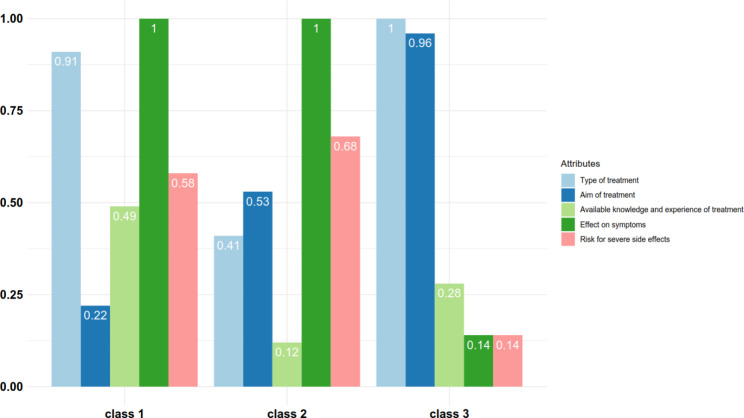
A substantial difference in respondents' preferences was observed in three latent preference patterns (classes). "Effect on symptoms" was the most important attribute in class 1, closely followed by "type of treatment," with medications as preferred to other treatment alternatives. Effect on symptoms was also the most important attribute in class 2, with treatment with hESCs preferred over other treatment alternatives. Likewise for class 3, that mainly focused on "type of treatment" in the decision-making. Respondents' class membership was influenced by their experience in treatment, side effects, and advanced treatment therapy as well as religious beliefs.
Most of the respondents would accept a treatment with products emanating from hESCs, regardless of views on the moral status of embryos. Preferences of patients with PD may provide guidance in clinical decision-making regarding treatments deriving from stem cells.
随着从人胚胎干细胞(hESC)中产生的细胞产品的脑内移植,治疗帕金森病(PD)的新的疾病修饰方法可能很快成为现实。本研究旨在评估哪些因素影响 PD 患者对基于干细胞的治疗方法的偏好,以便未来治疗 PD。
邀请 PD 患者完成基于网络的离散选择实验,以评估以下属性的重要性:(i)治疗类型,(ii)治疗目的,(iii)对不同类型治疗的了解程度,(iv)对症状的影响,以及(v)发生严重副作用的风险。使用潜在类别条件逻辑回归模型来确定偏好估计值和受访者偏好的异质性。
在三个潜在偏好模式(类别)中观察到受访者偏好存在明显差异。“对症状的影响”是类别 1 中最重要的属性,紧随其后的是“治疗类型”,首选药物治疗而不是其他治疗选择。对症状的影响在类别 2 中也是最重要的属性,首选 hESC 治疗而不是其他治疗选择。同样,类别 3 主要关注治疗决策中的“治疗类型”。受访者的类别成员资格受到其治疗经验、副作用和先进治疗疗法以及宗教信仰的影响。
大多数受访者会接受源自 hESC 的治疗产品,无论他们对胚胎的道德地位的看法如何。PD 患者的偏好可能为基于干细胞的治疗方法的临床决策提供指导。