Institute for Human Movement and Medical Sciences, Niigata University of Health and Welfare, 1398 Shimami-cho, Kita-ku, , Niigata-shi, Niigata, 950-3198, Japan.
Eur J Med Res. 2023 Oct 12;28(1):428. doi: 10.1186/s40001-023-01418-7.
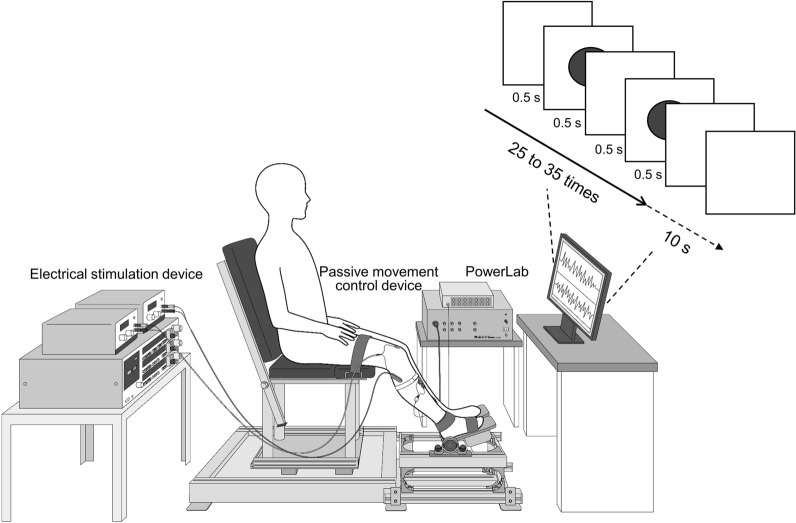
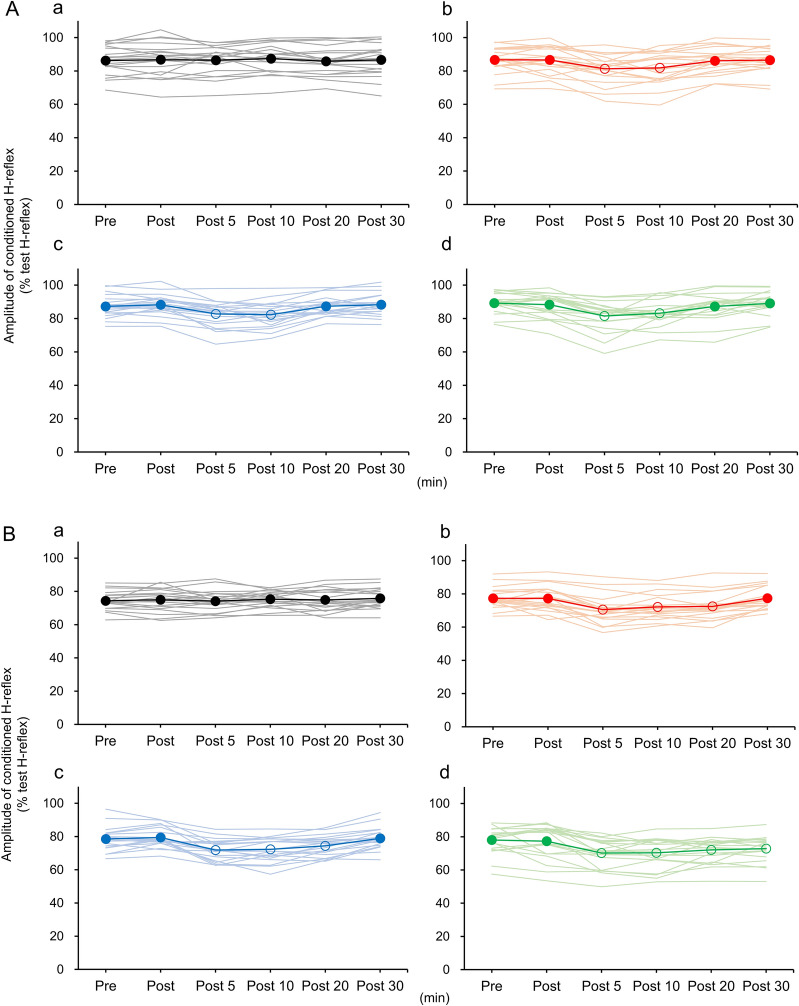
This study aimed to evaluate the effects of the participant's attention target during repetitive passive movement (RPM) intervention on reciprocal inhibition (RI) and joint movement function. Twenty healthy adults participated in two experiments involving four attention conditions [control (forward attention with no RPM), forward attention (during RPM), monitor attention (monitor counting task during RPM), ankle joint attention (ankle movement counting task during RPM)] during 10-min RPM interventions on the ankle joint. Counting tasks were included to ensure the participant's attention remained on the target during the intervention. In Experiment 1, RI was measured before, immediately after, and 5, 10, 15, 20, and 30 min after the RPM intervention. In Experiment 2, we evaluated ankle joint movement function at the same time points before and after RPM intervention. The maximum ankle dorsiflexion movement (from 30° plantar flexion to 10° dorsiflexion) was measured, reflecting RI. In Experiment 1, the RI function reciprocal Ia inhibition was enhanced for 10 min after RPM under all attention conditions (excluding the control condition. D1 inhibition was enhanced for 20 min after RPM in the forward and monitor attention conditions and 30 min after RPM in the ankle joint attention condition. In Experiment 2, the joint movement function decreased under the forward and monitor attention conditions but improved under the ankle joint attention condition. This study is the first to demonstrate that the participant's attention target affected the intervention effect of the RI enhancement method, which has implications for improving the intervention effect of rehabilitation.
本研究旨在评估参与者在重复被动运动(RPM)干预过程中注意力目标对交互抑制(RI)和关节运动功能的影响。20 名健康成年人参与了两个实验,在这两个实验中,参与者在踝关节 RPM 干预期间的 10 分钟内处于四种注意力条件下[对照组(无 RPM 的正向注意力)、正向注意力(RPM 期间)、监测注意力(RPM 期间计数任务)、踝关节注意力(RPM 期间踝关节运动计数任务)]。计数任务包括在内,以确保参与者在干预过程中注意力集中在目标上。在实验 1 中,在 RPM 干预之前、之后以及之后的 5、10、15、20 和 30 分钟测量 RI。在实验 2 中,我们在 RPM 干预前后的相同时间点评估踝关节运动功能。测量最大踝关节背屈运动(从 30°跖屈到 10°背屈),反映 RI。在实验 1 中,在所有注意力条件下(不包括对照组),RPM 后 10 分钟 RI 功能反向 Ia 抑制增强。在正向和监测注意力条件下,RPM 后 20 分钟 D1 抑制增强,在踝关节注意力条件下,RPM 后 30 分钟 D1 抑制增强。在实验 2 中,在正向和监测注意力条件下,关节运动功能下降,但在踝关节注意力条件下改善。这项研究首次表明,参与者的注意力目标影响 RI 增强方法的干预效果,这对改善康复干预效果具有重要意义。