Raeder Robert, Clayton Nicola S, Boeckle Markus
Department of Psychology, University of Cambridge, Cambridge, United Kingdom.
Scientific Working Group, Karl Landsteiner University of Health Sciences, Krems, Austria.
Front Psychol. 2023 Sep 27;14:1215225. doi: 10.3389/fpsyg.2023.1215225. eCollection 2023.
The aim of this systematic review and meta-analysis is to evaluate the efficacy of narrative-based interventions (NBIs) for individuals with post-traumatic stress disorder (PTSD). Investigating the efficacy of NBIs should yield insight on autobiographical memory (AM) phenomena implicated in PTSD onset and recovery, leading to improved intervention protocols. Furthermore, by analyzing how NBIs influence maladaptive AM distortions, we hope to shed light on the theorized narrative architecture of AM more generally.
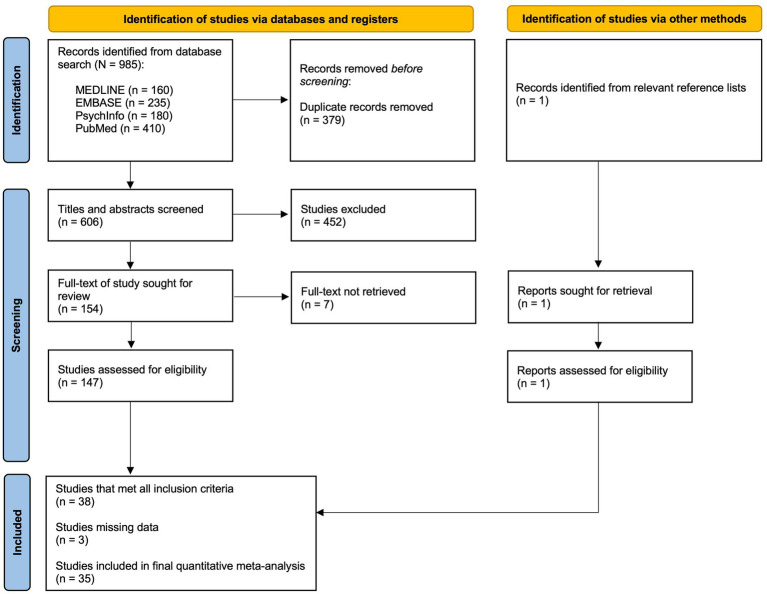
A systematic literature search was conducted according to PRISMA and Cochrane guidelines in MEDLINE, EMBASE, PsychINFO, and PubMed. Additional studies were then also identified from the reference lists of other relevant literature and considered for inclusion. Studies were then evaluated for adherence to the inclusion/exclusion criteria and assessed for risk of bias. Various meta-analyses were performed on included studies to understand how NBIs may or may not influence the overall effect size of treatment.
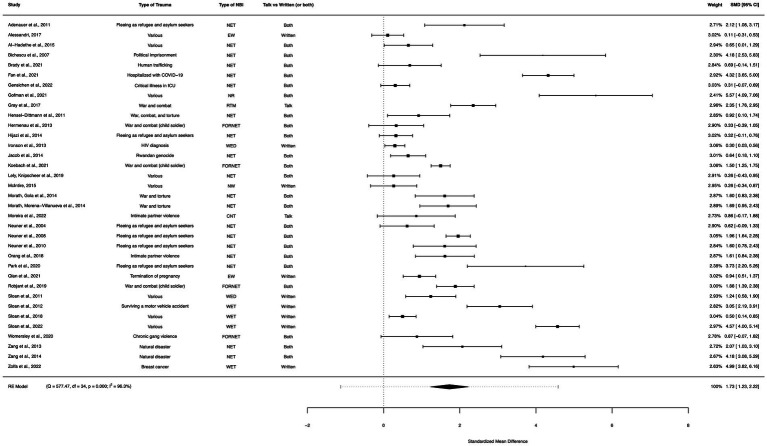
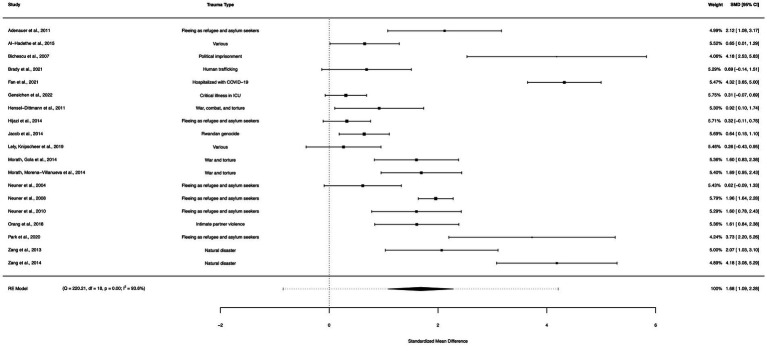
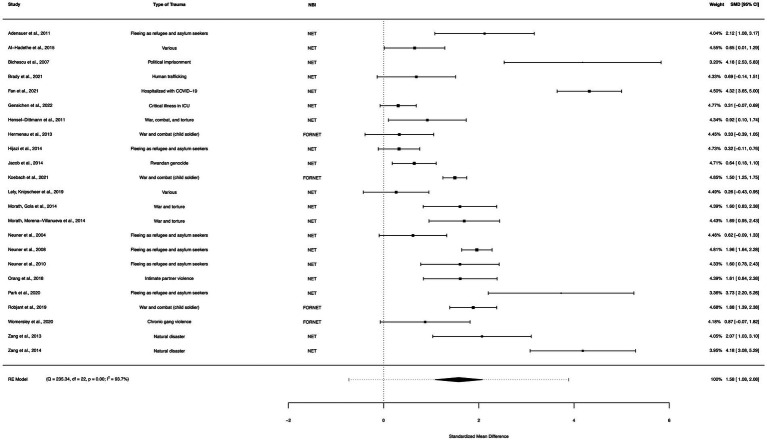
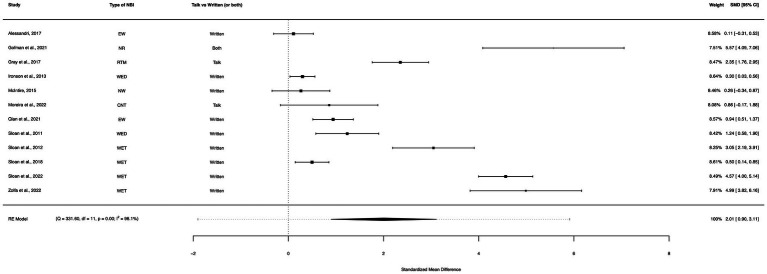
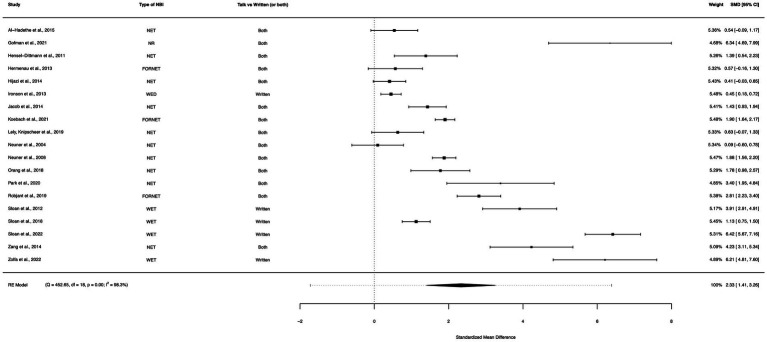
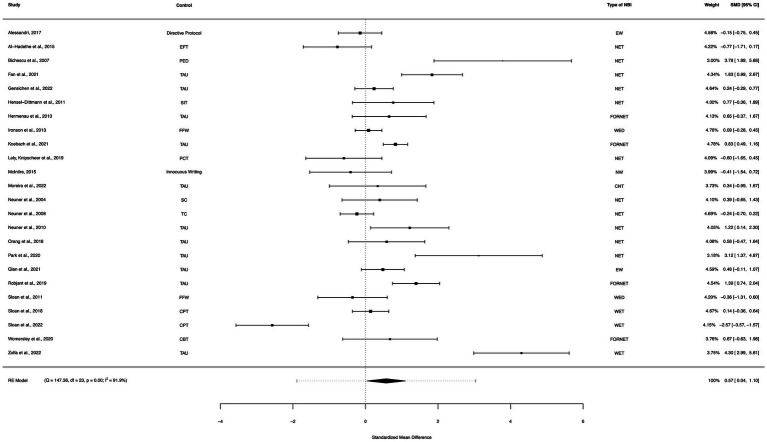
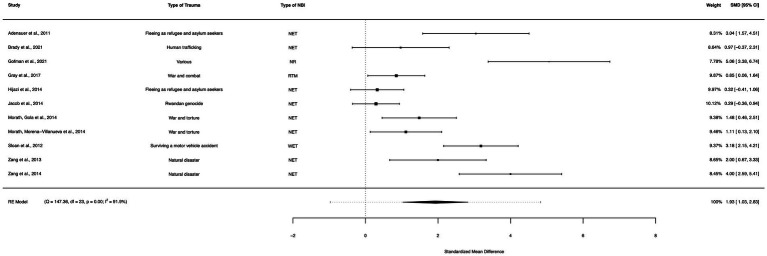
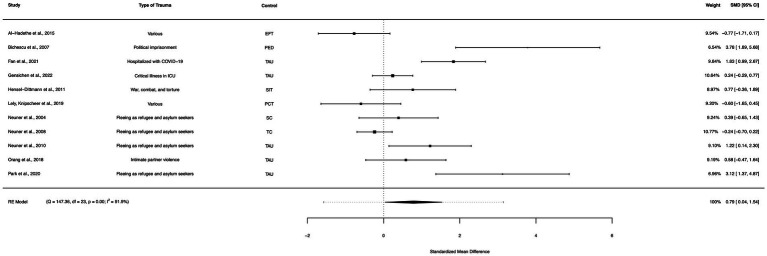
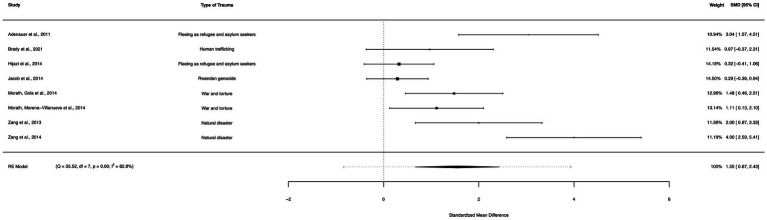
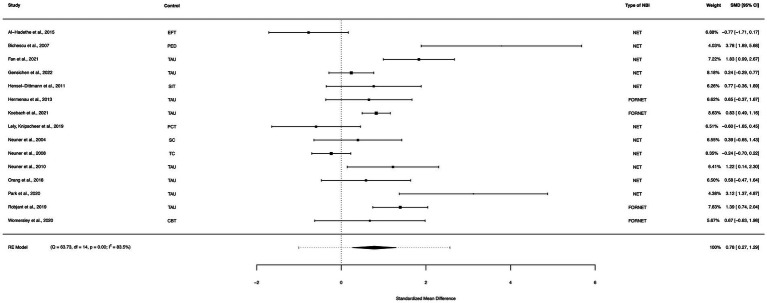
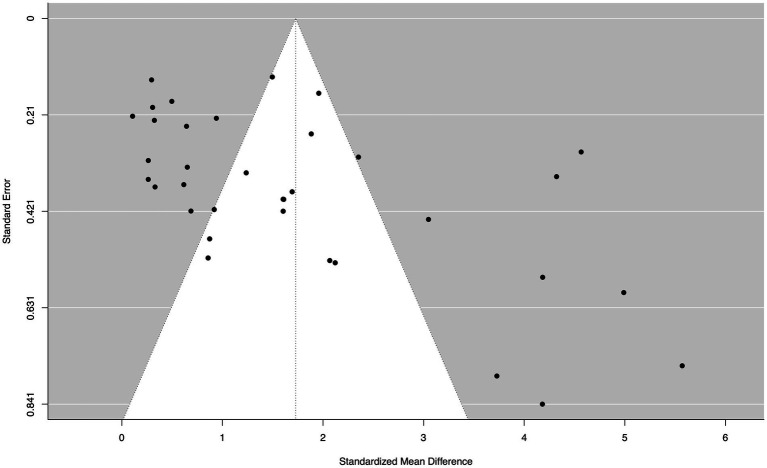
The results of the meta-analysis of 35 studies, involving 2,596 participants, suggest that NBIs are a viable and effective treatment option for PTSD, yielding a statistically significant within-group effect size and decrease in PTSD symptomatology at both post-treatment [ = 1.73, 95% CI (1.23-2.22)] and 3-9 month follow-up assessments [ = 2.33, 95% CI (1.41-3.26)]. Furthermore, the difference in effect sizes between NBIs compared to active and waitlist controls was statistically significant, suggesting that NBIs are superior. Sub-analyses showed that NET provided a stronger effect size than FORNET, which may be due to the nature of the traumatic event itself and not the treatment protocol. While evidence of small study and publication bias was present, a weight-function model and trim-and-fill method suggested it was not influencing the overall results.
This meta-analysis presents strong evidence supporting the use of NBIs in the treatment of PTSD. Clear similarities can be identified between NBIs included in this analysis that make them distinct from non-NBI interventions, which are reviewed in the discussion. Controlled comparisons between NBIs and non-NBIs would help to further understand AM mechanisms of action implicated in recovery and how various interventions facilitate them. Future research should also aim to elucidate the full range of AM impairment in individuals with PTSD to gain insight on how other memory capabilities, such as the ability to mentally simulate the future, are implicated in the pathogenesis of PTSD.
本系统评价和荟萃分析的目的是评估基于叙事的干预措施(NBI)对创伤后应激障碍(PTSD)患者的疗效。研究NBI的疗效应能深入了解PTSD发病和康复过程中涉及的自传体记忆(AM)现象,从而改进干预方案。此外,通过分析NBI如何影响适应不良的AM扭曲,我们希望更全面地阐明AM的理论叙事结构。
根据PRISMA和Cochrane指南,在MEDLINE、EMBASE、PsychINFO和PubMed中进行系统的文献检索。然后还从其他相关文献的参考文献列表中识别出更多研究,并考虑纳入。随后评估研究是否符合纳入/排除标准,并评估偏倚风险。对纳入的研究进行了各种荟萃分析,以了解NBI可能如何或是否会影响治疗的总体效应大小。
对35项研究(涉及2596名参与者)的荟萃分析结果表明,NBI是一种可行且有效的PTSD治疗选择,在治疗后[效应量=1.73,95%置信区间(1.23 - 2.22)]和3 - 9个月随访评估时[效应量=2.33,95%置信区间(1.41 - 3.26)],组内效应量具有统计学意义,PTSD症状有所减轻。此外,与积极对照组和等待名单对照组相比,NBI的效应量差异具有统计学意义,表明NBI更具优势。亚组分析显示,网络暴露疗法(NET)的效应量比格式塔导向的网络暴露疗法(FORNET)更强,这可能是由于创伤事件本身的性质而非治疗方案所致。虽然存在小规模研究和发表偏倚的证据,但权重函数模型和修剪填充法表明其并未影响总体结果。
这项荟萃分析提供了有力证据支持使用NBI治疗PTSD。本分析中纳入的NBI之间可以发现明显的相似之处,这使它们有别于非NBI干预措施,在讨论中对此进行了综述。NBI与非NBI之间的对照比较将有助于进一步了解与康复相关的AM作用机制,以及各种干预措施如何促进这些机制。未来的研究还应旨在阐明PTSD患者中AM损害的全貌,以深入了解其他记忆能力,如心理模拟未来的能力,如何在PTSD的发病机制中发挥作用。