Department of Entomology, The University of Arizona, Tucson, AZ, 85721, USA.
Department of Chemistry and Biochemistry, The University of Arizona, Tucson, AZ, 85721, USA.
BMC Biol. 2023 Oct 13;21(1):214. doi: 10.1186/s12915-023-01721-z.
Up to 40% of the world population live in areas where mosquitoes capable of transmitting the dengue virus, including Aedes aegypti, coexist with humans. Understanding how mosquito egg development and oviposition are regulated at the molecular level may provide new insights into novel mosquito control strategies. Previously, we identified a protein named eggshell organizing factor 1 (EOF1) that when knocked down with RNA interference (RNAi) resulted in non-melanized and fragile eggs that did not contain viable embryos.
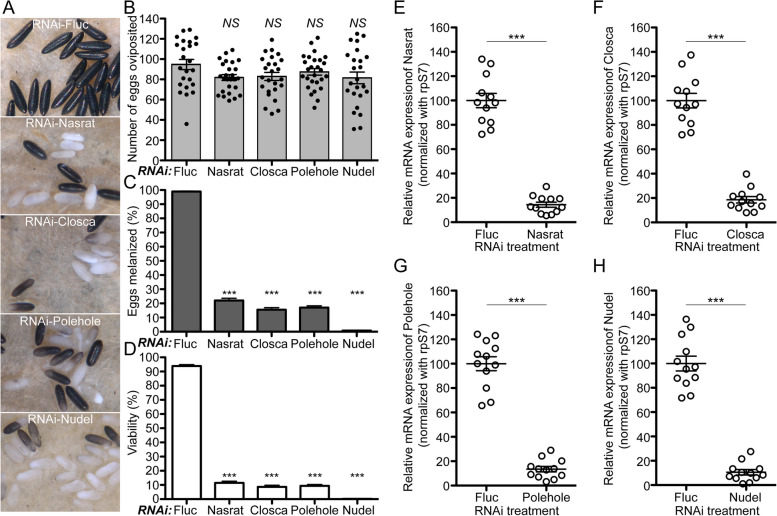
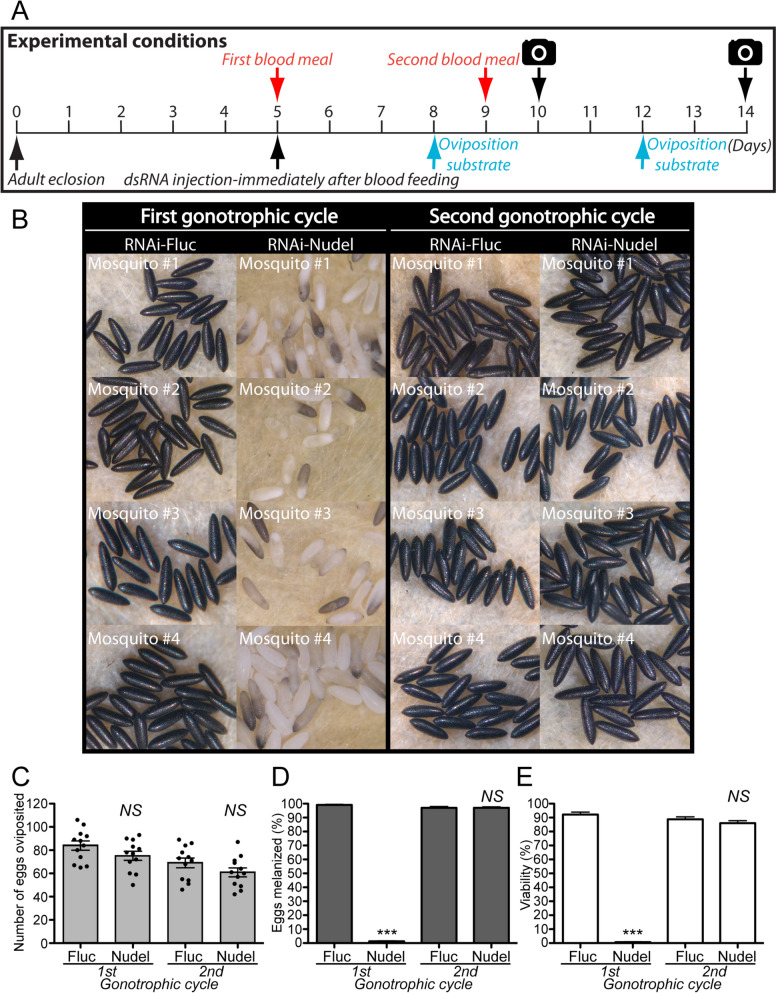
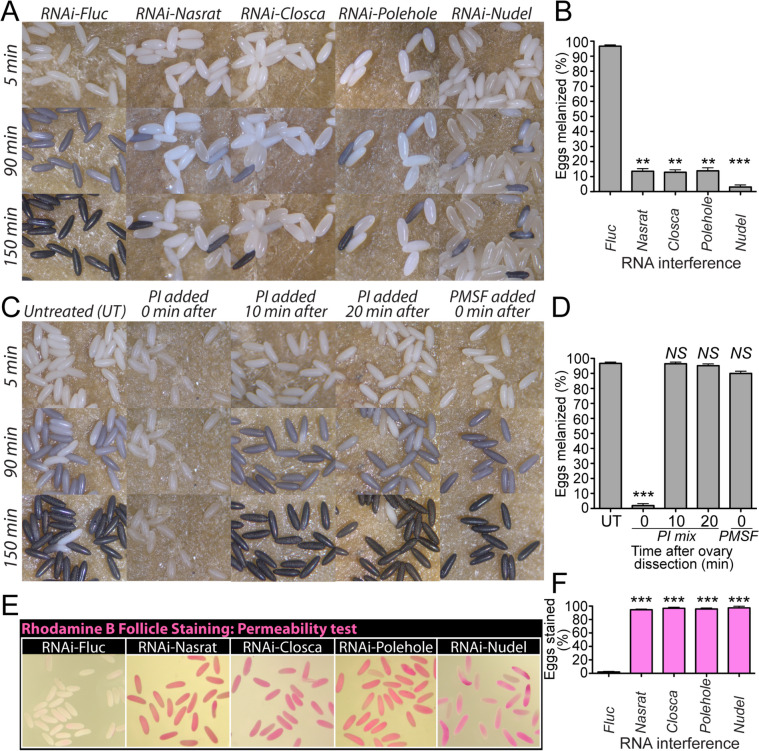
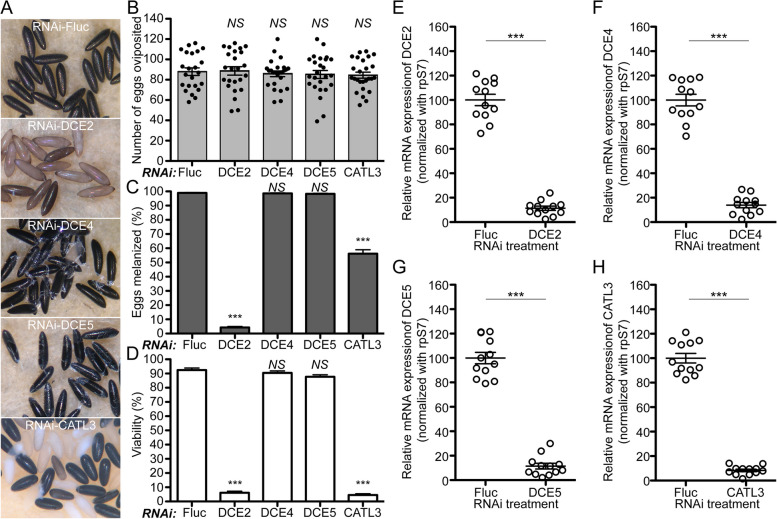
In this current study, we performed a comprehensive RNAi screen of putative A. aegypti eggshell proteins to identify additional proteins that interact with intracellular EOF1. We identified several proteins essential for eggshell formation in A. aegypti and characterized their phenotypes through a combination of molecular and biochemical approaches. We found that Nasrat, Closca, and Polehole structural proteins, together with the Nudel serine protease, are indispensable for eggshell melanization and egg viability. While all four proteins are predominantly expressed in ovaries of adult females, Nudel messenger RNA (mRNA) expression is highly upregulated in response to blood feeding. Furthermore, we identified four additional secreted eggshell enzymes that regulated mosquito eggshell formation and melanization. These enzymes included three dopachrome-converting enzymes (DCEs) and one cysteine protease. All eight of these eggshell proteins were essential for proper eggshell formation. Interestingly, their eggshell surface topologies in response to RNAi did not phenocopy the effect of RNAi-EOF1, suggesting that additional mechanisms may influence how EOF1 regulates eggshell formation and melanization.
While our studies did not identify a definitive regulator of EOF1, we did identify eight additional proteins involved in mosquito eggshell formation that may be leveraged for future control strategies.
多达 40%的世界人口生活在能够传播登革热病毒的蚊子(包括埃及伊蚊)与人类共存的地区。了解蚊子卵发育和产卵是如何在分子水平上调控的,可能为新的蚊子控制策略提供新的见解。此前,我们鉴定了一种名为卵壳组织因子 1(EOF1)的蛋白,当用 RNA 干扰(RNAi)敲低时,会导致未黑素化和脆弱的卵,其中不含有存活的胚胎。
在本研究中,我们对埃及伊蚊卵壳蛋白进行了全面的 RNAi 筛选,以鉴定与细胞内 EOF1 相互作用的其他蛋白。我们鉴定了几个在埃及伊蚊卵壳形成中必不可少的蛋白,并通过分子和生化方法的组合来描述它们的表型。我们发现,Nasrat、Closca 和 Polehole 结构蛋白与 Nudel 丝氨酸蛋白酶一起,对于卵壳黑素化和卵的存活是必不可少的。虽然这四种蛋白主要在成年雌性卵巢中表达,但 Nudel 信使 RNA(mRNA)表达在对血液摄食的反应中高度上调。此外,我们还鉴定了四个额外的分泌卵壳酶,它们调节蚊子卵壳形成和黑素化。这些酶包括三种多巴醌转化酶(DCE)和一种半胱氨酸蛋白酶。这八种卵壳蛋白对于正常的卵壳形成都是必不可少的。有趣的是,它们的卵壳表面拓扑结构在 RNAi 后的表型并不模拟 RNAi-EOF1 的效果,这表明可能有其他机制影响 EOF1 如何调节卵壳形成和黑素化。
虽然我们的研究没有确定 EOF1 的明确调节剂,但我们确实鉴定了 8 种额外的参与蚊子卵壳形成的蛋白,它们可能被用于未来的控制策略。