The Key Laboratory of Biology and Genetic Improvement of Oil Crops, The Ministry of Agriculture and Rural Affairs of the PRC, Oil Crops Research Institute of the Chinese Academy of Agricultural Sciences, Wuhan 430062, China.
Int J Mol Sci. 2023 Sep 25;24(19):14504. doi: 10.3390/ijms241914504.
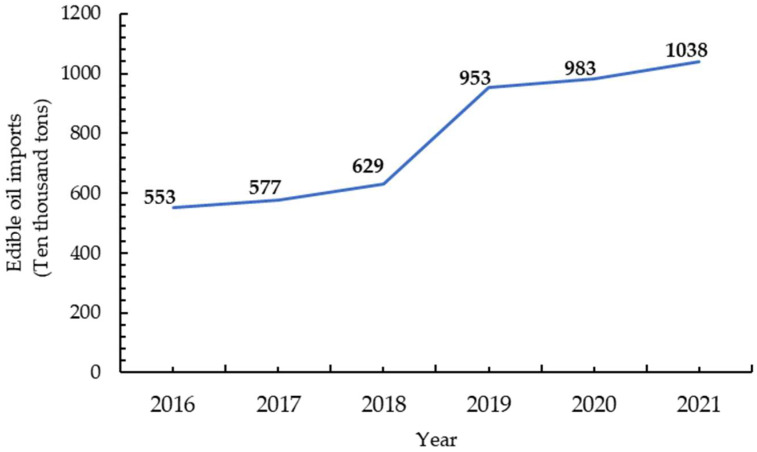
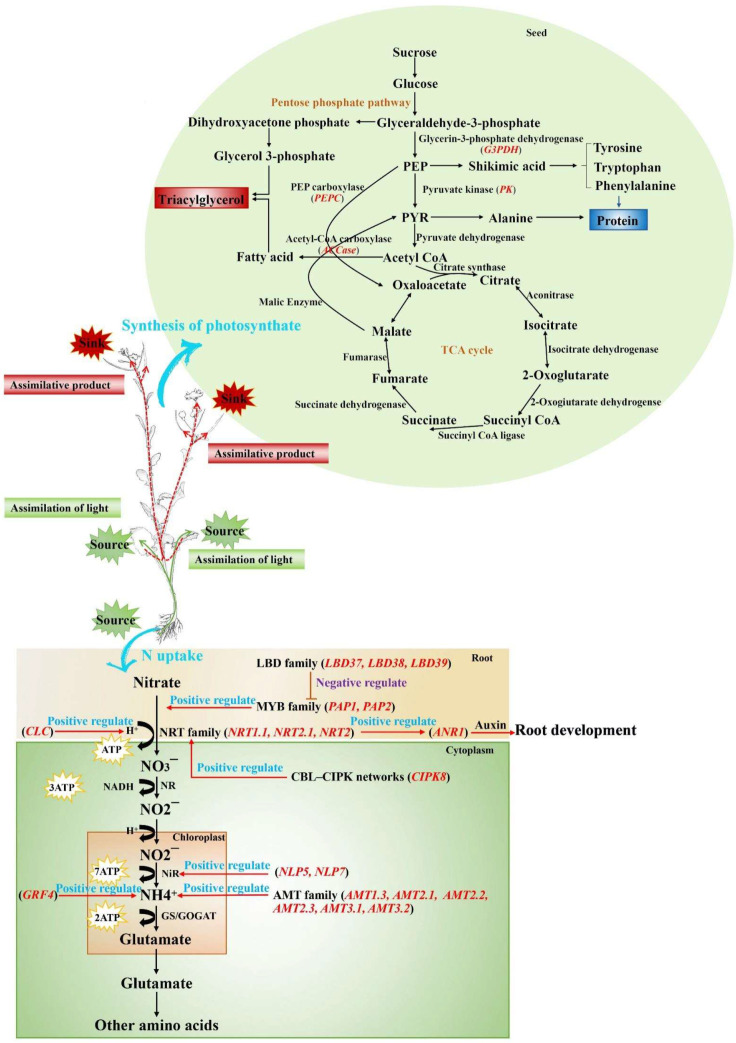
Rapeseed ( L.) is one of the most important oil crops in China. Improving the oil production of rapeseed is an important way to ensure the safety of edible oil in China. Oil production is an important index that reflects the quality of rapeseed and is determined by the oil content and yield. Applying nitrogen is an important way to ensure a strong and stable yield. However, the seed oil content has been shown to be reduced in most rapeseed varieties after nitrogen application. Thus, it is critical to screen elite germplasm resources with stable or improved oil content under high levels of nitrogen, and to investigate the molecular mechanisms of the regulation by nitrogen of oil accumulation. However, few studies on these aspects have been published. In this review, we analyze the effect of nitrogen on the growth and development of rapeseed, including photosynthetic assimilation, substance distribution, and the synthesis of lipids and proteins. In this process, the expression levels of genes related to nitrogen absorption, assimilation, and transport changed after nitrogen application, which enhanced the ability of carbon and nitrogen assimilation and increased biomass, thus leading to a higher yield. After a crop enters the reproductive growth phase, photosynthates in the body are transported to the developing seed for protein and lipid synthesis. However, protein synthesis precedes lipid synthesis, and a large number of photosynthates are consumed during protein synthesis, which weakens lipid synthesis. Moreover, we suggest several research directions, especially for exploring genes involved in lipid and protein accumulation under nitrogen regulation. In this study, we summarize the effects of nitrogen at both the physiological and molecular levels, aiming to reveal the mechanisms of nitrogen regulation in oil accumulation and, thereby, provide a theoretical basis for breeding varieties with a high oil content.
油菜(L.)是中国最重要的油料作物之一。提高油菜的产油量是确保中国食用油安全的重要途径。产油量是反映油菜品质的重要指标,由含油量和产量决定。施氮是保证油菜产量强劲稳定的重要手段。然而,研究表明,在大多数油菜品种中,施氮后种子含油量降低。因此,筛选在高氮水平下油含量稳定或提高的优良种质资源,并研究氮对油脂积累的调控分子机制至关重要。然而,在这些方面的研究很少。在这篇综述中,我们分析了氮对油菜生长发育的影响,包括光合作用的同化、物质的分配以及脂质和蛋白质的合成。在此过程中,施氮后与氮吸收、同化和运输相关的基因表达水平发生变化,增强了碳氮同化能力,增加了生物量,从而提高了产量。作物进入生殖生长阶段后,体内的光合产物被运输到发育中的种子中用于蛋白质和脂质的合成。然而,蛋白质合成先于脂质合成,并且在蛋白质合成过程中消耗大量的光合产物,从而削弱了脂质合成。此外,我们还提出了几个研究方向,特别是探索氮调节下参与脂质和蛋白质积累的基因。本研究总结了氮在生理和分子水平上的作用,旨在揭示氮在油脂积累中的调控机制,为培育高含油量品种提供理论依据。