College of Agronomy, Gansu Agricultural University, Lanzhou, Gansu, 730070, China.
State Key Laboratory of Arid land Crop Science, Lanzhou, Gansu, 730070, China.
BMC Plant Biol. 2024 Oct 9;24(1):937. doi: 10.1186/s12870-024-05556-w.
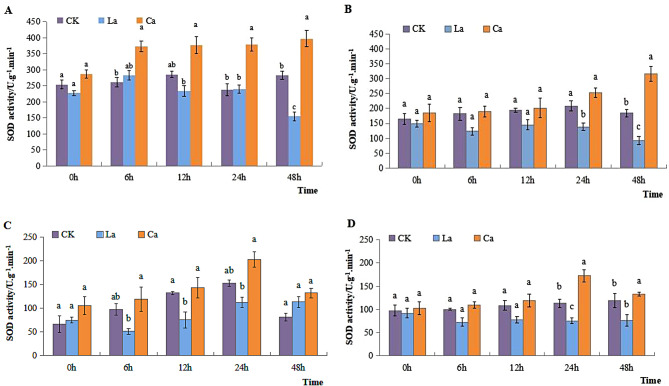
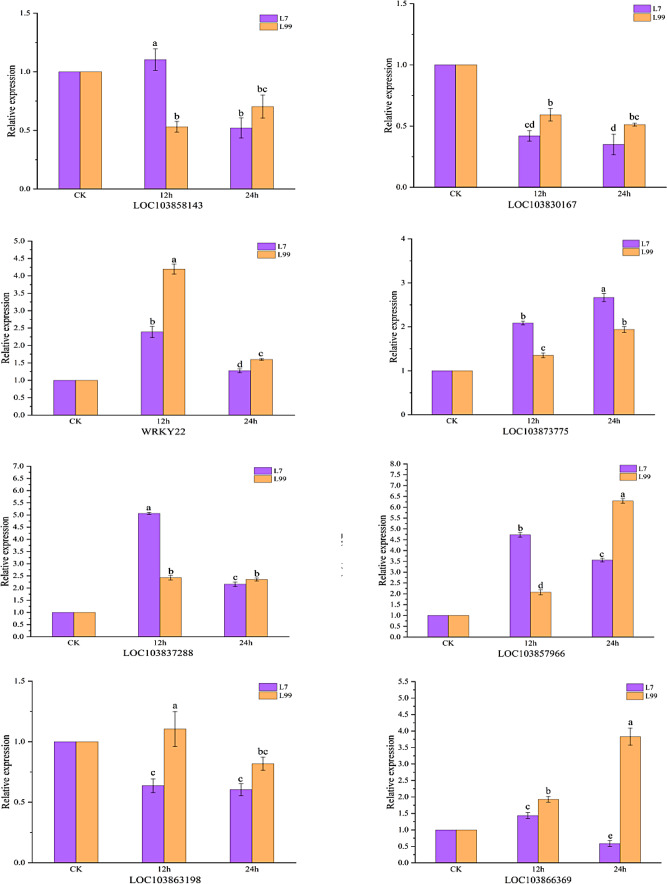
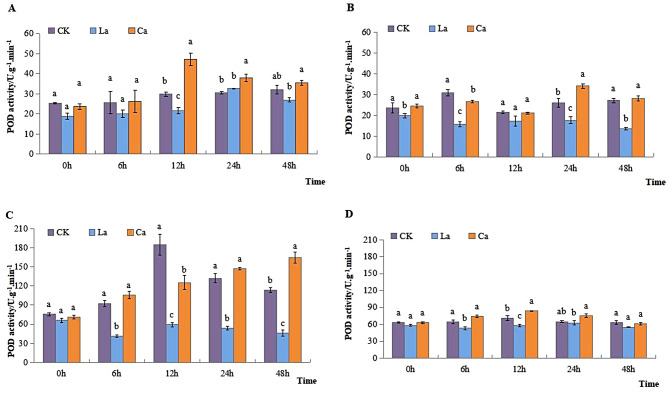
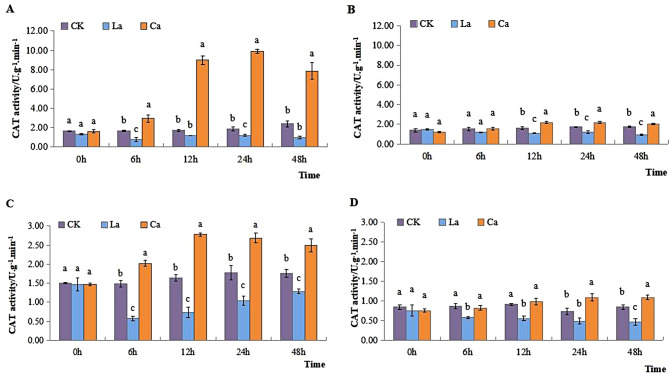
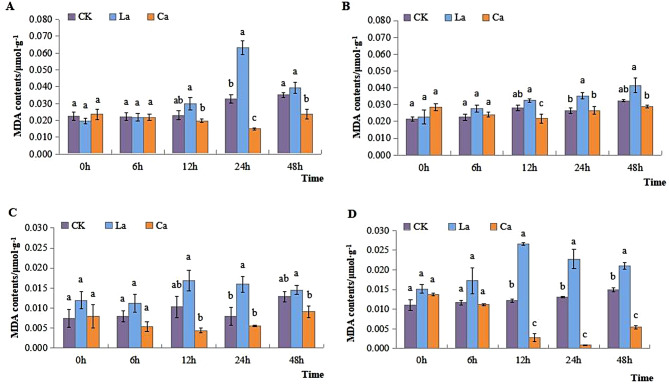
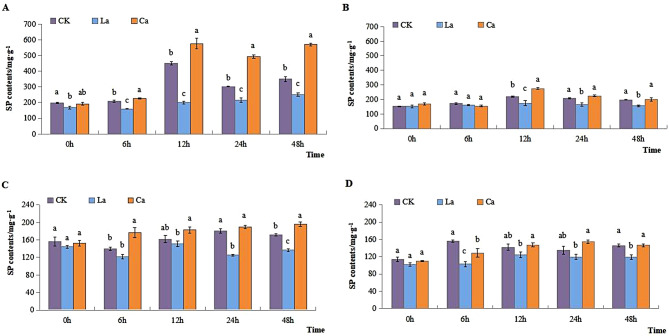
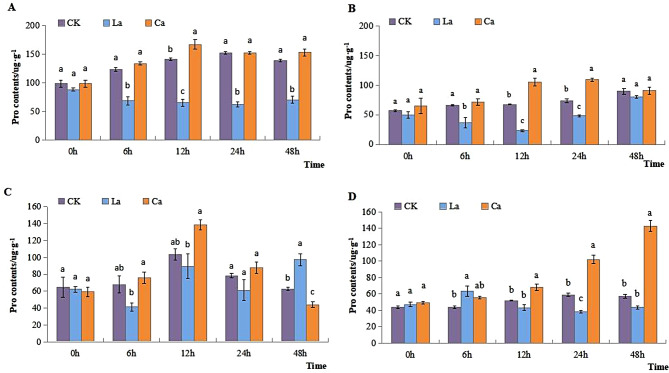
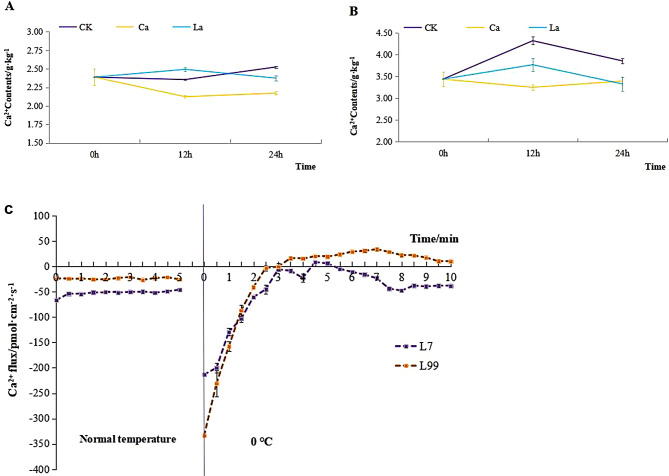
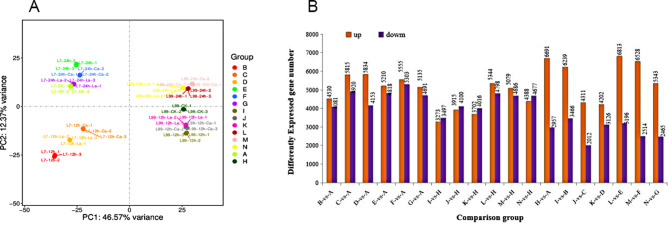
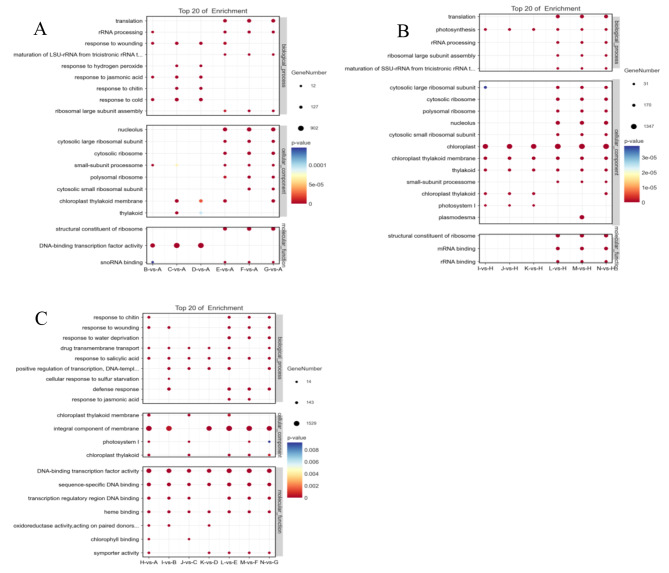
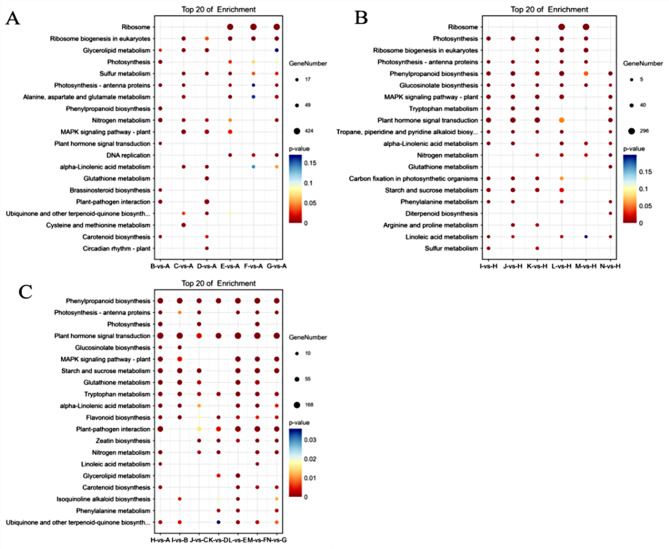
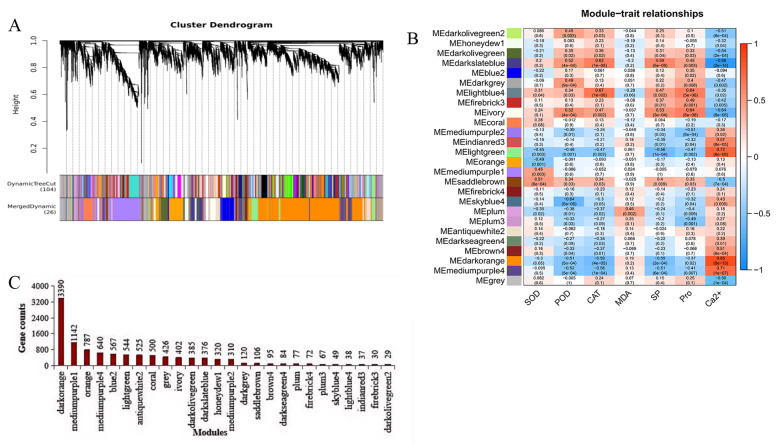
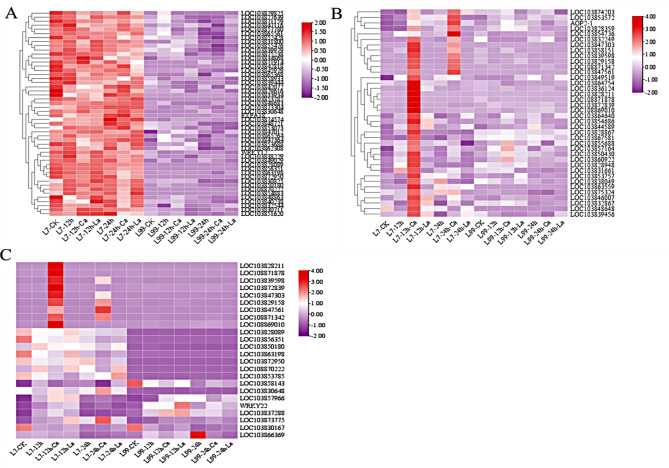
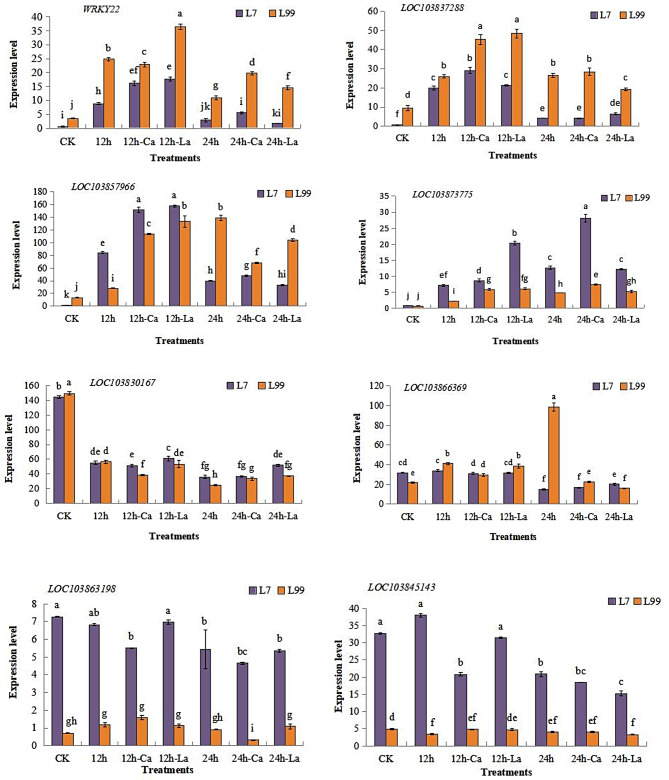
Low temperature is one of the environmental factors that restrict the growth and geographical distribution of Brassica. To investigate the effects of exogenous calcium and calcium inhibitor on the ability of winter turnip rapeseed (Brassica rapa L.) to withstand low temperatures (4℃), we used a strong cold-resistant variety Longyou 7 (L7) and a weak cold-resistant variety Longyou 99 (L99) as the materials. The seedlings were treated with CaCl (20 mmol·L) and calcium inhibitor LaCl (10 mmol·L) at 0 h (CK), 6 h, 12 h, 24 h and 48 h after 4℃ treatments. Physiological characteristics, Ca flux and Ca concentration in roots after treatments were analyzed. Results illustrated that under 4℃ treatment, activities of superoxide dismutase (SOD), peroxidase (POD), and catalase (CAT) increased by both CK and exogenous CaCl treatments. Contents of soluble protein (SP) and proline (Pro) increased, while contents of malondialdehyde (MDA) decreased, resulting in reduced membrane lipid peroxidation. But enzyme activity decreased and MDA content increased following treatment with exogenous LaCl. The rate of Ca flow showed a higher uptake in L7 roots compared with L99. L99 showed Ca efflux with a rate of 30.21 pmol‧cm‧s, whereas L7 showed short efflux then returned to influx. Calcium ion content in roots decreased in both cultivars after CaCl treatment. Results of RNA-seq revealed that genes were differentially expressed in response to low temperatures, hormones, photosystem II, chloroplasts, DNA replication, ribosomal RNA processing, and translation. This study found significant expression genes related to cellular signal transduction (MAPK signaling pathway) and material metabolism (nitrogen metabolism, glycerol ester metabolism).It was also analyzed by WGCNA that two modules had the strongest correlation with physiological indicators. Eight candidate genes were identified among MAPK signaling pathway and the two modules.
低温是限制芸薹属植物生长和地理分布的环境因素之一。为了研究外源钙和钙抑制剂对冬季萝卜油菜(芸薹属)耐低温(4℃)能力的影响,我们以抗寒能力较强的品种龙游 7 号(L7)和抗寒能力较弱的品种龙游 99 号(L99)为材料,在 4℃处理后 0 h(CK)、6 h、12 h、24 h 和 48 h 时用 CaCl(20 mmol·L)和钙抑制剂 LaCl(10 mmol·L)处理幼苗。分析处理后生理特性、根系 Ca 流和 Ca 浓度的变化。结果表明,在 4℃处理下,超氧化物歧化酶(SOD)、过氧化物酶(POD)和过氧化氢酶(CAT)活性均随 CK 和外源 CaCl 处理而升高。可溶性蛋白(SP)和脯氨酸(Pro)含量增加,丙二醛(MDA)含量降低,膜脂过氧化减轻。但外源 LaCl 处理后,酶活性降低,MDA 含量增加。L7 根中的 Ca 流速表现出较高的吸收速率,而 L99 则表现出 Ca 外排速率为 30.21 pmol·cm·s,而 L7 则表现出短暂的外排,然后恢复到内流。两种品种根系中的 Ca 离子含量在 CaCl 处理后均减少。RNA-seq 结果表明,基因对外源低温、激素、光合作用 II、叶绿体、DNA 复制、核糖体 RNA 加工和翻译等均有差异表达。本研究发现与细胞信号转导(MAPK 信号通路)和物质代谢(氮代谢、甘油酯代谢)相关的显著表达基因。还通过 WGCNA 分析发现,MAPK 信号通路和两个模块中有 8 个候选基因。