Department of Physiology, Albert Szent-Györgyi Medical School, University of Szeged, 6720 Szeged, Hungary.
Institute of Pharmaceutical Analysis, Interdisciplinary Excellence Center, University of Szeged, 6720 Szeged, Hungary.
Int J Mol Sci. 2023 Sep 25;24(19):14522. doi: 10.3390/ijms241914522.
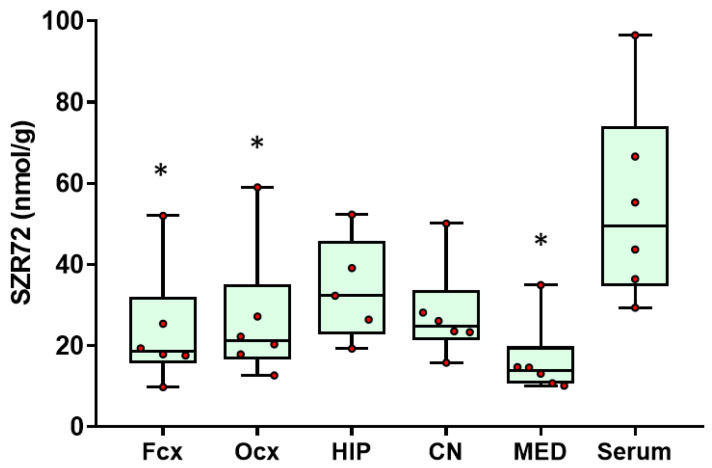
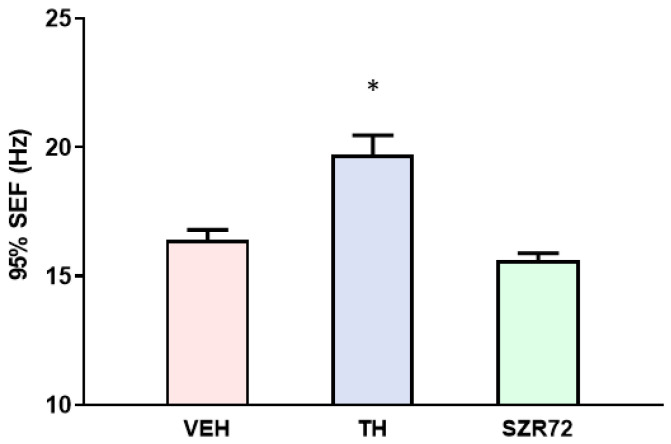
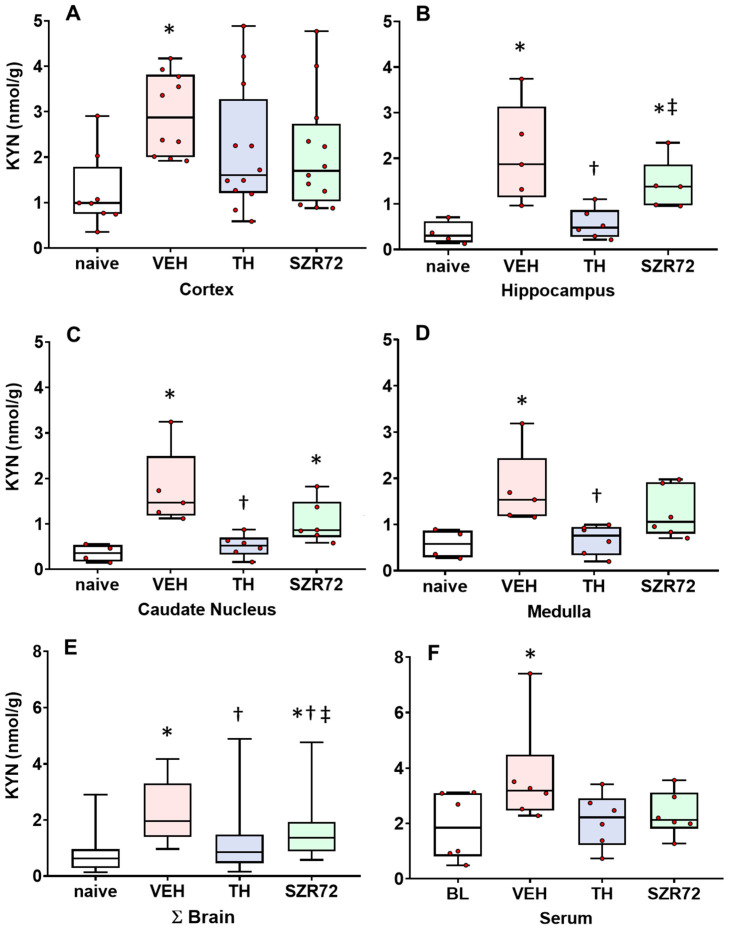
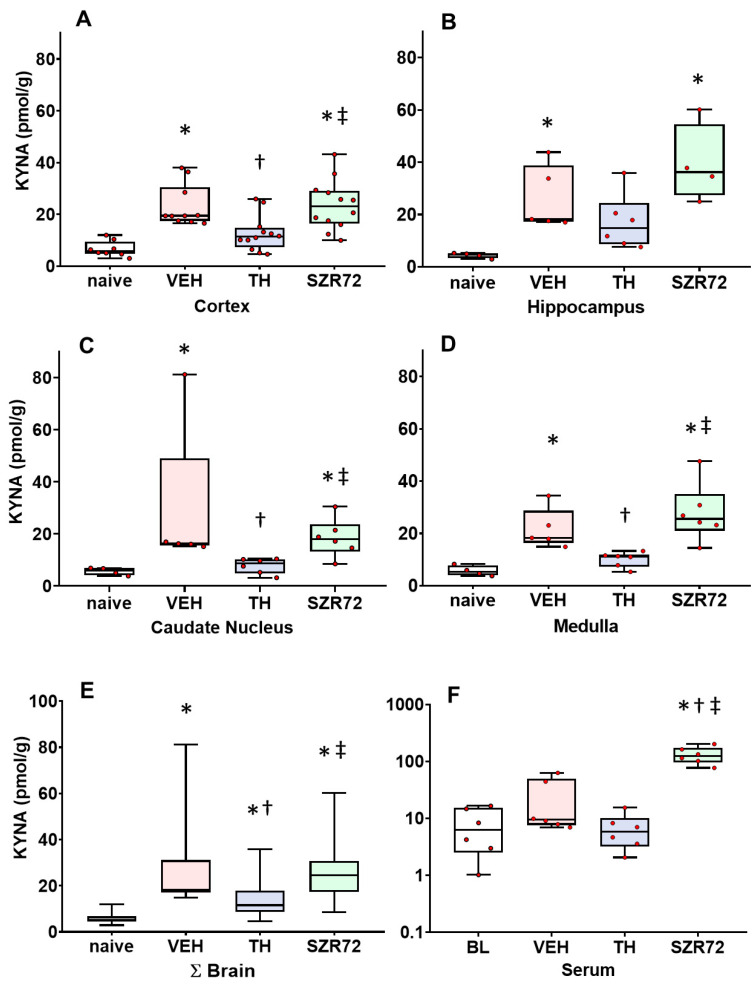
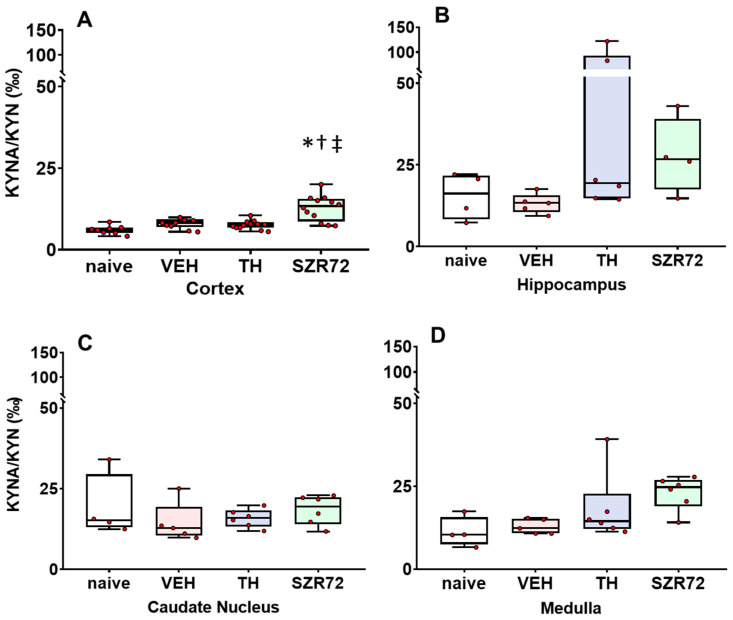
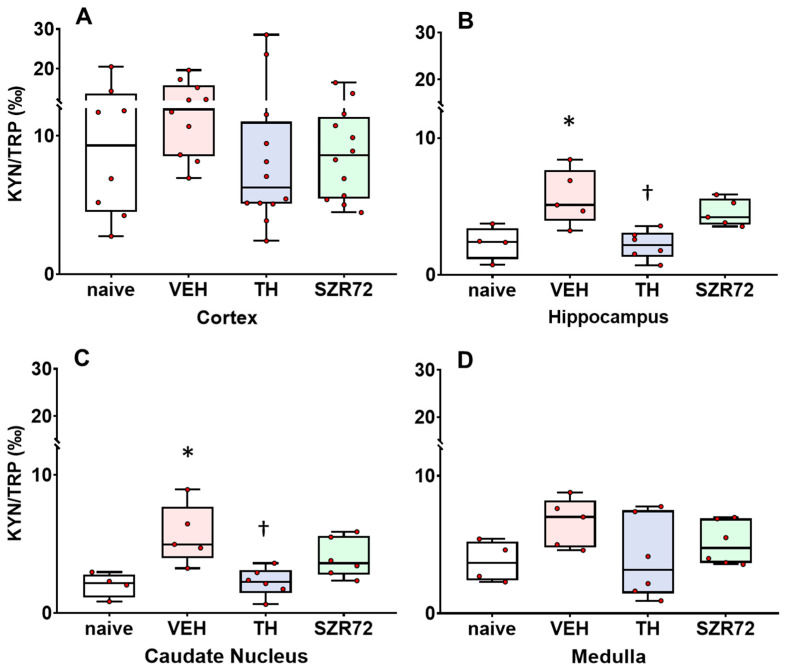
Kynurenic acid (KYNA), an endogenous neuroprotectant with antiexcitotoxic, antioxidant, and anti-inflammatory effects, is synthesized through the tryptophan-kynurenine (KYN) pathway. We investigated whether brain KYN or KYNA levels were affected by asphyxia in a translational piglet model of hypoxic-ischemic encephalopathy (HIE). We also studied brain levels of the putative blood-brain barrier (BBB) permeable neuroprotective KYNA analogue SZR72, and whether SZR72 or therapeutic hypothermia (TH) modified KYN or KYNA levels. KYN, KYNA, and SZR72 levels were determined using ultra-high-performance liquid chromatography coupled with tandem mass spectrometry in five brain regions 24 h after 20 min of asphyxia in vehicle-, SZR72- and TH-treated newborn piglets (n = 6-6-6) and naive controls (n = 4). Endogenous brain KYN levels (median range 311.2-965.6 pmol/g) exceeded KYNA concentrations (4.5-6.0 pmol/g) ~100-fold. Asphyxia significantly increased cerebral KYN and KYNA levels in all regions (1512.0-3273.9 and 16.9-21.2 pmol/g, respectively), increasing the KYN/Tryptophan-, but retaining the KYNA/KYN ratio. SZR72 treatment resulted in very high cerebral SZR72 levels (13.2-33.2 nmol/g); however, KYN and KYNA levels remained similar to those of the vehicle-treated animals. However, TH virtually ameliorated asphyxia-induced elevations in brain KYN and KYNA levels. The present study reports for the first time that the KYN pathway is altered during HIE development in the piglet. SZR72 readily crosses the BBB in piglets but fails to affect cerebral KYNA levels. Beneficial effects of TH may include restoration of the tryptophan metabolism to pre-asphyxia levels.
犬尿酸(KYNA)是一种内源性神经保护剂,具有抗兴奋毒性、抗氧化和抗炎作用,通过色氨酸-犬尿氨酸(KYN)途径合成。我们研究了在缺氧缺血性脑病(HIE)的转化仔猪模型中,窒息是否会影响大脑中的 KYN 或 KYNA 水平。我们还研究了脑内潜在的血脑屏障(BBB)通透性神经保护 KYNA 类似物 SZR72 的水平,以及 SZR72 或治疗性低温(TH)是否会改变 KYN 或 KYNA 水平。在接受 vehicle、SZR72 和 TH 治疗的新生仔猪(n = 6-6-6)和对照仔猪(n = 4)中,使用超高效液相色谱-串联质谱法测定了窒息 20 分钟后 24 小时的 5 个脑区中的 KYN、KYNA 和 SZR72 水平。内源性脑 KYN 水平(中位数范围 311.2-965.6 pmol/g)超过 KYNA 浓度(4.5-6.0 pmol/g)约 100 倍。窒息显著增加了所有脑区的 KYN 和 KYNA 水平(分别为 1512.0-3273.9 和 16.9-21.2 pmol/g),增加了 KYN/色氨酸比,但保持了 KYNA/KYN 比值。SZR72 治疗导致大脑中 SZR72 水平非常高(13.2-33.2 nmol/g);然而,KYN 和 KYNA 水平仍与 vehicle 治疗的动物相似。然而,TH 实际上减轻了窒息引起的脑 KYN 和 KYNA 水平升高。本研究首次报道,在仔猪 HIE 发展过程中,KYN 途径发生改变。SZR72 容易穿过仔猪的 BBB,但不能影响脑 KYNA 水平。TH 的有益作用可能包括恢复色氨酸代谢至窒息前的水平。