
粒径对通过选择性激光烧结制备的花生壳粉/PES复合材料力学性能和烧结质量的影响
Influence of Particle Size on the Mechanical Performance and Sintering Quality of Peanut Husk Powder/PES Composites Fabricated through Selective Laser Sintering.
作者信息
Idriss Aboubaker I B, Yang Chun-Mei, Li Jian, Guo Yanling, Liu Jiuqing, Abdelmagid Alaaeldin A A, Ahmed Gafer A, Zhang Hao
机构信息
College of Mechanical and Electrical Engineering, Northeast Forestry University, Harbin 150040, China.
Department of Mechanical Engineering, Faculty of Engineering Science, University of Nyala, Nyala P.O. Box 155, Sudan.
出版信息
Polymers (Basel). 2023 Sep 28;15(19):3913. doi: 10.3390/polym15193913.
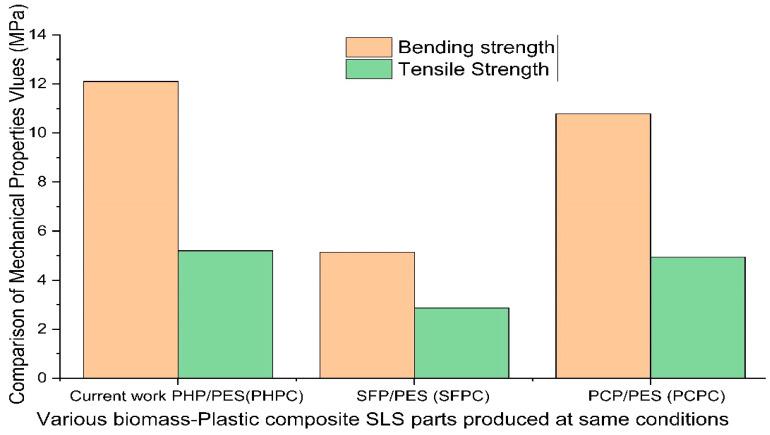
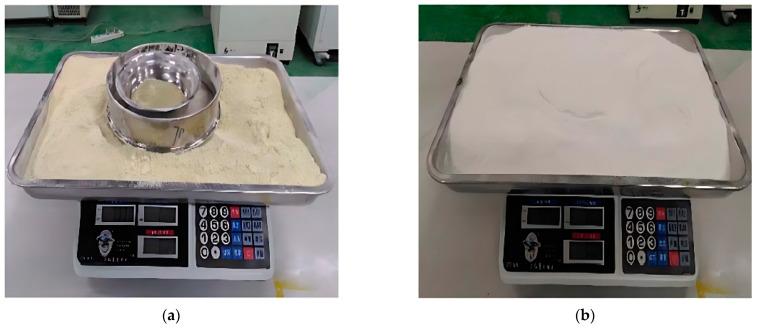
This study intends to enhance the mechanical strength of wood-plastic composite selective laser sintering (SLS) parts by using a sustainable composite, peanut husk powder (PHP)/poly ether sulfone (PES) (PHPC). The study aims to address agricultural waste pollution by encouraging the eco-friendly utilization of such waste in SLS technology. To ensure the sintering quality and mechanical properties and prevent deformation and warping during sintering, the thermo-physical properties of PHP and PES powders were analyzed to determine a suitable preheating temperature for PHPC. Single-layer sintering tests were conducted to assess the formability of PHPC specimens with varying PHP particle sizes. The study showed the effects of different PHP particle sizes on the mechanical performance of PHPC parts. The evaluation covered various aspects of PHPC SLS parts, including mechanical strength, density, residual ash content, dimensional accuracy (DA), and surface roughness, with different PHP particle sizes. The mechanical analysis showed that PHPC parts made from PHP particles of ≤0.125 mm were the strongest. Specifically, the density bending strength, residual ash content, tensile, and impact strength were measured as 1.1825 g/cm, 14.1 MPa, 1.2%, 6.076 MPa, and 2.12 kJ/cm, respectively. Notably, these parameters showed significant improvement after the wax infiltration treatment. SEM was used to examine the PHP and PES powder particles, PHPC specimen microstructure, and PHPC SLS parts before and after the mechanical tests and waxing. Consequently, SEM analysis wholly confirmed the mechanical test results.
本研究旨在通过使用一种可持续复合材料——花生壳粉(PHP)/聚醚砜(PES)(PHPC),来提高木塑复合材料选择性激光烧结(SLS)零件的机械强度。该研究旨在通过鼓励在SLS技术中对这类废物进行环保利用,来解决农业废物污染问题。为确保烧结质量和机械性能,并防止烧结过程中出现变形和翘曲,对PHP和PES粉末的热物理性能进行了分析,以确定适合PHPC的预热温度。进行了单层烧结试验,以评估不同PHP粒径的PHPC试样的可成型性。该研究展示了不同PHP粒径对PHPC零件机械性能的影响。评估涵盖了PHPC SLS零件的各个方面,包括不同PHP粒径下的机械强度、密度、残余灰分含量、尺寸精度(DA)和表面粗糙度。力学分析表明,由粒径≤0.125 mm的PHP颗粒制成的PHPC零件强度最高。具体而言,密度、弯曲强度、残余灰分含量、拉伸强度和冲击强度分别测量为1.1825 g/cm、14.1 MPa、1.2%、6.076 MPa和2.12 kJ/cm。值得注意的是,经过蜡浸处理后,这些参数有了显著改善。使用扫描电子显微镜(SEM)检查了PHP和PES粉末颗粒、PHPC试样微观结构以及机械测试和上蜡前后的PHPC SLS零件。因此,SEM分析完全证实了力学测试结果。


 Zotero 插件