Emergency Medicine Department, Pisa University Hospital, Pisa, Italy.
Department of Surgical, Medical, Molecular and Critical Area Pathology, University of Pisa, Via Savi, Pisa, 10 - 56126, Italy.
BMC Emerg Med. 2023 Oct 15;23(1):122. doi: 10.1186/s12873-023-00884-w.
Nomograms are easy-to-handle clinical tools which can help in estimating the risk of adverse outcome in certain population. This multi-center study aims to create and validate a simple and usable clinical prediction nomogram for individual risk of post-traumatic Intracranial Hemorrhage (ICH) after Mild Traumatic Brain Injury (MTBI) in patients treated with Direct Oral Anticoagulants (DOACs).
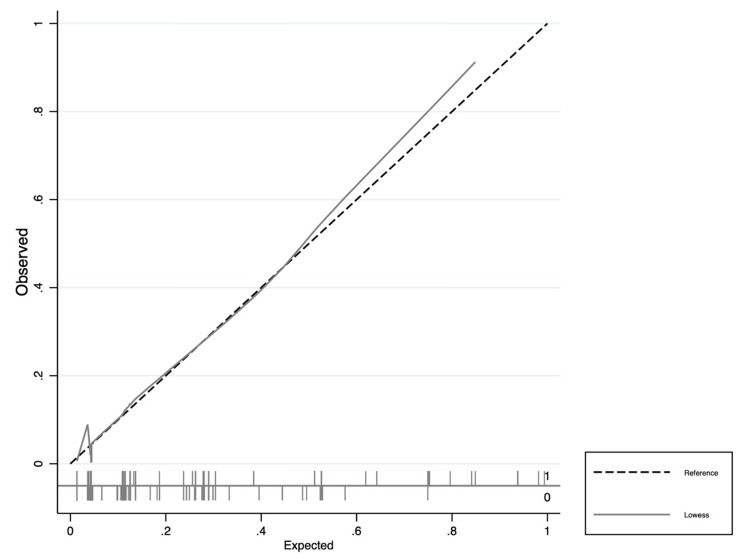
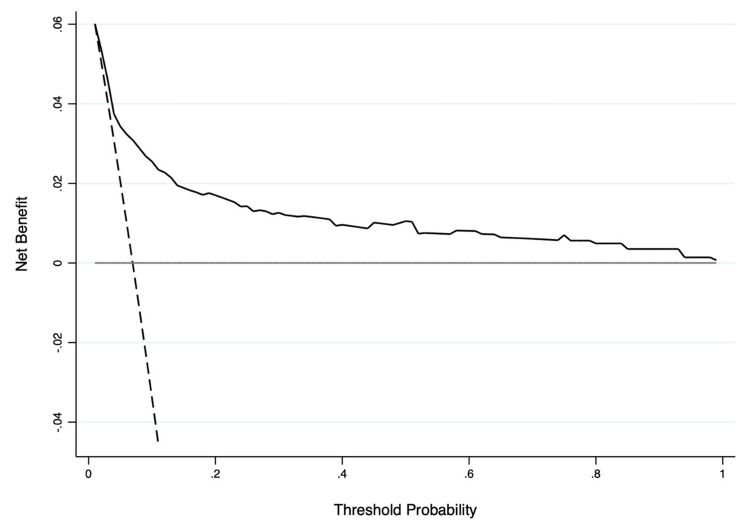
From January 1, 2016 to December 31, 2019, all patients on DOACs evaluated for an MTBI in five Italian Emergency Departments were enrolled. A training set to develop the nomogram and a test set for validation were identified. The predictive ability of the nomogram was assessed using AUROC, calibration plot, and decision curve analysis.
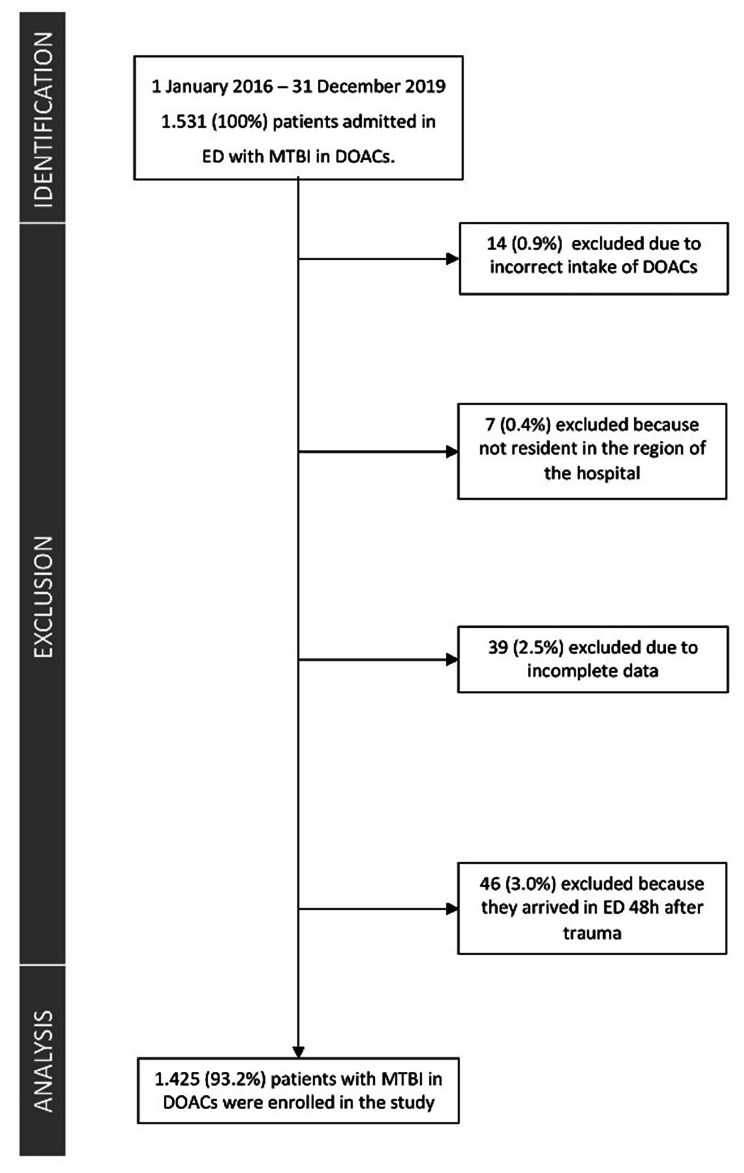
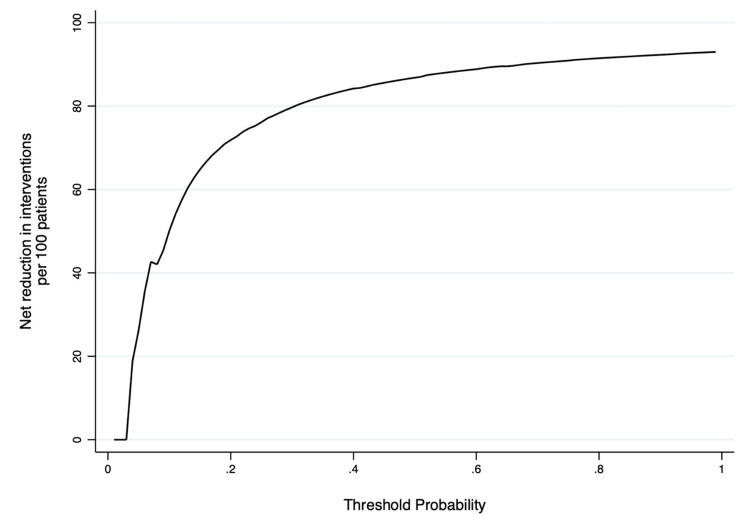
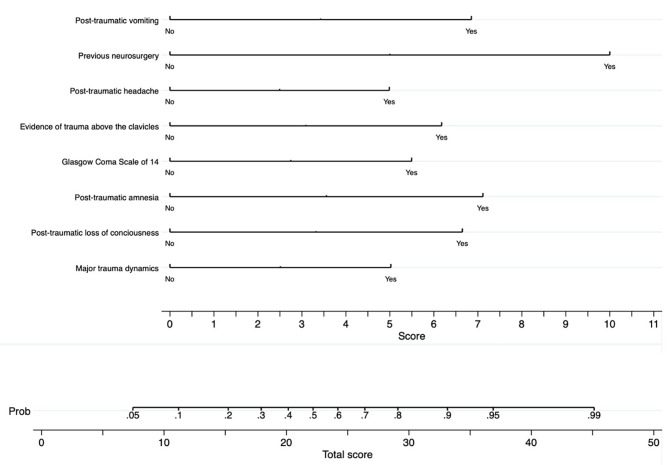
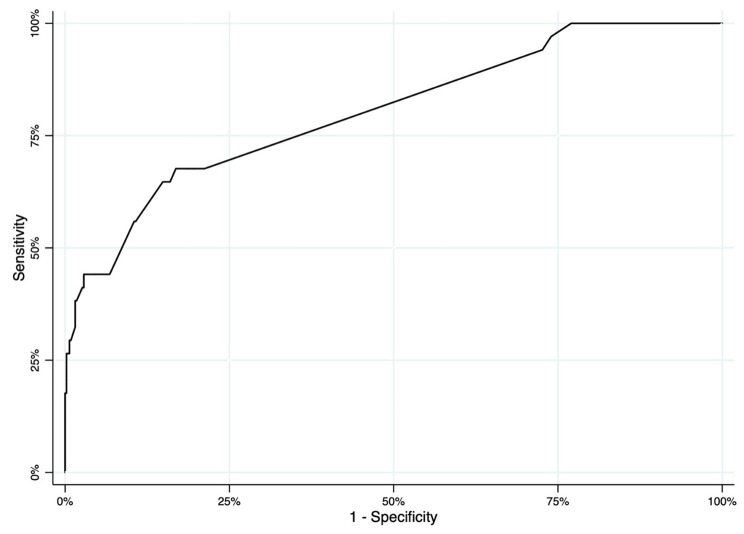
Of the 1425 patients in DOACs in the study cohort, 934 (65.5%) were included in the training set and 491 (34.5%) in the test set. Overall, the rate of post-traumatic ICH was 6.9% (7.0% training and 6.9% test set). In a multivariate analysis, major trauma dynamic (OR: 2.73, p = 0.016), post-traumatic loss of consciousness (OR: 3.78, p = 0.001), post-traumatic amnesia (OR: 4.15, p < 0.001), GCS < 15 (OR: 3.00, p < 0.001), visible trauma above the clavicles (OR: 3. 44, p < 0.001), a post-traumatic headache (OR: 2.71, p = 0.032), a previous history of neurosurgery (OR: 7.40, p < 0.001), and post-traumatic vomiting (OR: 3.94, p = 0.008) were independent risk factors for ICH. The nomogram demonstrated a good ability to predict the risk of ICH (AUROC: 0.803; CI95% 0.721-0.884), and its clinical application showed a net clinical benefit always superior to performing CT on all patients.
The Hemorrhage Estimate Risk in Oral anticoagulation for Mild head trauma (HERO-M) nomogram was able to predict post-traumatic ICH and can be easily applied in the Emergency Department (ED).
列线图是一种易于操作的临床工具,可以帮助评估特定人群不良结局的风险。这项多中心研究旨在创建和验证一种简单易用的临床预测列线图,用于预测接受直接口服抗凝剂(DOAC)治疗的轻度创伤性脑损伤(MTBI)患者发生创伤性颅内出血(ICH)的个体风险。
本研究纳入了 2016 年 1 月 1 日至 2019 年 12 月 31 日期间在意大利五个急诊科接受 DOAC 评估的所有 MTBI 患者。建立了列线图的训练集和验证集。使用 AUROC、校准图和决策曲线分析评估列线图的预测能力。
在研究队列中,1425 例 DOAC 患者中有 934 例(65.5%)纳入训练集,491 例(34.5%)纳入验证集。总体而言,创伤后 ICH 的发生率为 6.9%(训练集为 7.0%,验证集为 6.9%)。多变量分析显示,主要创伤动态(OR:2.73,p=0.016)、创伤后意识丧失(OR:3.78,p=0.001)、创伤后遗忘(OR:4.15,p<0.001)、GCS<15(OR:3.00,p<0.001)、锁骨以上可见创伤(OR:3.44,p<0.001)、创伤后头痛(OR:2.71,p=0.032)、既往神经外科病史(OR:7.40,p<0.001)和创伤后呕吐(OR:3.94,p=0.008)是 ICH 的独立危险因素。列线图具有良好的预测 ICH 风险的能力(AUROC:0.803;95%CI 0.721-0.884),其临床应用显示净临床获益始终优于对所有患者进行 CT 检查。
口服抗凝剂轻度颅脑创伤后出血风险评估(HERO-M)列线图能够预测创伤性 ICH,并可在急诊科轻松应用。