Shaterian Mohammadi Hamidreza, Moazamian Dina, Athertya Jiyo S, Shin Soo Hyun, Lo James, Suprana Arya, Malhi Bhavsimran S, Ma Yajun
Department of Radiology, University of California San Diego, San Diego, CA, United States.
Front Radiol. 2023 Sep 28;3:1263491. doi: 10.3389/fradi.2023.1263491. eCollection 2023.
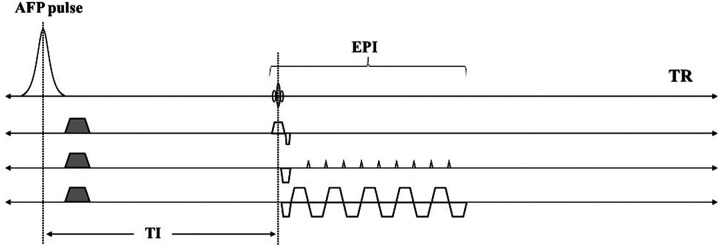
Numerous techniques for myelin water imaging (MWI) have been devised to specifically assess alterations in myelin. The biomarker employed to measure changes in myelin content is known as the myelin water fraction (MWF). The short TR adiabatic inversion recovery (STAIR) sequence has recently been identified as a highly effective method for calculating MWF. The purpose of this study is to develop a new clinical transitional myelin water imaging (MWI) technique that combines STAIR preparation and echo-planar imaging (EPI) (STAIR-EPI) sequence for data acquisition.
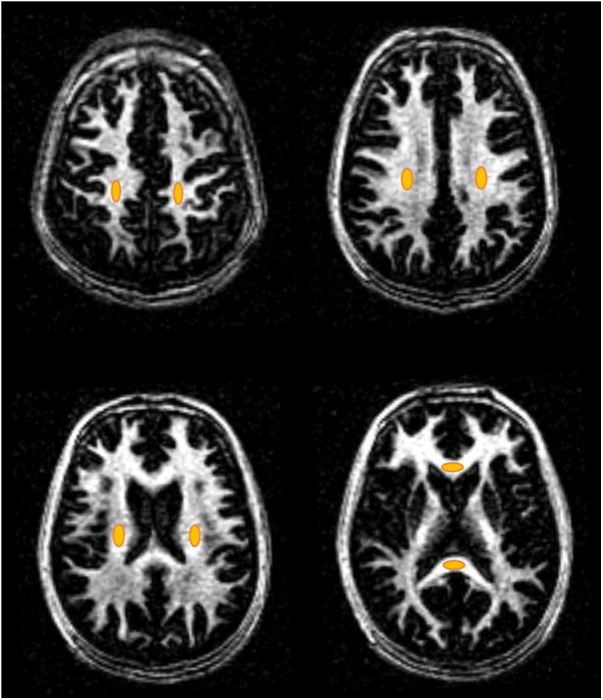
Myelin water (MW) in the brain has shorter and relaxation times than intracellular and extracellular water. In the proposed STAIR-EPI sequence, a short TR (e.g., ≤300 ms) together with an optimized inversion time enable robust long water suppression with a wide range of values [i.e., (600, 2,000) ms]. The EPI allows fast data acquisition of the remaining MW signals. Seven healthy volunteers and seven patients with multiple sclerosis (MS) were recruited and scanned in this study. The apparent myelin water fraction (aMWF), defined as the signal ratio of MW to total water, was measured in the lesions and normal-appearing white matter (NAWM) in MS patients and compared with those measured in the normal white matter (NWM) in healthy volunteers.
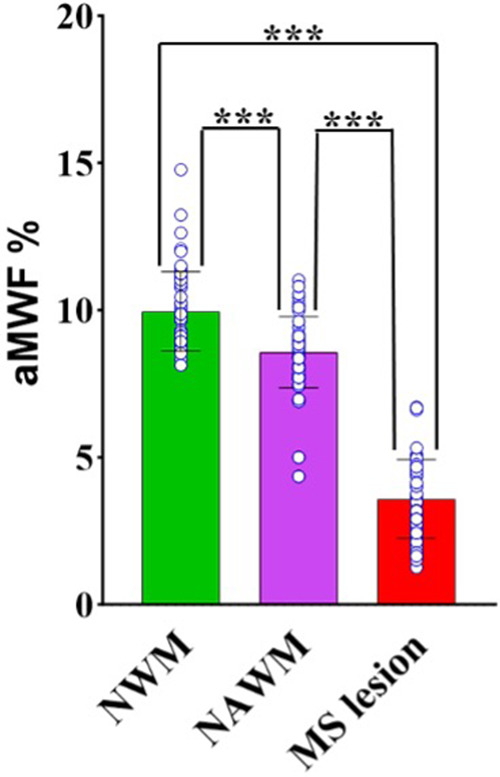
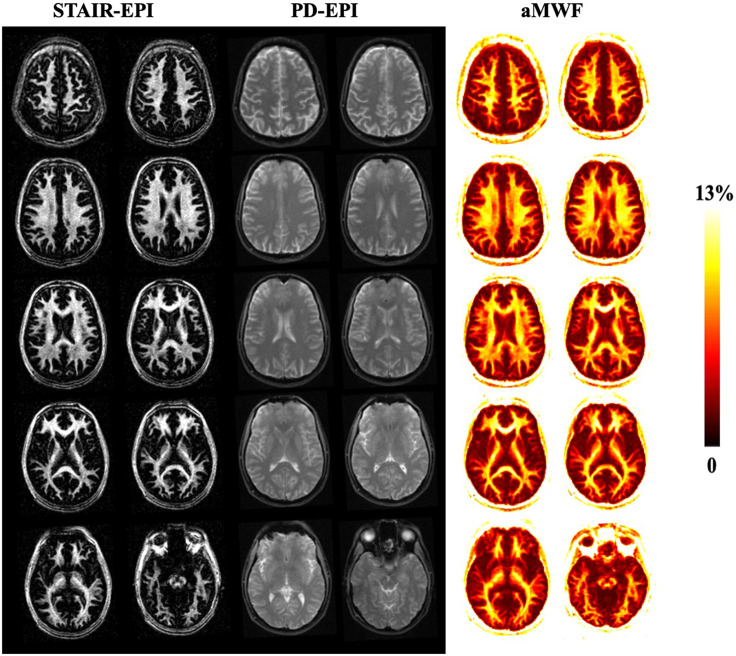
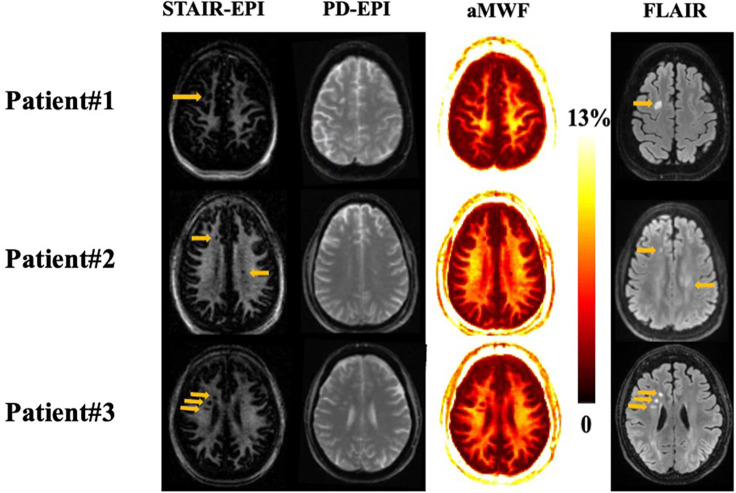
As seen in the STAIR-EPI images acquired from MS patients, the MS lesions show lower signal intensities than NAWM do. The aMWF measurements for both MS lesions (3.6 ± 1.3%) and NAWM (8.6 ± 1.2%) in MS patients are significantly lower than NWM (10 ± 1.3%) in healthy volunteers ( < 0.001).
The proposed STAIR-EPI technique, which can be implemented in MRI scanners from all vendors, is able to detect myelin loss in both MS lesions and NAWM in MS patients.
已设计出多种髓鞘水成像(MWI)技术来专门评估髓鞘的改变。用于测量髓鞘含量变化的生物标志物称为髓鞘水分数(MWF)。短TR绝热反转恢复(STAIR)序列最近被确定为计算MWF的一种高效方法。本研究的目的是开发一种新的临床过渡性髓鞘水成像(MWI)技术,该技术结合STAIR准备和回波平面成像(EPI)(STAIR-EPI)序列进行数据采集。
脑内的髓鞘水(MW)比细胞内和细胞外水具有更短的T1和T2弛豫时间。在所提出的STAIR-EPI序列中,短TR(例如,≤300毫秒)与优化的反转时间相结合,能够在较宽的T2值范围[即(600,2000)毫秒]内实现强大的长T2水抑制。EPI允许快速采集剩余的MW信号。本研究招募了7名健康志愿者和7名多发性硬化症(MS)患者并进行扫描。在MS患者的病变和正常外观白质(NAWM)中测量表观髓鞘水分数(aMWF),其定义为MW与总水的信号比,并与健康志愿者正常白质(NWM)中的测量值进行比较。
从MS患者获得的STAIR-EPI图像显示,MS病变的信号强度低于NAWM。MS患者的MS病变(3.6±1.3%)和NAWM(8.6±1.2%)的aMWF测量值均显著低于健康志愿者的NWM(10±1.3%)(P<0.001)。
所提出的STAIR-EPI技术可在所有供应商的MRI扫描仪中实现,能够检测MS患者MS病变和NAWM中的髓鞘丢失。