Department of Molecular and Cellular Biology, Harvard University, Cambridge, MA 02138.
Department of Bioengineering, The University of Texas at Dallas, Richardson, TX 75080.
Proc Natl Acad Sci U S A. 2023 Oct 24;120(43):e2307203120. doi: 10.1073/pnas.2307203120. Epub 2023 Oct 16.
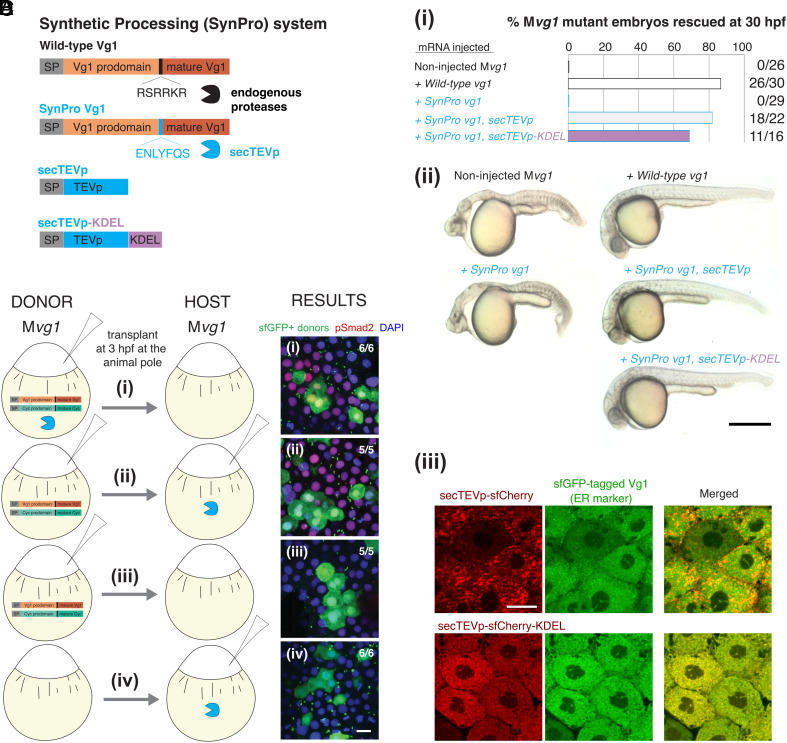
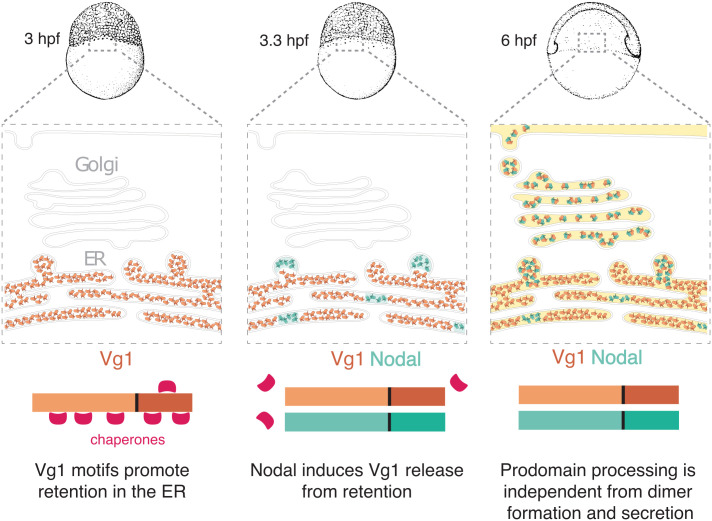
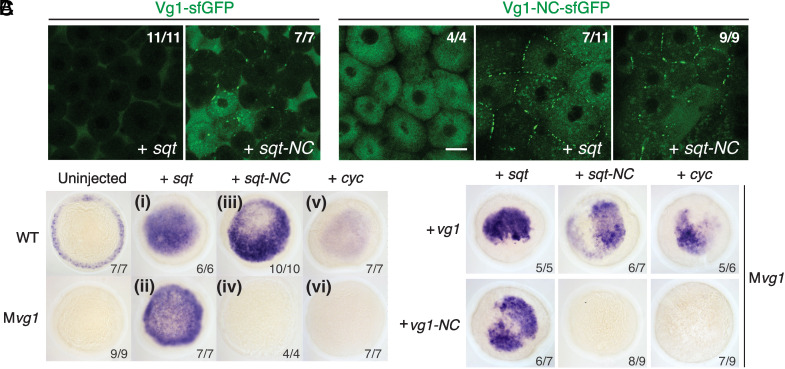
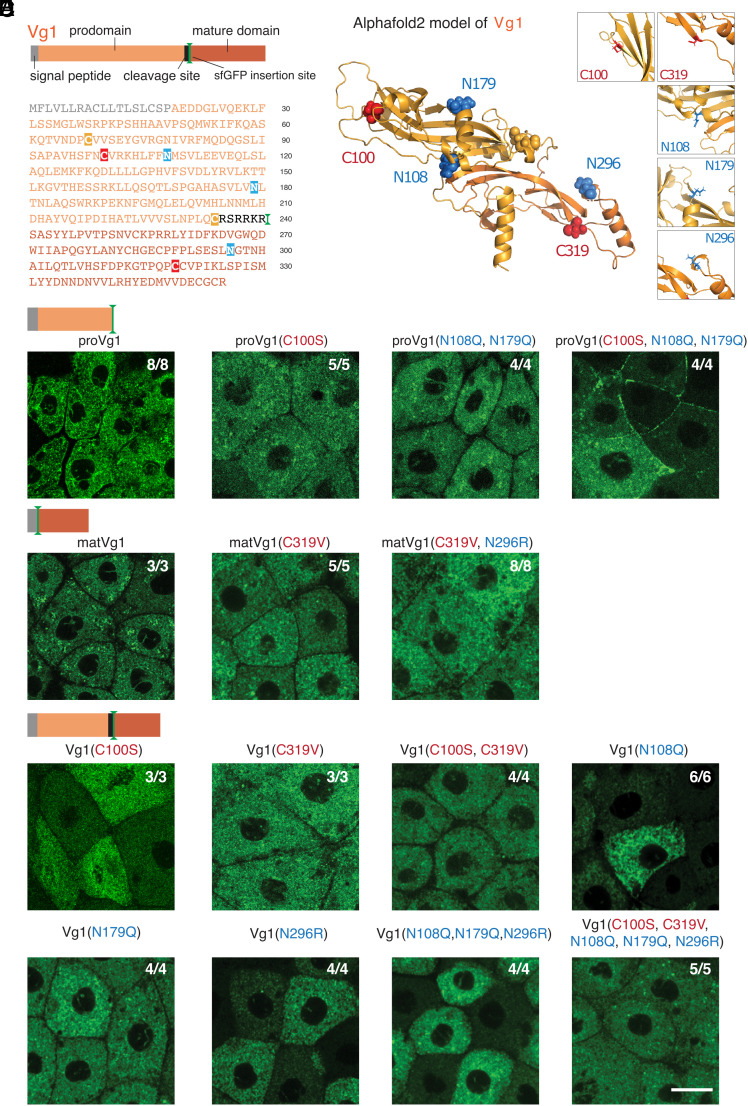
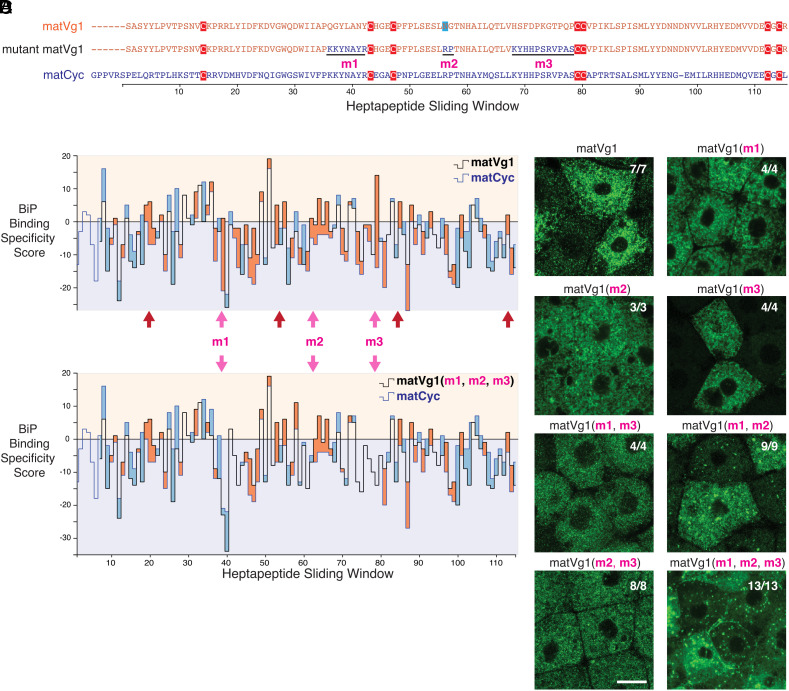
The TGF-beta signals Vg1 (Dvr1/Gdf3) and Nodal form heterodimers to induce vertebrate mesendoderm. The Vg1 proprotein is a monomer retained in the endoplasmic reticulum (ER) and is processed and secreted upon heterodimerization with Nodal, but the mechanisms underlying Vg1 biogenesis are largely elusive. Here, we clarify the mechanisms underlying Vg1 retention, processing, secretion, and signaling and introduce a Synthetic Processing (SynPro) system that enables the programmed cleavage of ER-resident and extracellular proteins. First, we find that Vg1 can be processed by intra- or extracellular proteases. Second, Vg1 can be processed without Nodal but requires Nodal for secretion and signaling. Third, Vg1-Nodal signaling activity requires Vg1 processing, whereas Nodal can remain unprocessed. Fourth, Vg1 employs exposed cysteines, glycosylated asparagines, and BiP chaperone-binding motifs for monomer retention in the ER. These observations suggest two mechanisms for rapid mesendoderm induction: Chaperone-binding motifs help store Vg1 as an inactive but ready-to-heterodimerize monomer in the ER, and the flexibility of Vg1 processing location allows efficient generation of active heterodimers both intra- and extracellularly. These results establish SynPro as an in vivo processing system and define molecular mechanisms and motifs that facilitate the generation of active TGF-beta heterodimers.
TGF-β 信号 Vg1(Dvr1/Gdf3)和 Nodal 形成异二聚体诱导脊椎动物中胚层。Vg1 前蛋白是一种单体,保留在内质网(ER)中,在与 Nodal 异二聚化后被加工和分泌,但 Vg1 生物发生的机制在很大程度上仍不清楚。在这里,我们阐明了 Vg1 保留、加工、分泌和信号转导的机制,并引入了一种合成加工(SynPro)系统,该系统能够对 ER 驻留蛋白和细胞外蛋白进行程序化切割。首先,我们发现 Vg1 可以被细胞内或细胞外蛋白酶加工。其次,Vg1 可以在没有 Nodal 的情况下被加工,但需要 Nodal 才能分泌和信号转导。第三,Vg1-Nodal 信号转导活性需要 Vg1 加工,而 Nodal 可以保持未加工状态。第四,Vg1 利用暴露的半胱氨酸、糖基化天冬酰胺和 BiP 伴侣结合基序在 ER 中保留单体。这些观察结果表明了两种快速诱导中胚层的机制:伴侣结合基序有助于将 Vg1 作为一种无活性但准备好与 Nodal 异二聚化的单体储存在 ER 中,而 Vg1 加工位置的灵活性允许在细胞内和细胞外有效地产生活性异二聚体。这些结果确立了 SynPro 作为一种体内加工系统,并定义了促进生成活性 TGF-β 异二聚体的分子机制和基序。