Carleton College, Northfield, USA.
University of Wisconsin-Madison, Madison, USA.
Sci Rep. 2023 Oct 16;13(1):17579. doi: 10.1038/s41598-023-44804-1.
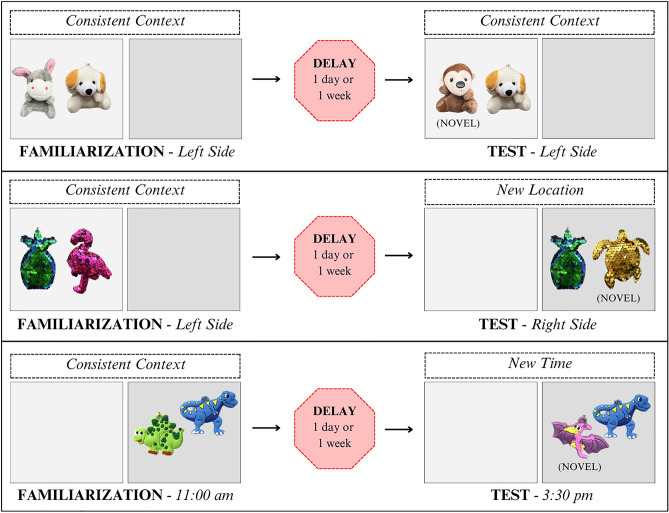
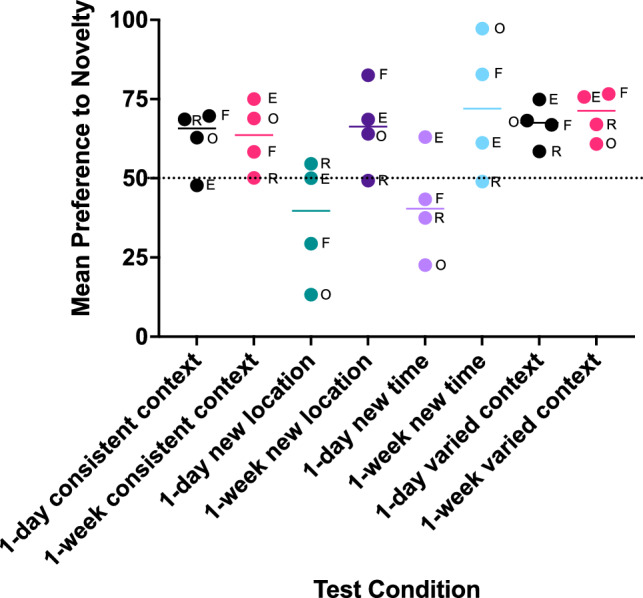
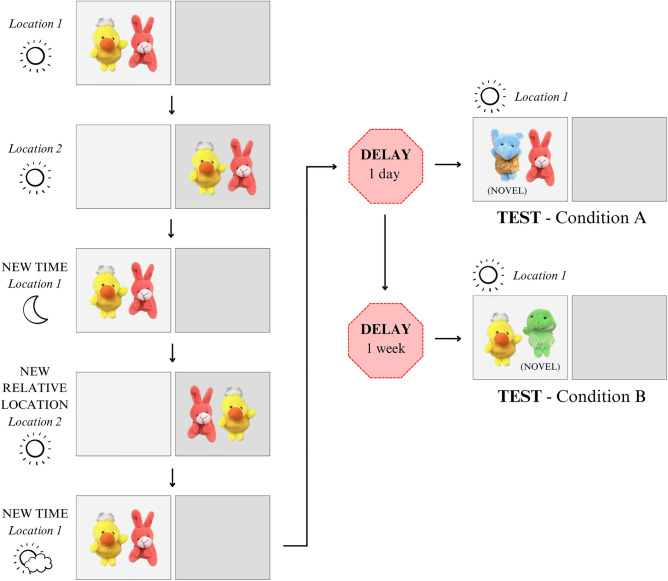
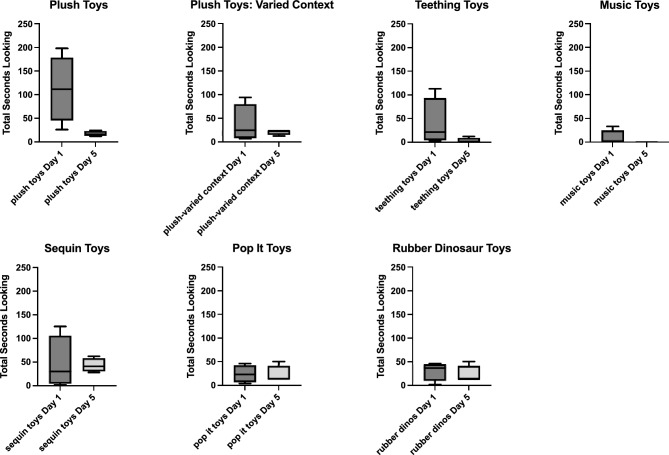
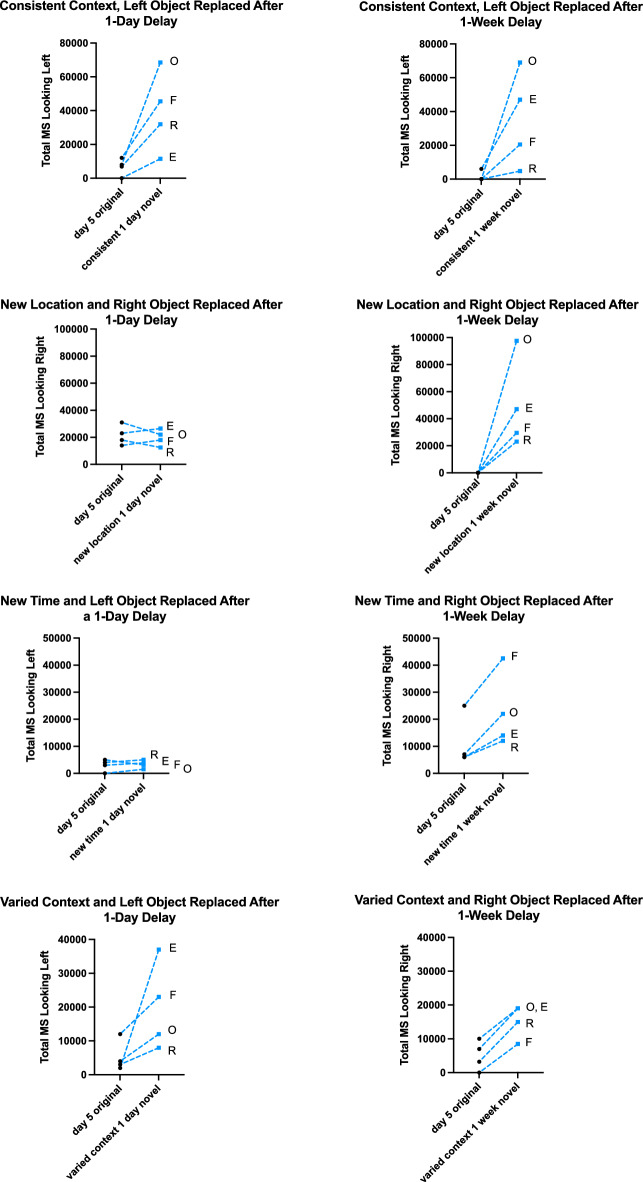
Episodic memory is memory for experiences within a specific temporal and spatial context. Episodic memories decline early in Alzheimer's Disease (AD). Recollection of episodic memories can fail with both AD and aging, but familiarity and recollection memory uniquely fail in AD. Finding a means to differentiate specific memory failures in animal models is critical for translational research. Four cotton top tamarins participated in an object recognition test. They were exposed to two unique objects placed in a consistent context for 5 daily sessions. Next a delay of 1 day or 1 week was imposed. Subjects' memory of the objects was tested by replacing one of the familiarized objects with a novel one. The tamarins looked longer at the novel object after both delays, an indication of remembering the familiar object. In other tests, the test pair was relocated to a new location or presented at a different time of day. With context changes, tamarins showed greater interest in the novel object after a 1-week delay but not after a 1-day delay. It seems that context changes disrupted their recollection of recent events. But the monkeys showed accurate familiarity memory across context changes with longer delays.
情景记忆是对特定时间和空间背景下的体验的记忆。情景记忆在阿尔茨海默病(AD)的早期就会下降。AD 和衰老都会导致情景记忆的回忆失败,但只有 AD 会导致熟悉度和回忆记忆的独特失败。在动物模型中找到区分特定记忆失败的方法对于转化研究至关重要。四只棉顶狨猴参加了一项物体识别测试。它们在一个一致的环境中暴露于两个独特的物体 5 天。然后施加 1 天或 1 周的延迟。通过用一个新物体替换熟悉的物体来测试动物对物体的记忆。在两次延迟后,棉顶狨猴对新物体的注视时间更长,这表明它们记住了熟悉的物体。在其他测试中,测试对被重新定位到一个新位置或在一天中的不同时间呈现。随着环境的变化,棉顶狨猴在 1 周的延迟后对新物体表现出更大的兴趣,但在 1 天的延迟后则没有。似乎环境变化干扰了它们对最近事件的回忆。但猴子在更长的延迟下表现出准确的熟悉度记忆,而不受环境变化的影响。