NIH Undiagnosed Diseases Program, Common Fund, Office of the Director, National Institutes of Health, Bethesda, MD, USA.
College of Medicine, University of Arkansas for Medical Sciences, Little Rock, AR, USA.
Cell Commun Signal. 2023 Oct 16;21(1):286. doi: 10.1186/s12964-023-01269-z.
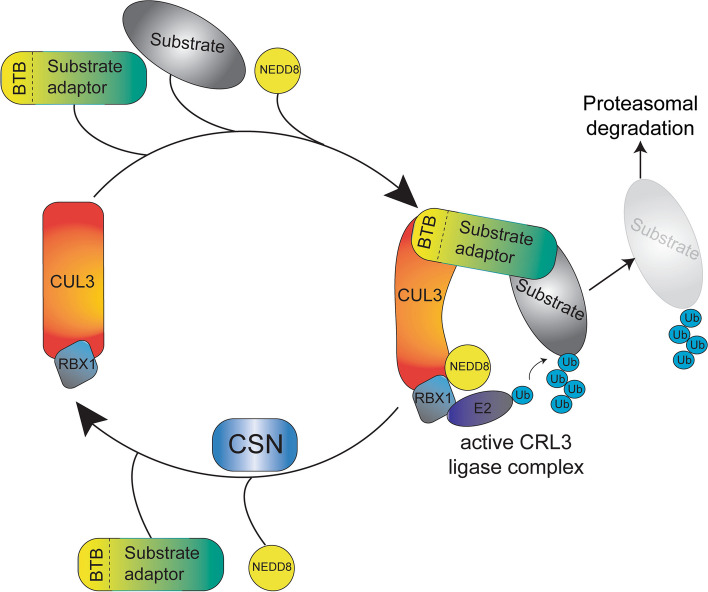
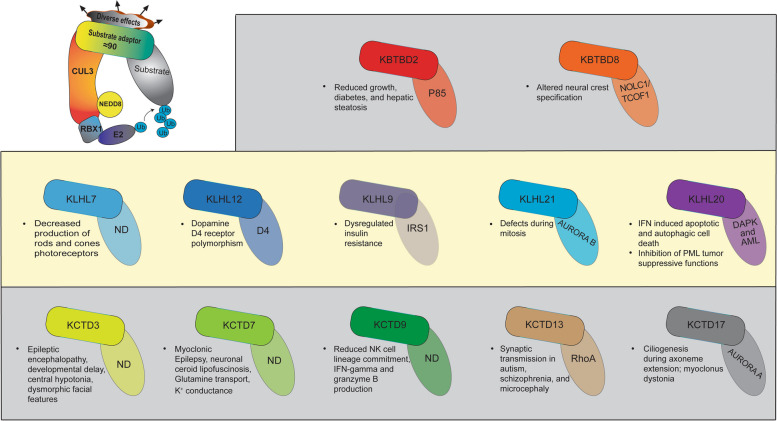
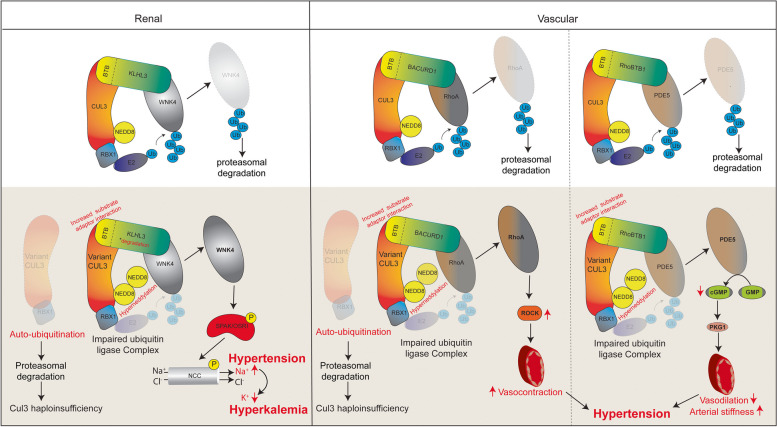
Familial hyperkalemic hypertension (FHHt), also known as Pseudohypoaldosteronism type II (PHAII) or Gordon syndrome is a rare Mendelian disease classically characterized by hyperkalemia, hyperchloremic metabolic acidosis, and high systolic blood pressure. The most severe form of the disease is caused by autosomal dominant variants in CUL3 (Cullin 3), a critical subunit of the multimeric CUL3-RING ubiquitin ligase complex. The recent identification of a novel FHHt disease variant of CUL3 revealed intricacies within the underlying disease mechanism. When combined with studies on canonical CUL3 variant-induced FHHt, these findings further support CUL3's role in regulating renal electrolyte transport and maintaining systemic vascular tone. However, the pathophysiological effects of CUL3 variants are often accompanied by diverse systemic disturbances in addition to classical FHHt symptoms. Recent global proteomic analyses provide a rationale for these systemic disturbances, paving the way for future mechanistic studies to reveal how CUL3 variants dysregulate processes outside of the renovascular axis. Video Abstract.
家族性高血钾型高血压(FHHt),又称假性醛固酮减少症Ⅱ型(PHAII)或 Gordon 综合征,是一种罕见的孟德尔疾病,其特征为高血钾、高氯性代谢性酸中毒和收缩压升高。该疾病的最严重形式是由 CUL3(Cullin 3)的常染色体显性变异引起的,CUL3 是多聚体 CUL3-RING 泛素连接酶复合物的关键亚基。最近发现的一种新型 FHHt 疾病变体的 CUL3,揭示了潜在疾病机制的复杂性。当与对经典 CUL3 变体引起的 FHHt 的研究相结合时,这些发现进一步支持了 CUL3 在调节肾脏电解质转运和维持全身血管张力中的作用。然而,CUL3 变体的病理生理效应通常伴随着除经典 FHHt 症状以外的多种全身紊乱。最近的全球蛋白质组学分析为这些全身紊乱提供了依据,为未来的机制研究铺平了道路,以揭示 CUL3 变体如何使肾血管轴以外的过程失调。视频摘要。