School of Medical Sciences, Faculty of Health and Medicine, University of Sydney, Sydney, NSW, 2006, Australia.
Charles Perkins Centre, University of Sydney, Sydney, NSW, 2006, Australia.
Adv Healthc Mater. 2023 Dec;12(32):e2301571. doi: 10.1002/adhm.202301571. Epub 2023 Nov 1.
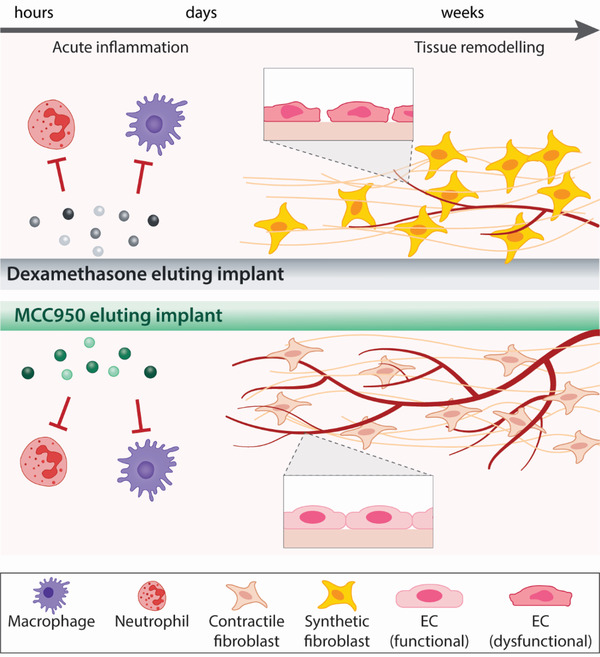
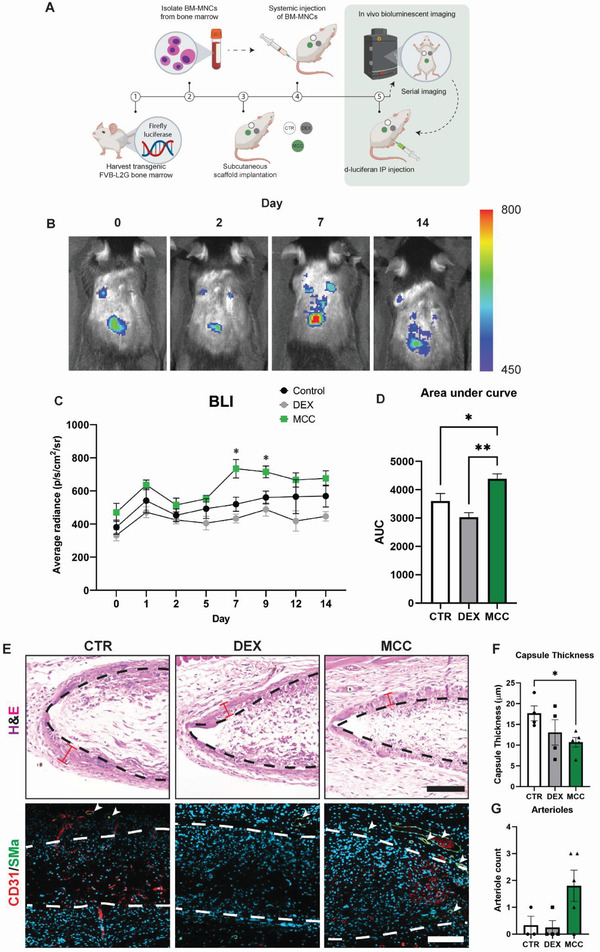
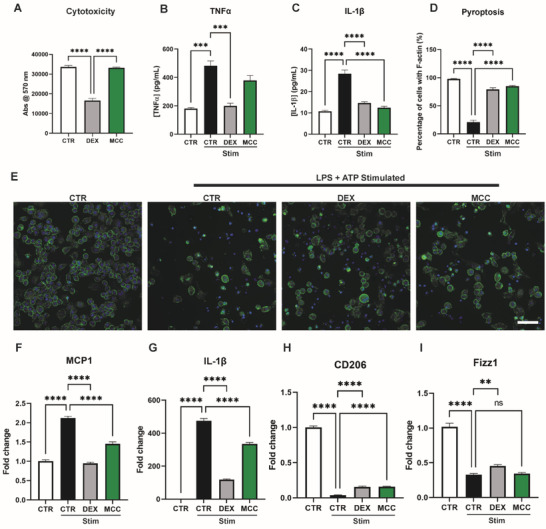
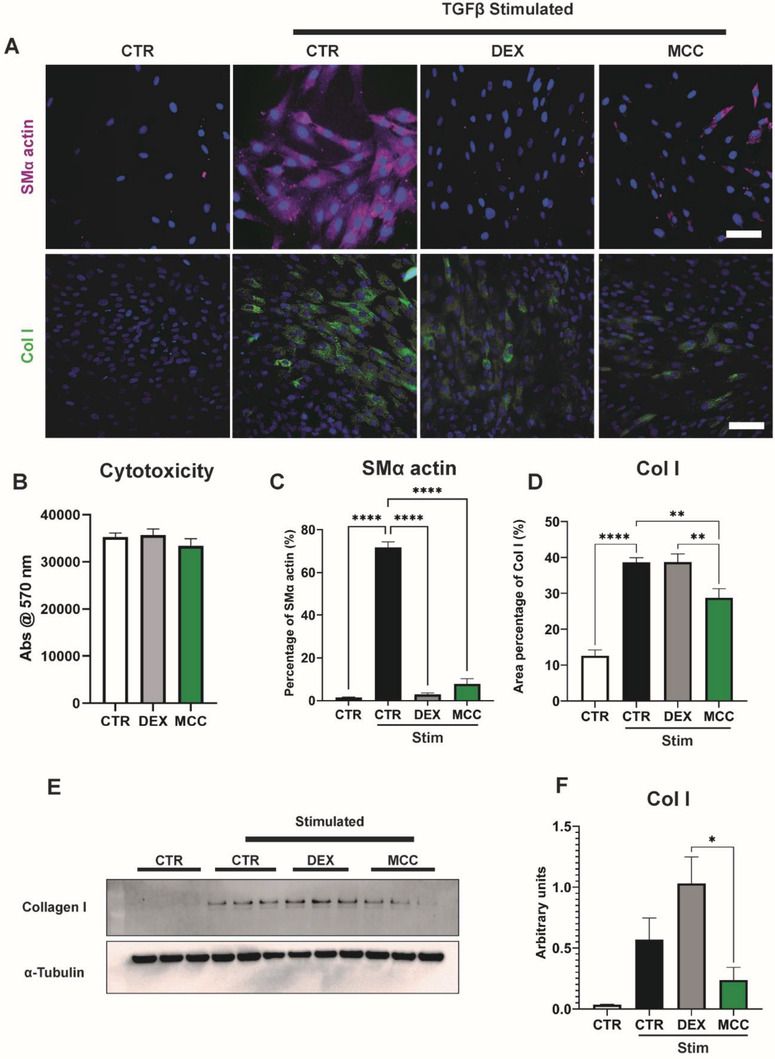
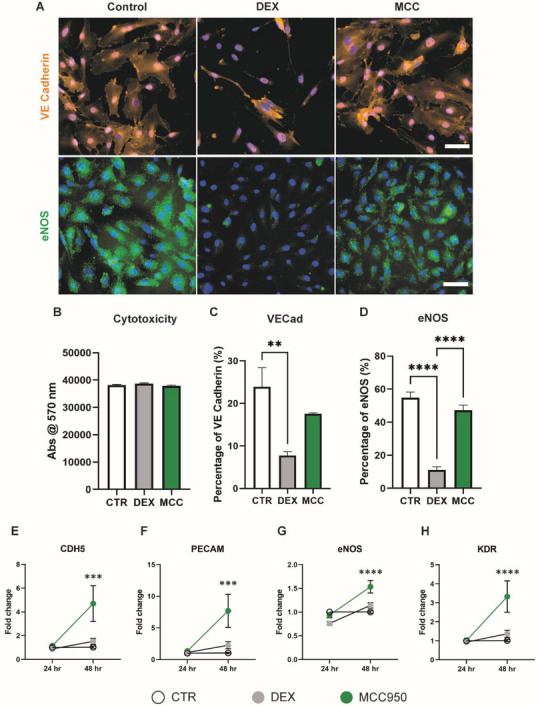
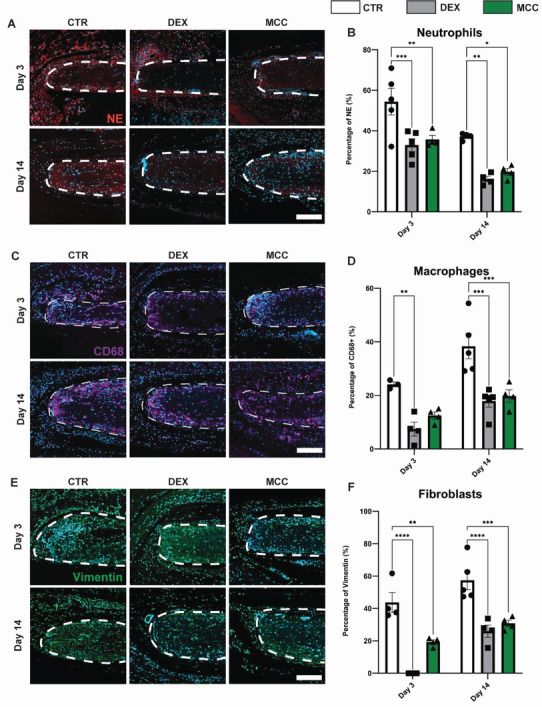
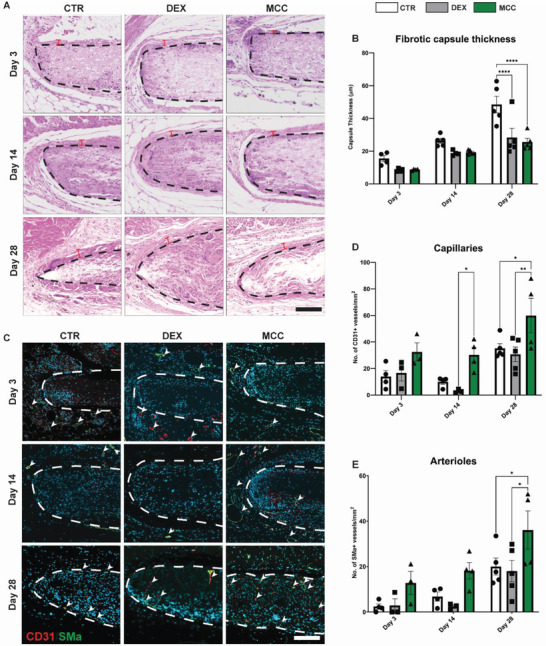
Medical devices are a mainstay of the healthcare industry, providing clinicians with innovative tools to diagnose, monitor, and treat a range of medical conditions. For implantable devices, it is widely regarded that chronic inflammation during the foreign body response (FBR) is detrimental to device performance, but also required for tissue regeneration and host integration. Current strategies to mitigate the FBR rely on broad acting anti-inflammatory drugs, most commonly, dexamethasone (DEX), which can inhibit angiogenesis and compromise long-term device function. This study challenges prevailing assumptions by suggesting that FBR inflammation is multifaceted, and selectively targeting its individual pathways can stop implant fibrosis while preserving beneficial repair pathways linked to improved device performance. MCC950, an anti-inflammatory drug that selectively inhibits the NLRP3 inflammasome, targets pathological inflammation without compromising global immune function. The effects of MCC950 and DEX on the FBR are compared using implanted polycaprolactone (PCL) scaffolds. The results demonstrate that both DEX and MCC950 halt immune cell recruitment and cytokine release, leading to reduced FBR. However, MCC950 achieves this while supporting capillary growth and enhancing tissue angiogenesis. These findings support selective immunosuppression approaches as a potential future direction for treating the FBR and enhancing the longevity and safety of implantable devices.
医疗器械是医疗保健行业的主要组成部分,为临床医生提供创新工具,用于诊断、监测和治疗各种医疗状况。对于可植入设备,人们普遍认为异物反应 (FBR) 期间的慢性炎症对设备性能有害,但也需要组织再生和宿主整合。目前减轻 FBR 的策略依赖于广泛作用的抗炎药物,最常见的是地塞米松 (DEX),它可以抑制血管生成并损害长期设备功能。这项研究通过表明 FBR 炎症是多方面的,并选择性地针对其各个途径,提出了挑战现有假设,选择性地抑制 NLRP3 炎性小体的抗炎药物 MCC950 可以阻止植入物纤维化,同时保留与改善设备性能相关的有益修复途径。使用植入的聚己内酯 (PCL) 支架比较了 MCC950 和 DEX 对 FBR 的影响。结果表明,DEX 和 MCC950 均阻止免疫细胞募集和细胞因子释放,从而减少 FBR。然而,MCC950 实现这一点的同时支持毛细血管生长并增强组织血管生成。这些发现支持选择性免疫抑制方法作为治疗 FBR 和提高可植入设备的寿命和安全性的潜在未来方向。