College of Pharmacy and Gachon Institute of Pharmaceutical Science, Gachon University, Incheon, Korea.
Lee Gil Ya Cancer and Diabetes Institute, College of Pharmacy and Gachon Institute of Pharmaceutical Science, 155 Gaetbeol-ro, Yeonsu-ku, Incheon, 21999, Korea.
Mol Cell Biochem. 2022 May;477(5):1329-1338. doi: 10.1007/s11010-022-04369-5. Epub 2022 Feb 9.
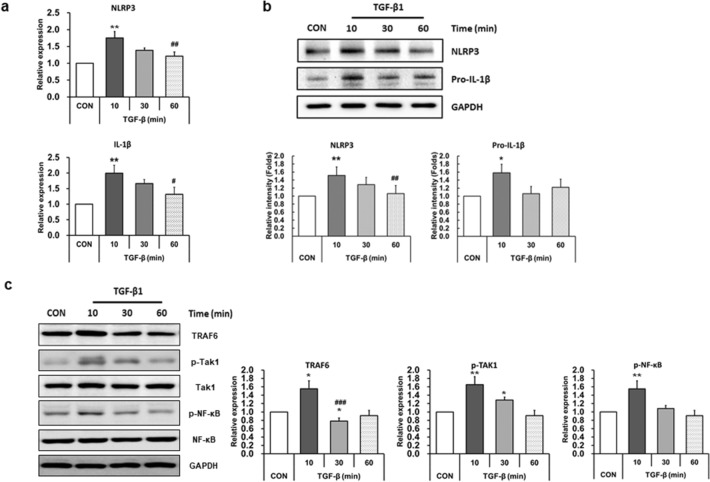
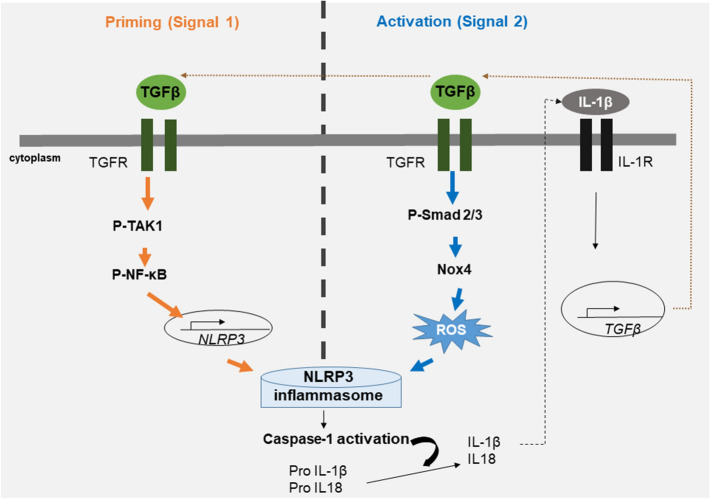
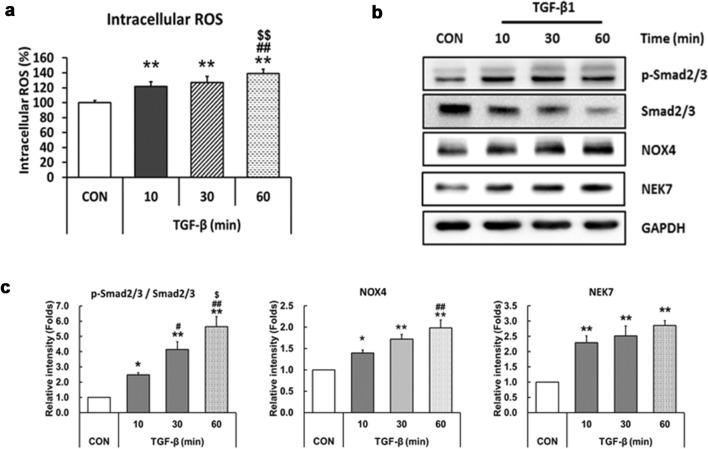
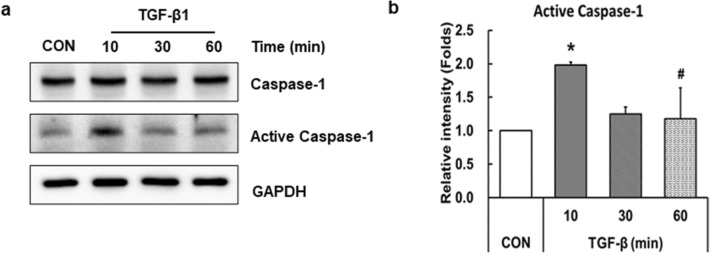
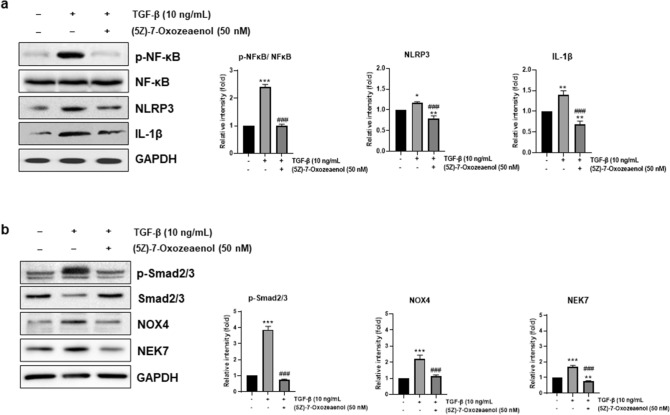
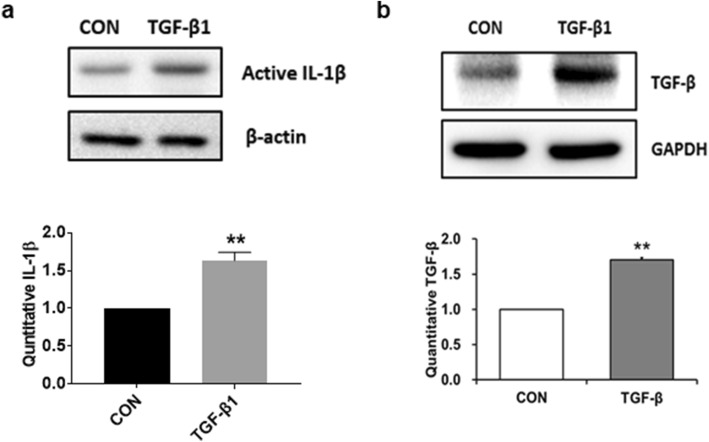
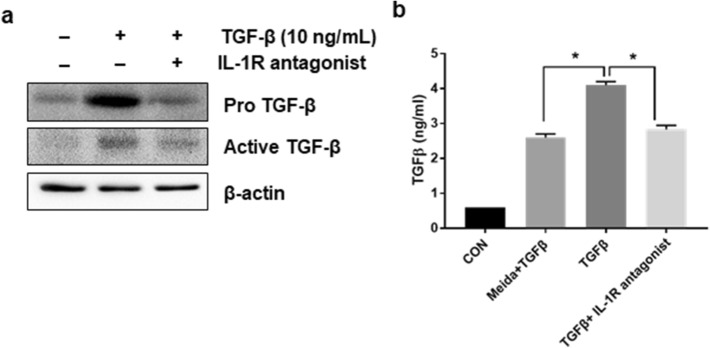
Inflammation contributes to the pathogenesis of liver disease, and inflammasome activation has been identified as a major contributor to the amplification of liver inflammation. Transforming growth factor-beta (TGF-β) is a key regulator of liver physiology, contributing to all stages of liver disease. We investigated whether TGF-β is involved in inflammasome-mediated fibrosis in hepatic stellate cells. Treatment with TGF-β increased priming of NLRP3 inflammasome signaling by increasing NLRP3 levels and activating TAK1-NF-kB signaling. Moreover, TGF-β increased the expression of p-Smad2/3-NOX4 in LX-2 cells and consequently increased ROS content, which is a trigger for NLRP3 inflammasome activation. Elevated expression of NEK7 and active caspase-1 was also shown in TGF-β-induced LX-2 cells, and this level was reduced by (5Z)-oxozeaenol, a TAK inhibitor. Finally, TGF-β-treated cells significantly increased TGF-β secretion levels, and their production was inhibited by IL-1β receptor antagonist treatment. In conclusion, TGF-β may represent an endogenous danger signal to the active NLRP3 inflammasome, by which IL-1β mediates TGF-β expression in an autocrine manner. Therefore, targeting the NLRP3 inflammasome may be a promising approach for the development of therapies for TGF-β-induced liver fibrosis.
炎症参与肝脏疾病的发病机制,而炎症小体的激活已被确定为放大肝脏炎症的主要因素。转化生长因子-β(TGF-β)是肝脏生理学的关键调节剂,参与肝脏疾病的所有阶段。我们研究了 TGF-β 是否参与肝星状细胞中炎症小体介导的纤维化。TGF-β 处理通过增加 NLRP3 水平和激活 TAK1-NF-κB 信号来增加 NLRP3 炎症小体信号的引发。此外,TGF-β 在 LX-2 细胞中增加 p-Smad2/3-NOX4 的表达,从而增加 ROS 含量,这是 NLRP3 炎症小体激活的触发因素。还显示 TGF-β 诱导的 LX-2 细胞中 NEK7 和活性 caspase-1 的表达升高,并且这种水平通过 TAK 抑制剂(5Z)-氧杂嗪醇降低。最后,TGF-β 处理的细胞显着增加 TGF-β 的分泌水平,并且它们的产生被 IL-1β 受体拮抗剂处理抑制。总之,TGF-β 可能代表活性 NLRP3 炎症小体的内源性危险信号,通过该信号,IL-1β 以自分泌方式介导 TGF-β 的表达。因此,靶向 NLRP3 炎症小体可能是开发用于 TGF-β 诱导的肝纤维化的治疗方法的有前途的方法。