Kurowska Anna, Matysiak Anna, Osiewalska Beata
Faculty of Political Sciences and International Relations, University of Warsaw, Warsaw, Poland.
LabFam - Interdisciplinary Centre for Labour Market and Family Dynamics, Faculty of Economic Sciences, University of Warsaw, Warsaw, Poland.
Eur J Popul. 2023 Oct 17;39(1):32. doi: 10.1007/s10680-023-09678-z.
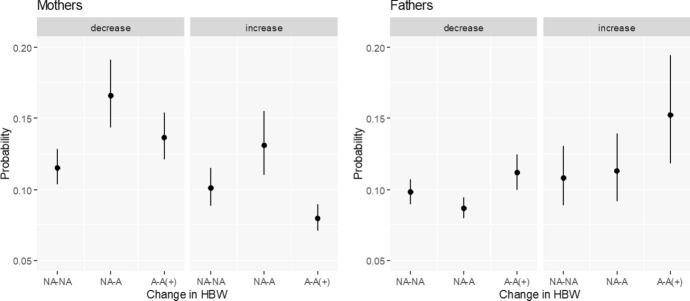
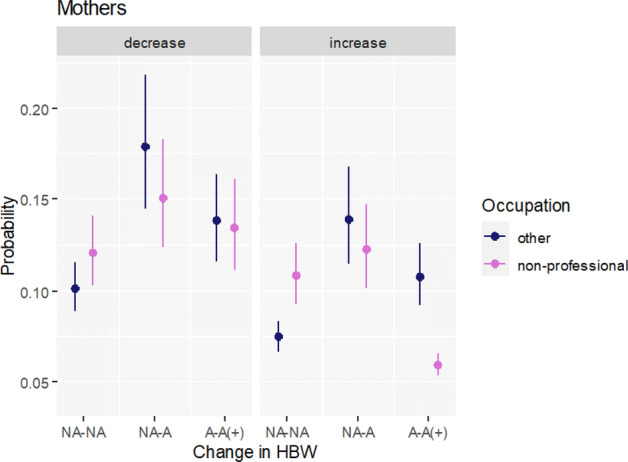
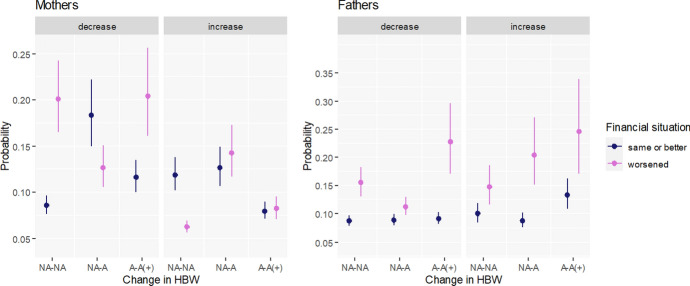
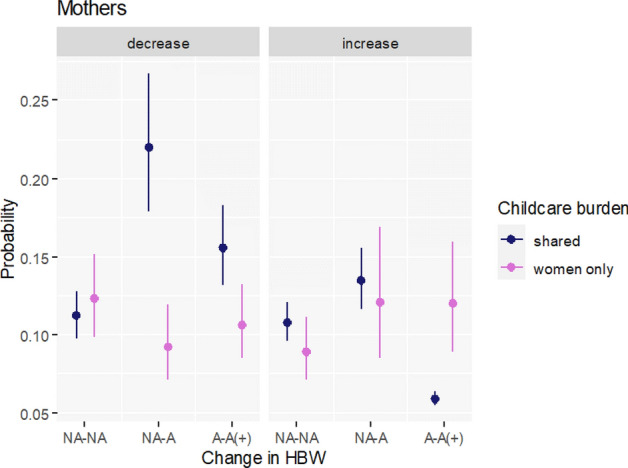
The Covid-19 pandemic and related massive spread of home based work led to substantial changes in the conditions for combining work and childbearing. On the one hand, working from home helped parents to accommodate increased childcare needs during the pandemic. On the other hand, it led to acute experiences of blurred boundaries between work and family life during childcare and school closures. Therefore, the direction of the impact of working from home on fertility intentions during the pandemic is not unequivocal. In this paper, we investigate how working from home was related to change in fertility intentions of mothers and fathers during the pandemic and discuss the complex mechanisms behind these relationships. With the use of unique Familydemic Survey data from a representative sample of parents in Poland, we estimate multinomial logit regressions by gender and consider a set of potential moderators, including financial well-being, gender relations, and occupational characteristics. We find evidence for an overall negative relationship between home based work and fertility intentions for mothers, but we also uncover some positive moderating effects. In particular, we shed light on the unobvious moderating role of gendered division of unpaid labor from before the pandemic.
新冠疫情以及相关的居家工作大规模普及,导致了工作与生育相结合的条件发生了重大变化。一方面,居家工作帮助父母在疫情期间应对增加的育儿需求。另一方面,在育儿和学校关闭期间,它导致了工作与家庭生活之间界限模糊的尖锐体验。因此,疫情期间居家工作对生育意愿的影响方向并不明确。在本文中,我们研究了居家工作与疫情期间父母生育意愿变化之间的关系,并讨论了这些关系背后的复杂机制。通过使用来自波兰有代表性的父母样本的独特的家庭疫情调查数据,我们按性别估计多项logit回归,并考虑一系列潜在的调节因素,包括财务状况、性别关系和职业特征。我们发现有证据表明居家工作与母亲的生育意愿之间总体呈负相关,但我们也发现了一些积极的调节作用。特别是,我们揭示了疫情前无薪劳动性别分工的不明显调节作用。