Department of Neurology, The Third Affiliated Hospital, Sun Yat-sen University, Guangzhou, China.
Scientific Research Center, The Seventh Affiliated Hospital of Sun Yat-sen University, Shenzhen, China.
Eur Neurol. 2023;86(6):363-376. doi: 10.1159/000533397. Epub 2023 Oct 17.
Many clinical studies reported the coexistence of Alzheimer's disease (AD) and multiple sclerosis (MS), but the common molecular signature between AD and MS remains elusive. The purpose of our study was to explore the genetic linkage between AD and MS through bioinformatic analysis, providing new insights into the shared signatures and possible pathogenesis of two diseases.
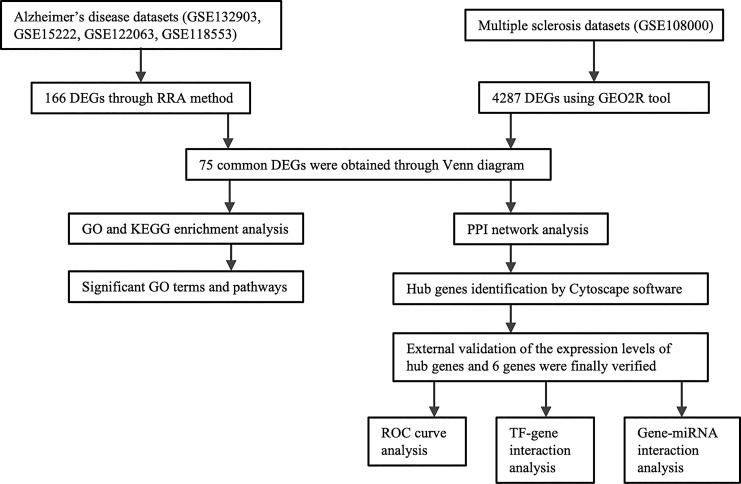
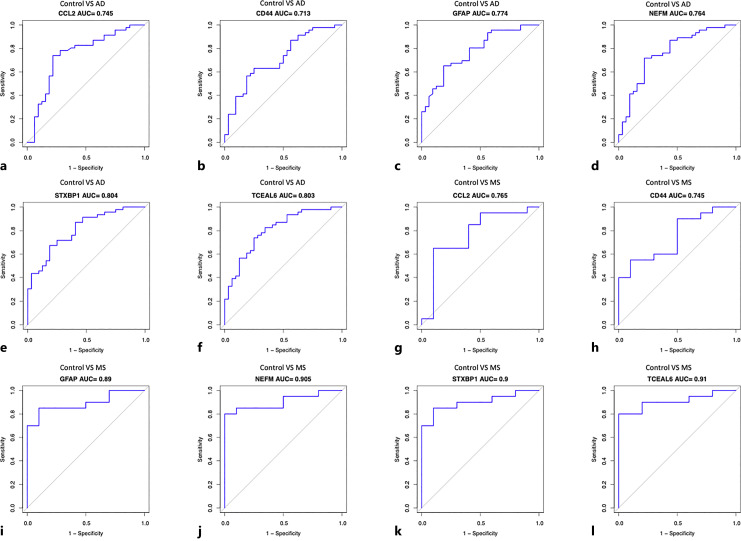
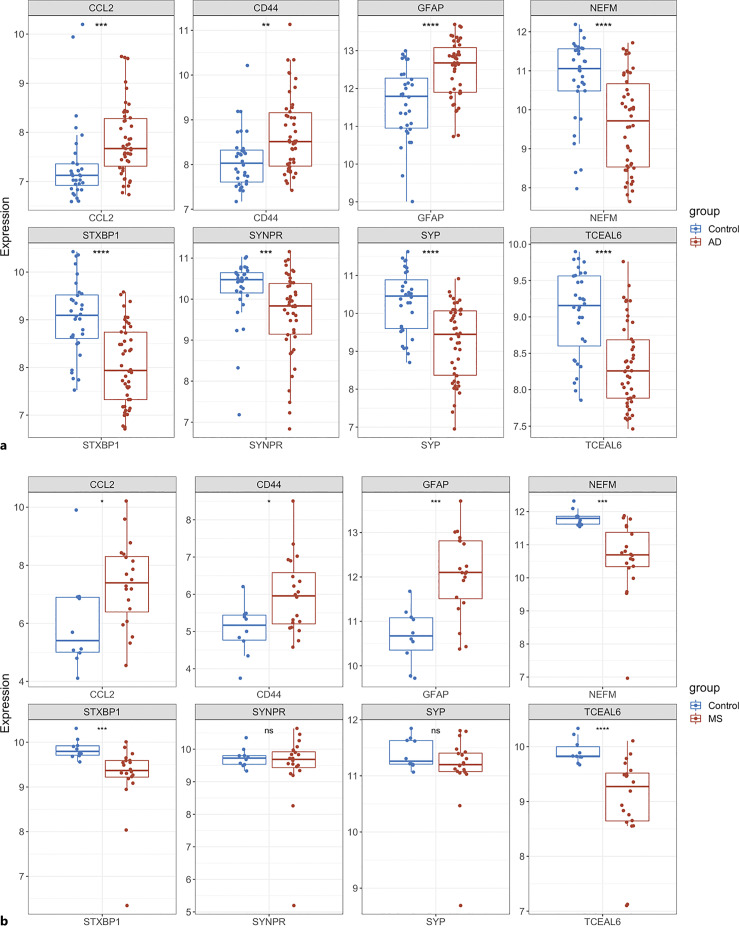
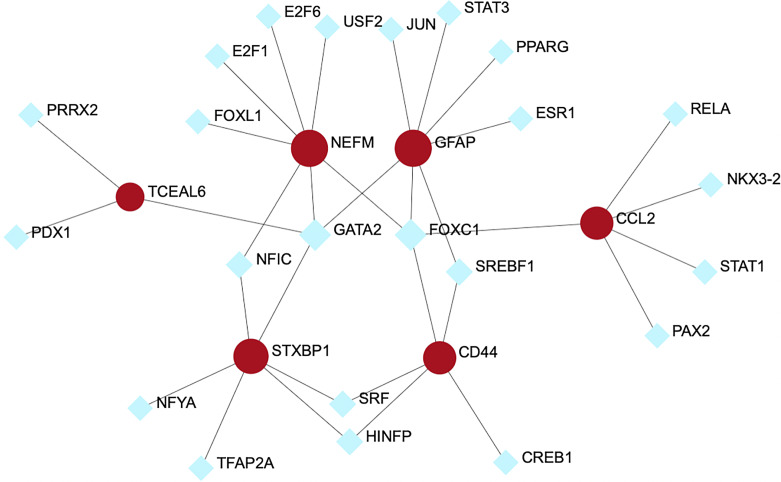
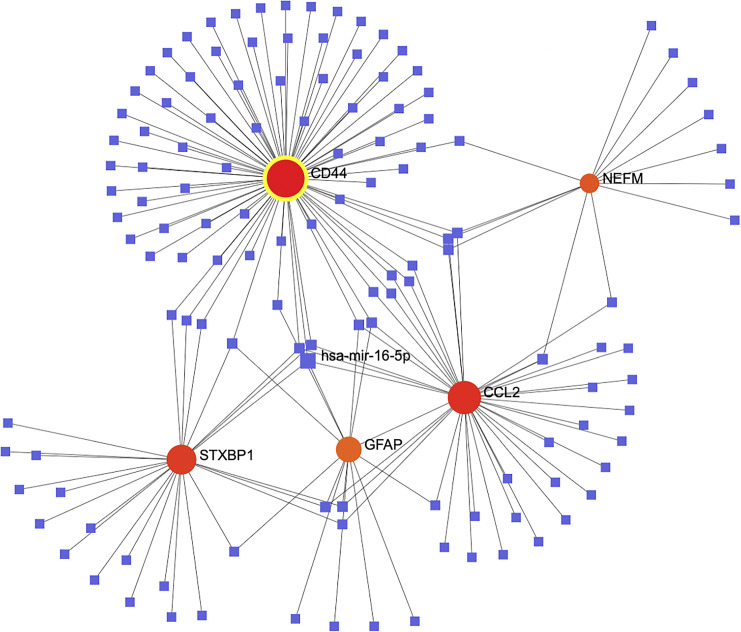
The common differentially expressed genes (DEGs) were determined between AD and MS from datasets obtained from Gene Expression Omnibus (GEO) database. Further, functional and pathway enrichment analysis, protein-protein interaction network construction, and identification of hub genes were carried out. The expression level of hub genes was validated in two other external AD and MS datasets. Transcription factor (TF)-gene interactions and gene-miRNA interactions were performed in NetworkAnalyst. Finally, receiver operating characteristic (ROC) curve analysis was applied to evaluate the predictive value of hub genes.
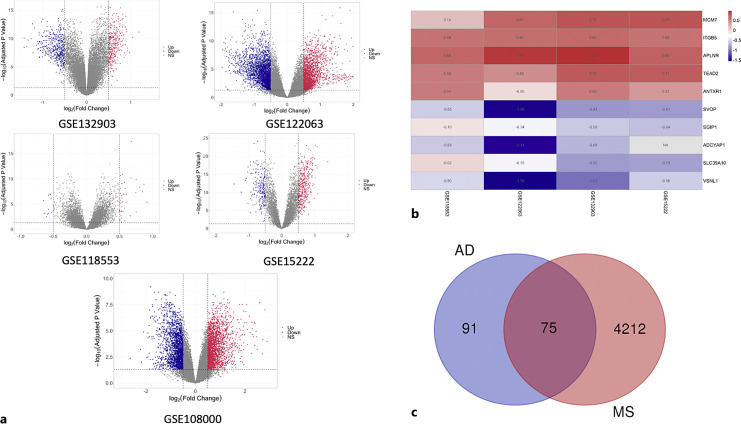
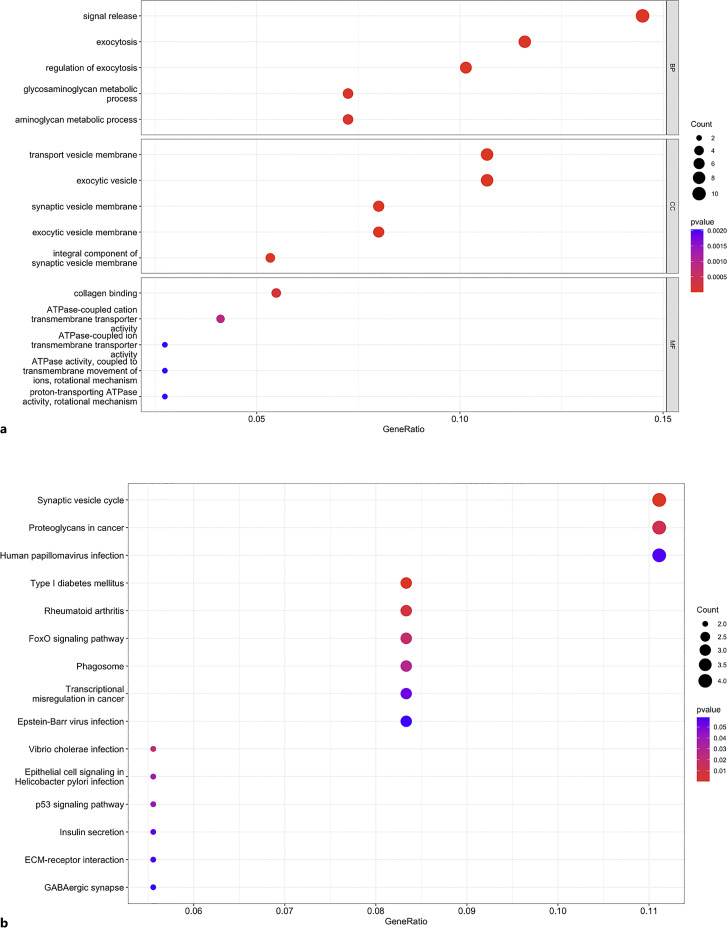
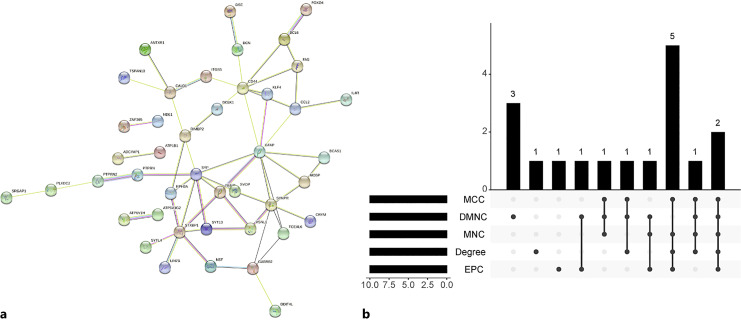
A total of 75 common DEGs were identified between AD and MS. Functional and pathway enrichment analysis emphasized the importance of exocytosis and synaptic vesicle cycle, respectively. Six significant hub genes, including CCL2, CD44, GFAP, NEFM, STXBP1, and TCEAL6, were identified and verified as common hub genes shared by AD and MS. FOXC1 and hsa-mir-16-5p are the most common TF and miRNA in regulating hub genes, respectively. In the ROC curve analysis, all hub genes showed good efficiency in helping distinguish patients from controls.
Our study first identified a common genetic signature between AD and MS, paving the road for investigating shared mechanism of AD and MS.
许多临床研究报告了阿尔茨海默病(AD)和多发性硬化症(MS)的共存,但 AD 和 MS 之间的共同分子特征仍难以捉摸。我们的研究目的是通过生物信息学分析探索 AD 和 MS 之间的遗传联系,为两种疾病的共同特征和可能的发病机制提供新的见解。
从基因表达综合数据库(GEO)数据库中获得的数据集确定 AD 和 MS 之间的常见差异表达基因(DEGs)。然后进行功能和通路富集分析、蛋白质-蛋白质相互作用网络构建和关键基因的鉴定。在另外两个外部 AD 和 MS 数据集验证关键基因的表达水平。在 NetworkAnalyst 中进行转录因子(TF)-基因相互作用和基因-miRNA 相互作用。最后,应用接收者操作特征(ROC)曲线分析评估关键基因的预测价值。
确定了 AD 和 MS 之间的 75 个共同 DEGs。功能和通路富集分析强调了胞吐作用和突触小泡循环的重要性。鉴定并验证了 6 个显著的关键基因,包括 CCL2、CD44、GFAP、NEFM、STXBP1 和 TCEAL6,它们是 AD 和 MS 共有的关键基因。FOXC1 和 hsa-mir-16-5p 分别是调节关键基因的最常见 TF 和 miRNA。在 ROC 曲线分析中,所有关键基因在帮助区分患者和对照组方面都表现出良好的效率。
我们的研究首次确定了 AD 和 MS 之间的共同遗传特征,为研究 AD 和 MS 的共同机制铺平了道路。