Department of Microbiology and Molecular Genetics, University of Pittsburgh School of Medicine, Pittsburgh, PA, 15219, USA.
Institute of Molecular Biotechnology of the Austrian Academy of Sciences (IMBA), Vienna Biocenter Campus (VBC), Vienna, Austria.
Nat Commun. 2023 Oct 17;14(1):6547. doi: 10.1038/s41467-023-42176-8.
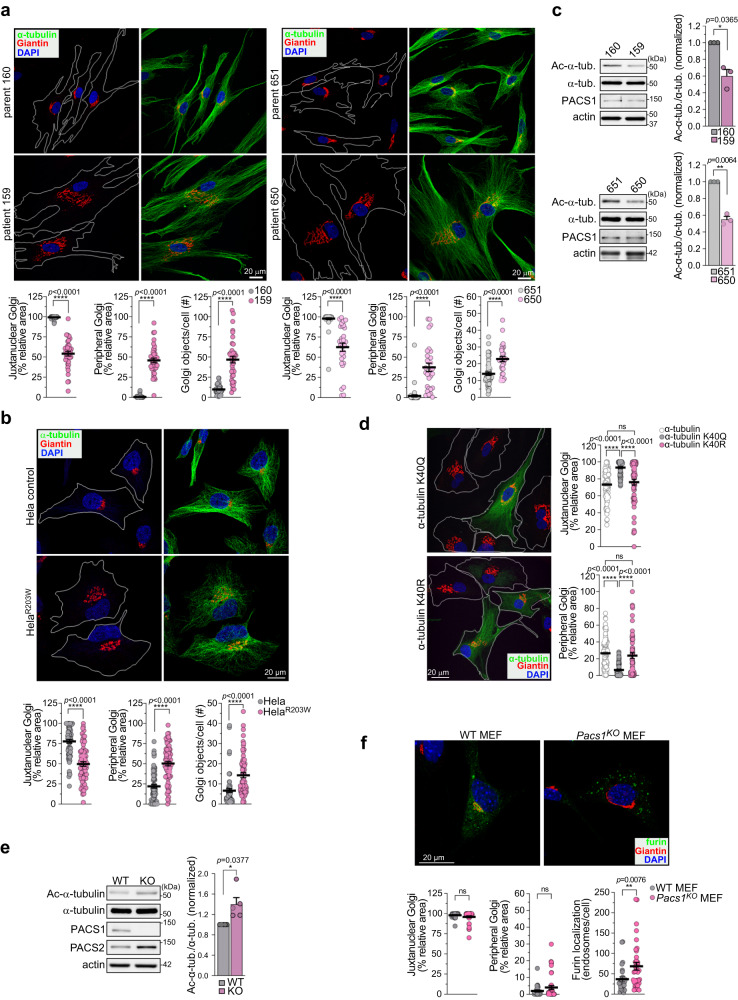
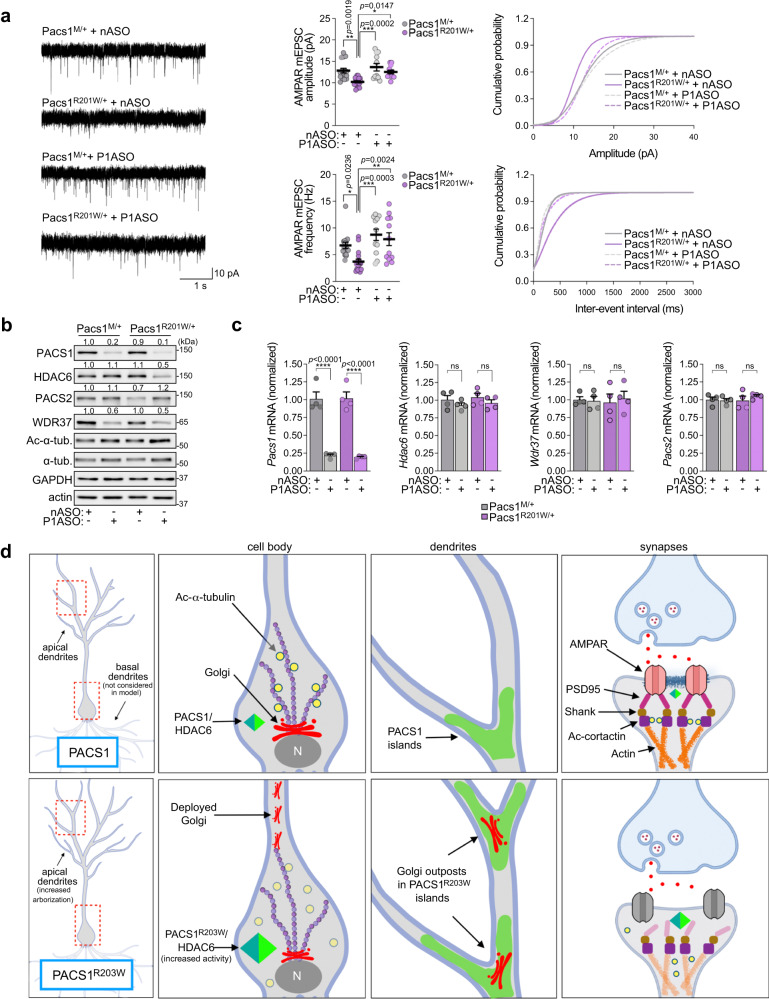
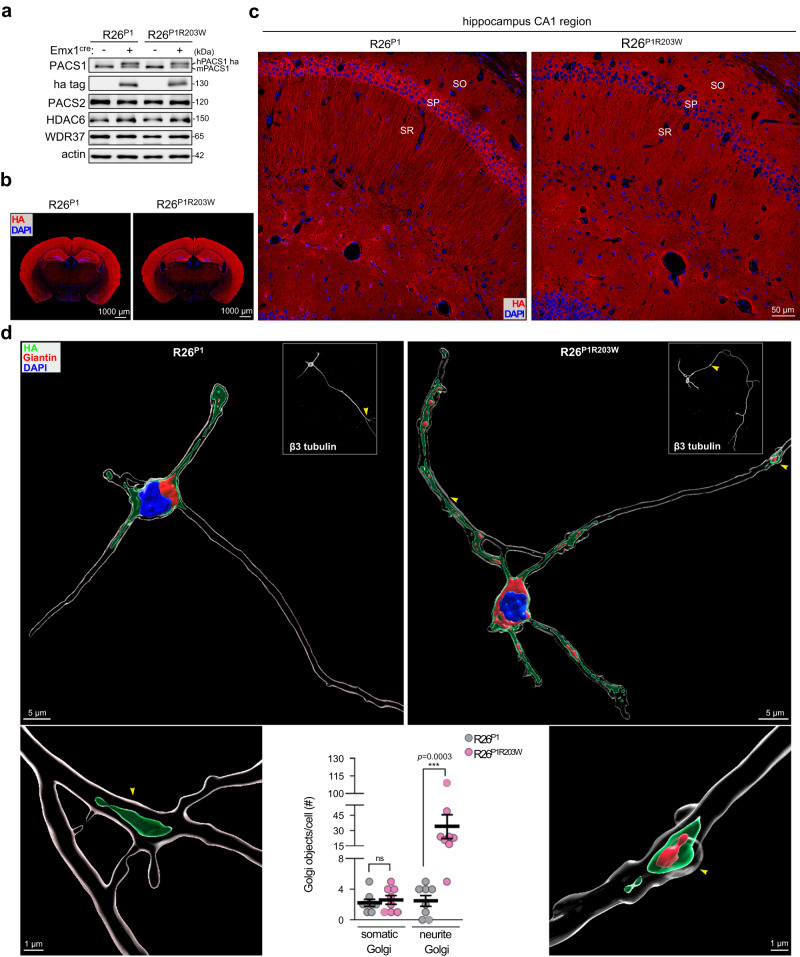
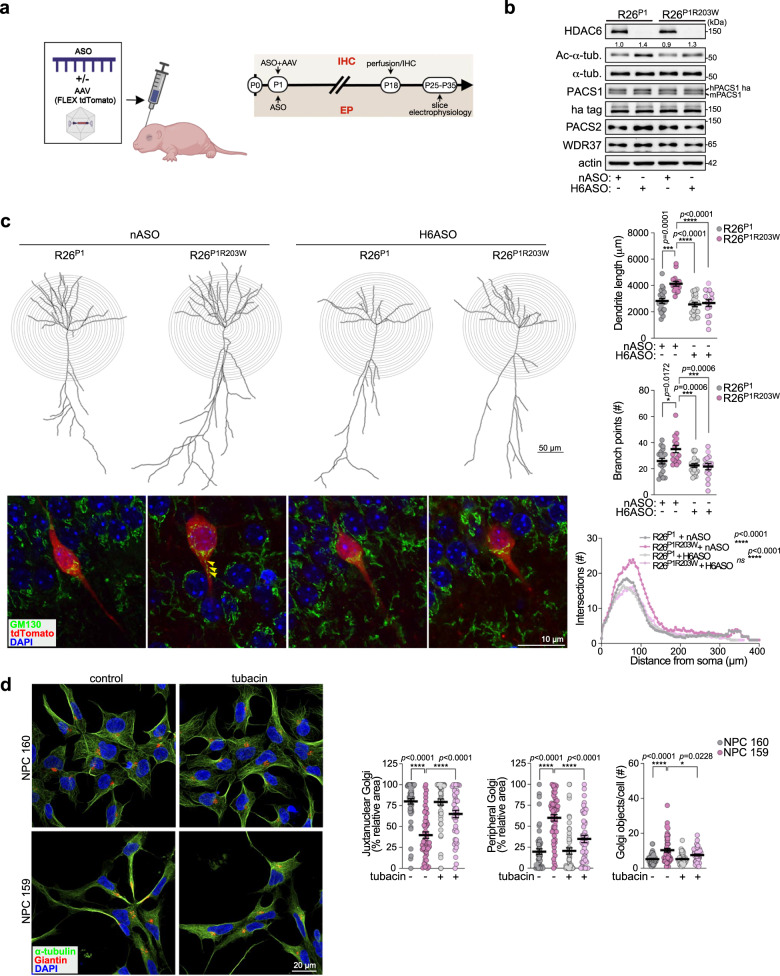
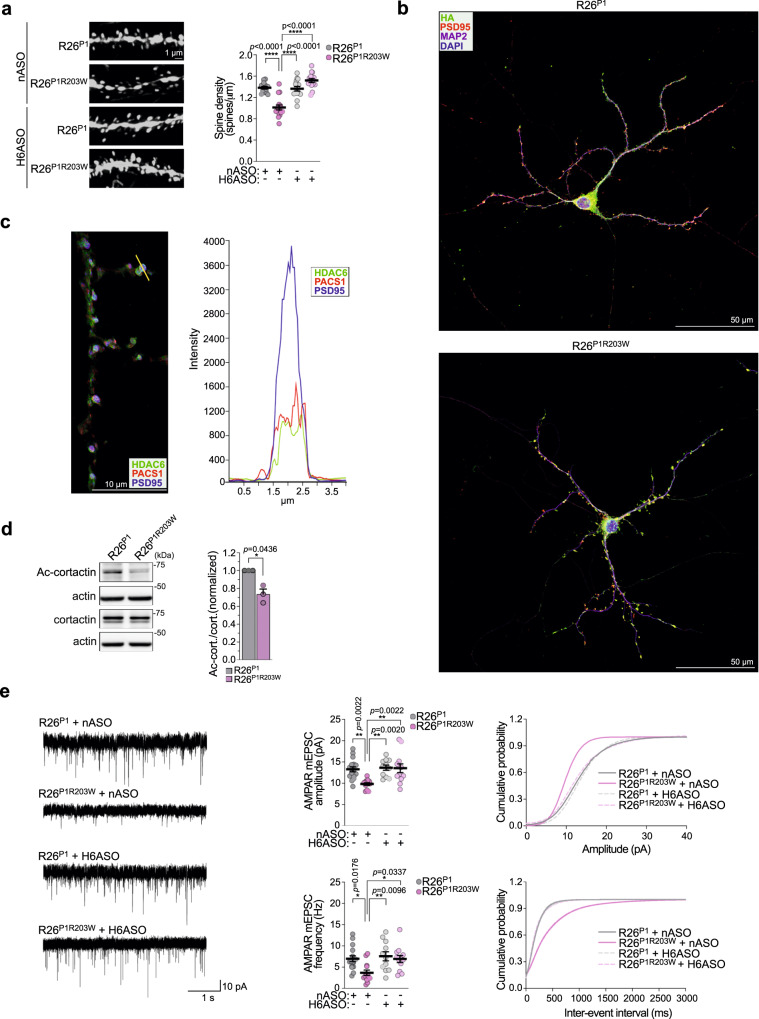
PACS1 syndrome is a neurodevelopmental disorder (NDD) caused by a recurrent de novo missense mutation in PACS1 (p.Arg203Trp (PACS1)). The mechanism by which PACS1 causes PACS1 syndrome is unknown, and no curative treatment is available. Here, we use patient cells and PACS1 syndrome mice to show that PACS1 (or PACS-1) is an HDAC6 effector and that the R203W substitution increases the PACS1/HDAC6 interaction, aberrantly potentiating deacetylase activity. Consequently, PACS1 reduces acetylation of α-tubulin and cortactin, causing the Golgi ribbon in hippocampal neurons and patient-derived neural progenitor cells (NPCs) to fragment and overpopulate dendrites, increasing their arborization. The dendrites, however, are beset with varicosities, diminished spine density, and fewer functional synapses, characteristic of NDDs. Treatment of PACS1 syndrome mice or patient NPCs with PACS1- or HDAC6-targeting antisense oligonucleotides, or HDAC6 inhibitors, restores neuronal structure and synaptic transmission in prefrontal cortex, suggesting that targeting PACS1/HDAC6 may be an effective therapy for PACS1 syndrome.
PACS1 综合征是一种神经发育障碍(NDD),由 PACS1(p.Arg203Trp(PACS1))中的反复新生错义突变引起。PACS1 引起 PACS1 综合征的机制尚不清楚,也没有有效的治疗方法。在这里,我们使用患者细胞和 PACS1 综合征小鼠表明 PACS1(或 PACS-1)是 HDAC6 的效应物,并且 R203W 取代增加了 PACS1/HDAC6 相互作用,异常增强去乙酰化酶活性。因此,PACS1 降低了α-微管蛋白和 cortactin 的乙酰化,导致海马神经元和患者来源的神经祖细胞(NPCs)中的高尔基带碎裂并过度填充树突,增加其分支。然而,树突上布满了曲张体,棘突密度降低,功能突触减少,这是 NDD 的特征。用 PACS1 或 HDAC6 靶向反义寡核苷酸或 HDAC6 抑制剂治疗 PACS1 综合征小鼠或患者 NPCs,可恢复前额叶皮层的神经元结构和突触传递,表明靶向 PACS1/HDAC6 可能是治疗 PACS1 综合征的有效方法。